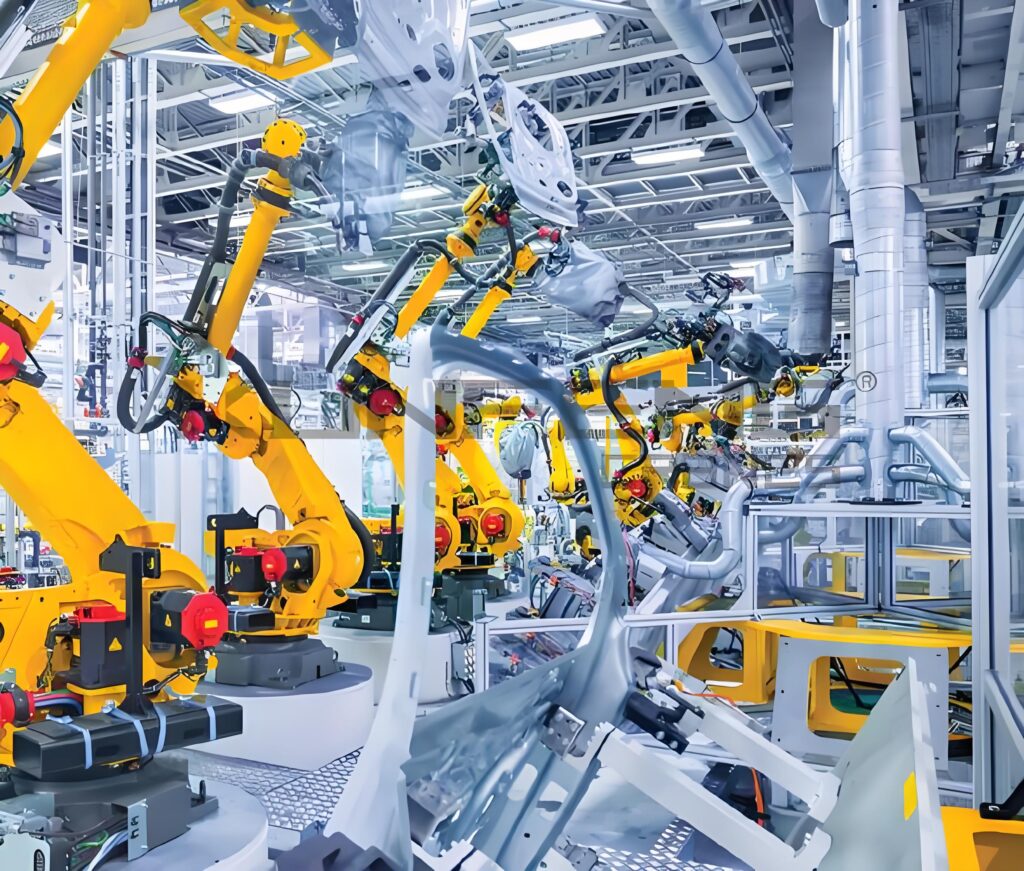





Cast Polyurethane Parts for Automotive Applications
Cast polyurethane elastomers deliver a unique combination of rubber-like elasticity and engineering-plastic-level mechanical strength. In automotive production and vehicle components, PU is often used to replace rubber (aging and cracking issues), metals (heavy weight and noise), and standard plastics (poor wear resistance).
Polyurethane parts can be precisely molded to meet the needs of OEMs, Tier-1 and Tier-2 suppliers. From chassis bushings, punching/stamping die components, urethane engine mounts to PU wheels used on automotive assembly lines, PU components significantly improve durability, reduce downtime and lower overall maintenance cost.
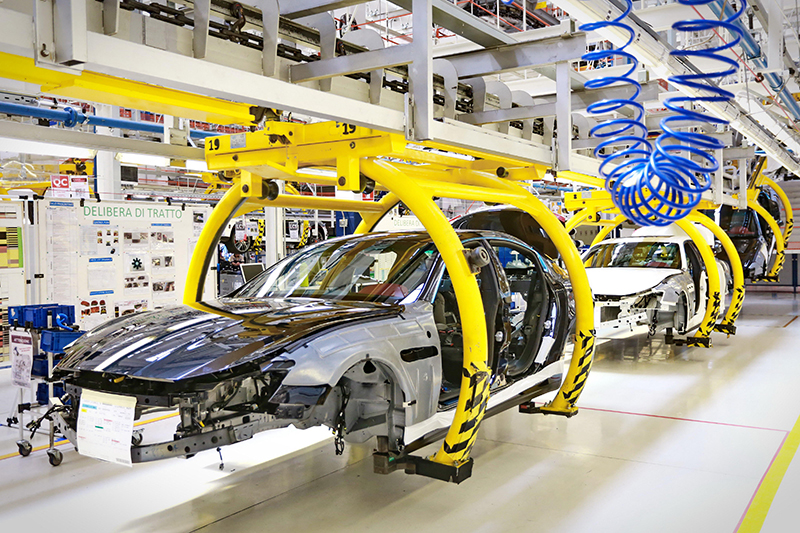
Advantages in the Automotive Industry
Excellent Shock Absorption: PU elastomers absorb impact and vibration from road irregularities and mechanical motion. In suspension systems, PU components can reduce noise levels by 15–20 dB and improve overall ride comfort and vehicle stability.
Superior Wear Resistance: With a stable friction coefficient of 0.3–0.5 and wear resistance 3–5× higher than natural rubber, PU maintains dimensional accuracy and resists abrasion under long-term sliding friction (e.g., shock absorber bush–metal rod contact). Typical service life is extended to 3–5 years depending on working conditions.
Thermal, UV & Aging Resistance: In environments ranging from −40℃ (cold starts) to 120℃ (engine bay heat), polyurethane maintains structural integrity. Tensile strength loss is typically <8%, and hardness deviation remains within ±5A, ensuring long-term reliability in both exterior and power-train-adjacent applications.
High Customizability: Suitable for in-mold casting, bonding to metal cores, overmolding, and precision shaping. PU can be tailored to different hardness levels (Shore 60A–98A) based on load, damping, and environmental requirements.
Technical Comparison: Cast Polyurethane vs. Injection TPU & Rubber
In the automotive world, "cheap" means a recall. Below is the raw data from our factory tests comparing our industrial-grade Cast PU against inferior mass-production materials.
| Performance Metric | Standard Rubber | Injection Molded TPU | Our Cast Polyurethane |
| Tensile Strength | 10 - 15 MPa | 25 - 35 MPa | 45 - 60 MPa |
| Tear Strength | Low (Propagates) | Moderate | High (Extreme Resistance) |
| Load Bearing | Poor (Deforms) | Moderate | Ultra-High (Heavy-Duty) |
| Tooling Cost | High (Steel Molds) | Very High (Injection) | Low (Open Cast Molds) |
| Customization | Rigid | Limited | Full (Flexible Formulations) |
The Engineering Workflow: From Prototype to OEM Integration
Speed is a competitive advantage. Our China source provides the agility of a boutique engineering shop with the scale of a global supplier.
- Chemical Engineering: We select the prepolymer base (NDI, MDI, or TDI) to match your specific environmental stress—whether it's hydrolysis resistance or high-speed dynamic heat buildup.
- Bonding Excellence: We utilize multi-stage chemical bonding (exceeding ASTM D429) to ensure the PU tread never separates from its metal or nylon core.
- Precision Machining: Post-casting CNC turning ensures your custom seals and bushings meet ±0.05mm tolerances for a perfect fit in OEM housings.
- Batch Verification: Every shipment includes a Shore hardness report and tensile test data, providing the audit trail required by modern automotive assembly standards.
Key Applications
Shock Absorption & Suspension
- Urethane engine mount / polyurethane transmission mount
- Bump stop, silent block
- Exhaust tailpipe mount bracket bushing
Punching / Stamping Die Manufacturing
- Urethane side pin
- Round urethane threaded bumper
- Tapered urethane rubber bumpers
- Polyurethane damping washer
- Urethane stop buffer for press die
- Down-holder damper
- Urethane blanking pad / urethane stripper bar
- Urethane bumpers with spherical tip
Testing, Manufacturing & Assembly
- Skid conveyor roller wheels for EV and ICE vehicle assembly lines
- Warehouse shelf buffers & PU collision pads
- Engine leak-testing seal / custom polyurethane gasket
Frequently Asked Questions: Automotive Sourcing & Technicals
We eliminate the risks associated with international sourcing by providing transparent technical data and a robust sample validation process.
- Is your polyurethane "foam" or "solid"?
We specialize strictly in Solid Cast Polyurethane. We do not produce foams. Our material is a dense, high-performance elastomer designed for structural and load-bearing applications.
- How does your cast PU handle under-hood temperatures?
Our specialized NDI formulations are stable up to 120°C (248°F), far outperforming rubber and standard plastics in transmission and engine-adjacent zones.
- Can you provide samples for destructive testing?
- Yes. We provide technical samples for your R&D department to verify abrasion, compression set, and oil resistance before moving to bulk factory production.
- What is the price advantage of casting over injection molding?
For non-standard custom parts, casting has significantly lower tooling costs. This allows for more design freedom and a lower price point for mid-to-high volume automotive runs.
Related Automotive Polyurethane Products
Explore more cast polyurethane parts used in automotive suspension, tooling and assembly lines:
- Custom Polyurethane Bushings for Automotive & Industrial – Made-to-drawing suspension and chassis bushings with higher load capacity and longer service life than rubber.
- Custom Cast Polyurethane Suspension Bushings – Designed for passenger cars, performance vehicles and commercial fleets to improve handling and durability.
- Urethane Springs for Industrial & Automotive Die – High-energy die springs for punching and stamping tools used in automotive metal forming.
- Polyurethane Mounts – Category overview of custom engine mount insert, transmission mount and related cast urethane parts.