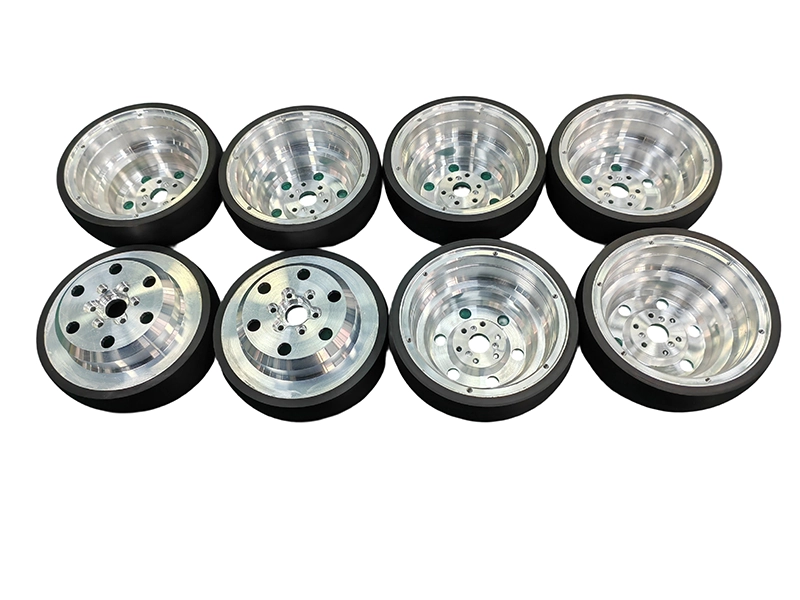
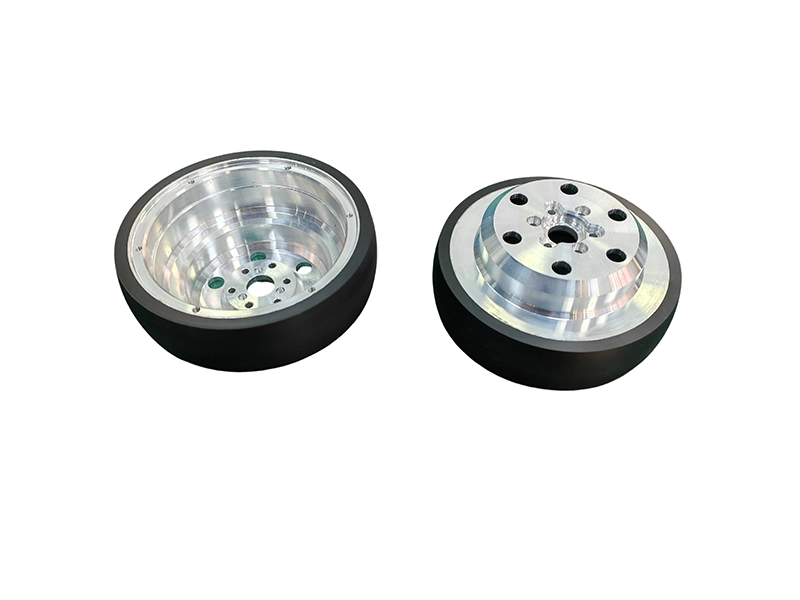
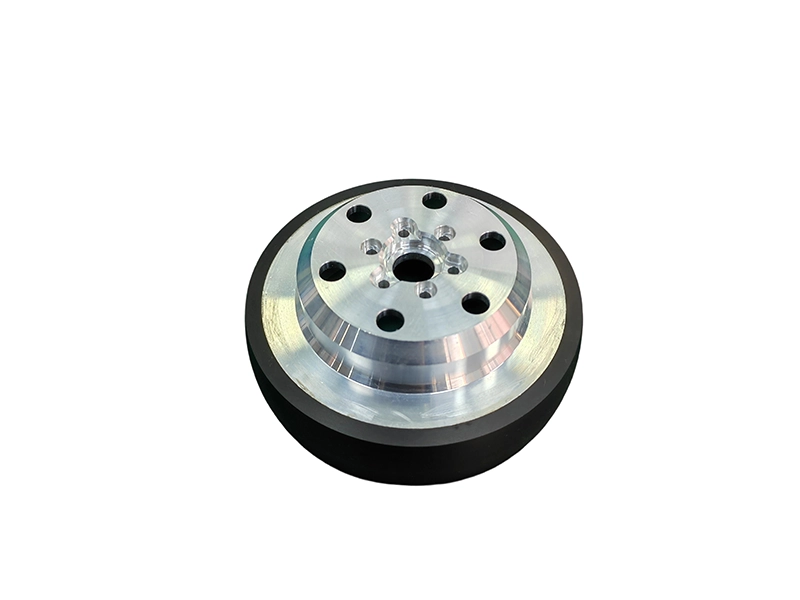
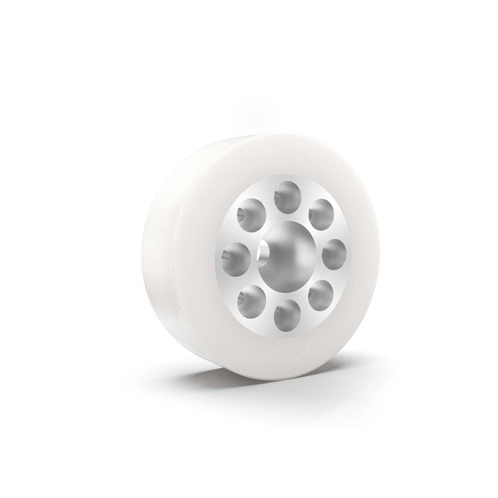
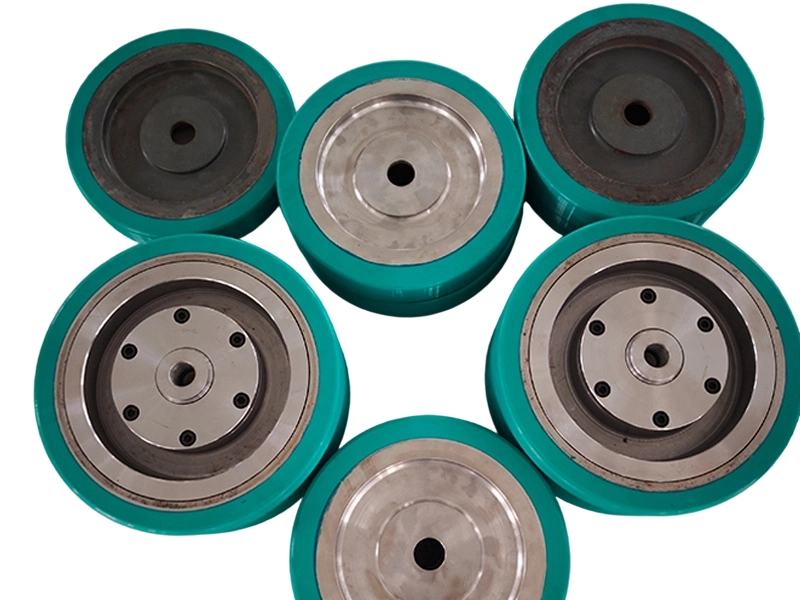
Steel core PU wheels rust in humid industrial environments, causing core expansion, PU delamination, and unplanned downtime. Low-grade rubber wheels flatten under heavy loads, while cheap TPU wheels fail within 3 months, wasting labor and raising maintenance costs for AGV, conveyor, and warehouse equipment.
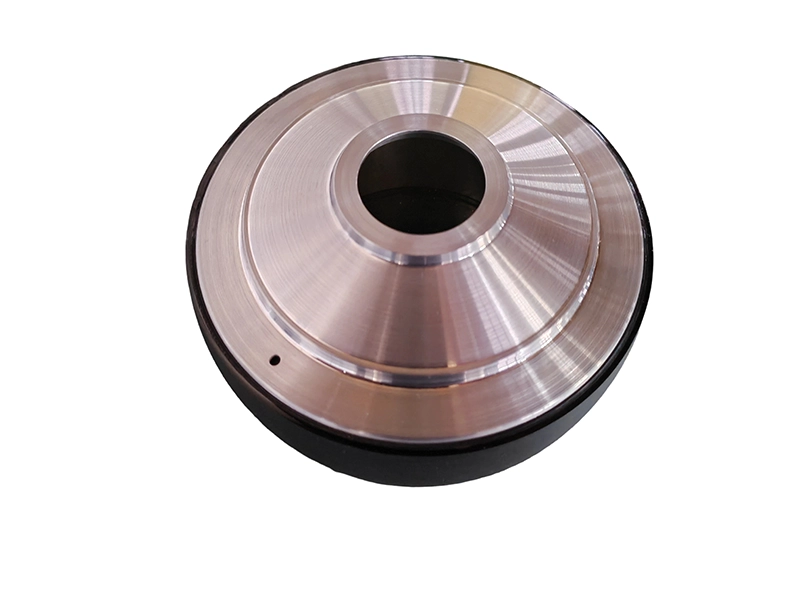
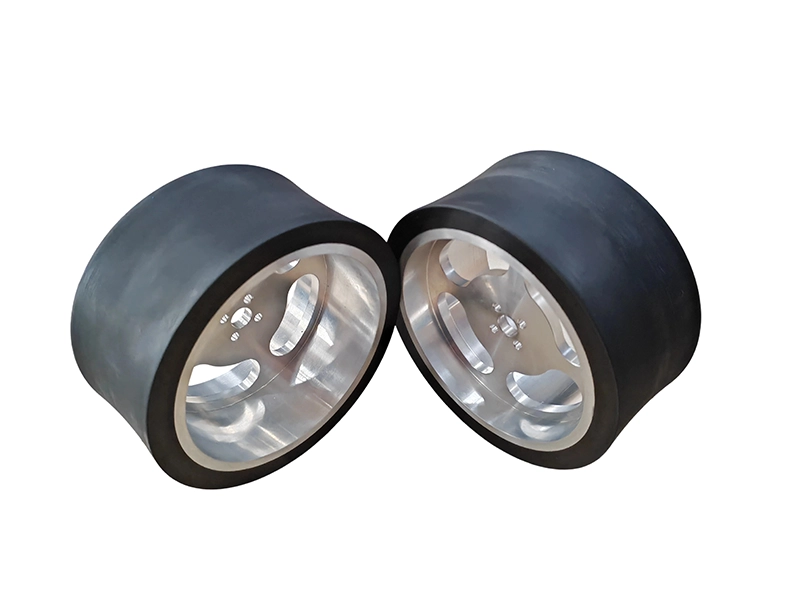
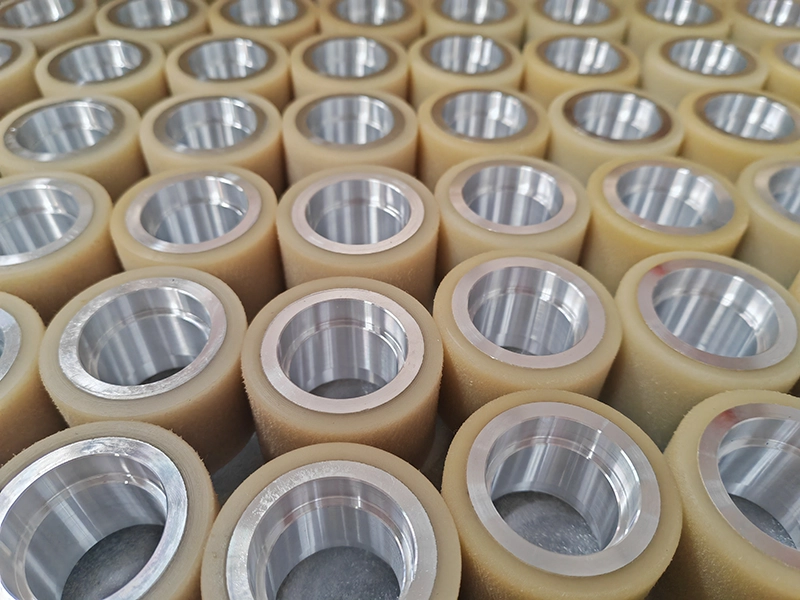
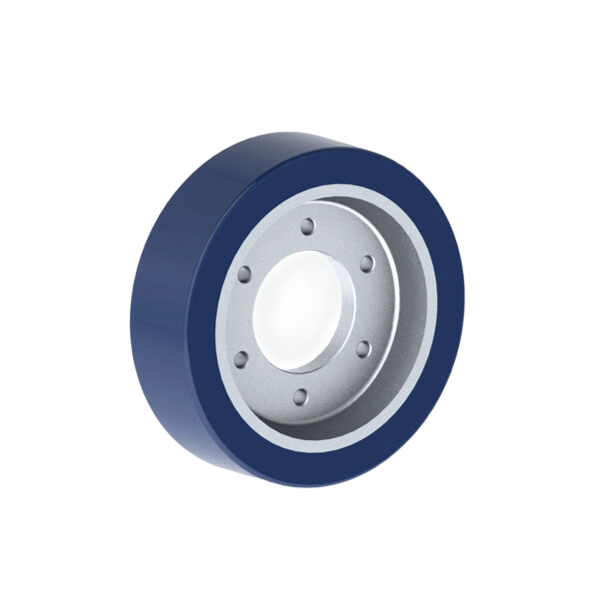
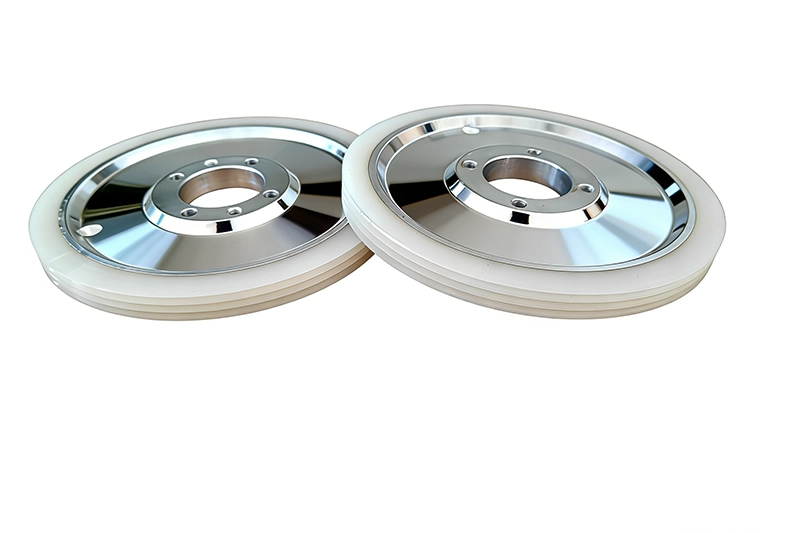
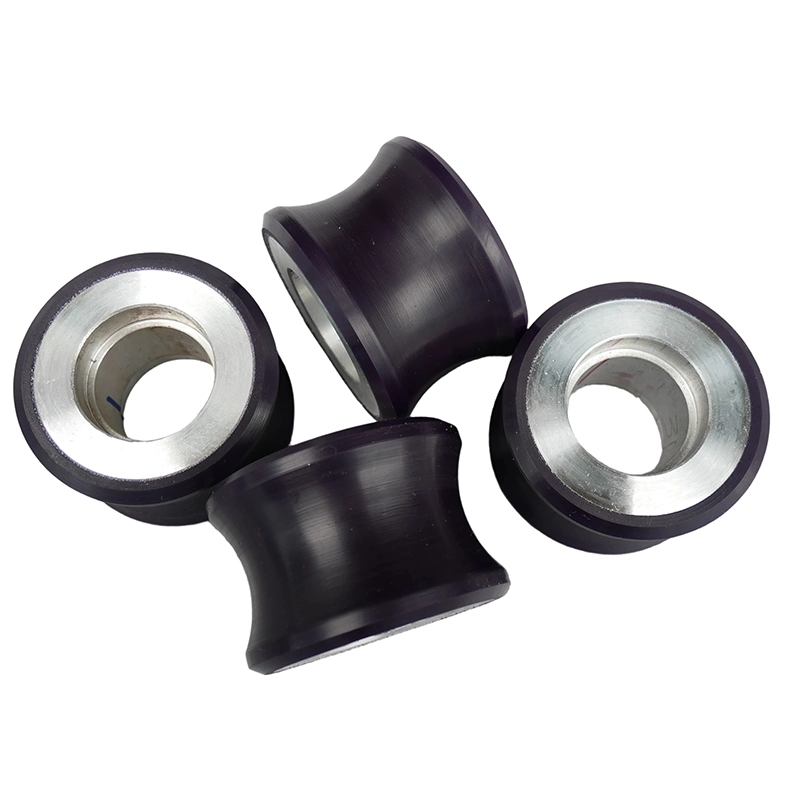
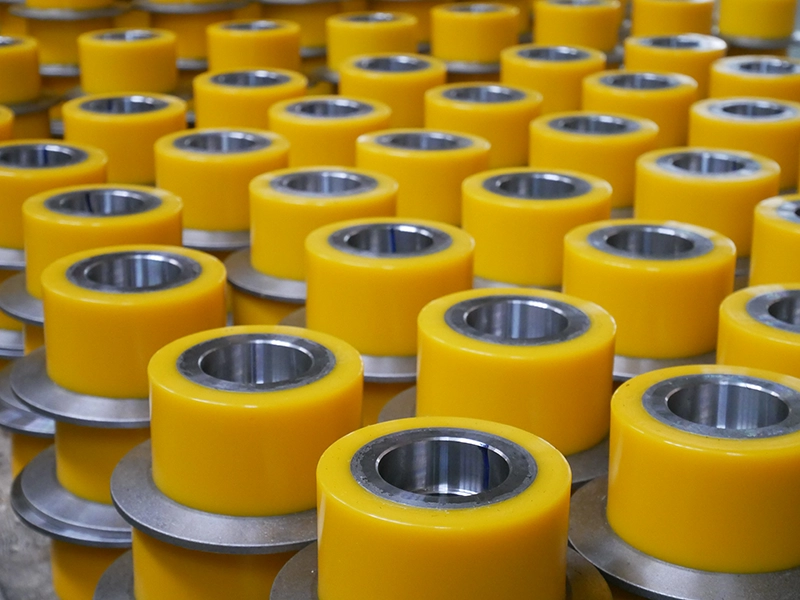
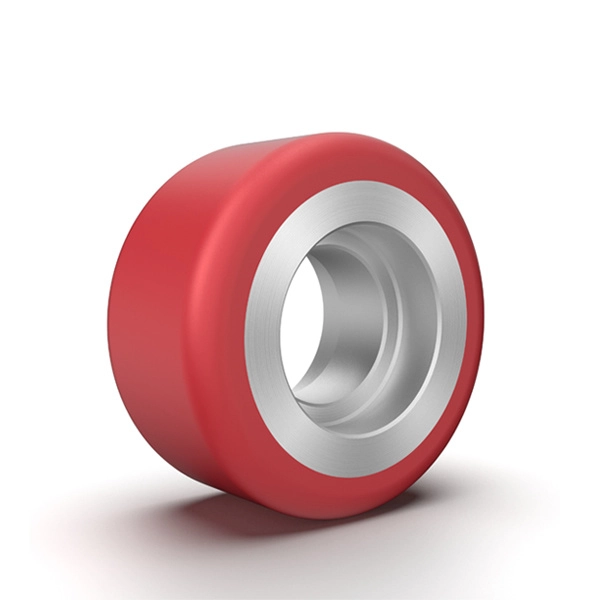
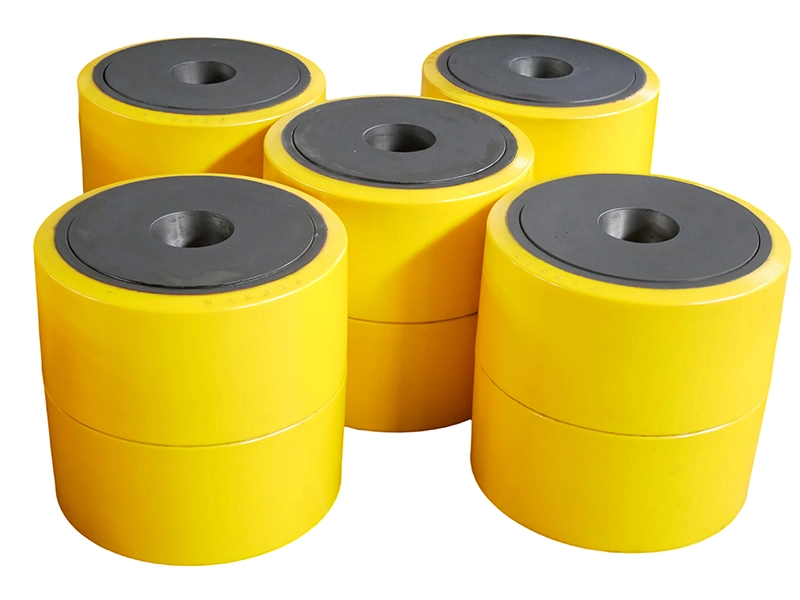
We solve this with cast polyurethane bonded to precision aluminum cores. In our lab tests, our aluminum core PU wheels resist corrosion, handle 800kg dynamic load, and last 6x longer than steel core alternatives. As a 20+ year manufacturer, we deliver OEM-compatible wheels that cut TCO and eliminate rust-related failures.
Custom Cast Polyurethane Wheel Manufacturer: 20+ Years Of Tailored Engineering Expertise
We bypass the "one-size-fits-all" trap by offering modular customization across core geometry and polymer chemistry, ensuring your specific load, speed, and environmental constraints are met with 100% precision.
- E-commerce Sorting: High-speed drive wheels optimized for low heat build-up at 4 m/s.
Advanced Heat Dissipation And Bonding Technology To Prevent Tread Delamination
Our cast polyurethane outperforms injection-molded TPU by offering superior "memory" and rebound resilience, effectively eliminating the "flat-spotting" common after long periods of static loading.
- Superior Bonding: Proprietary chemical primers ensure a 12kN/m peel strength.
- Load Capacity: Aluminum cores provide the strength of steel at 30% of the weight.
- Precision Tolerance: CNC-machined hubs guarantee concentricity within 0.05mm.
- Hydrolysis Resistance: Specialized formulations for humid or wash-down environments.
Why Choose Us?
Working directly with our engineering team removes the 40% distributor markup while giving you access to SPC data and direct DFM feedback for your custom designs.
- ISO Certified: 9001, 14001, and 45001 compliant manufacturing.
- Low MOQ: Prototyping starting at 5-10 units for specialized OEM projects.
- TCO Savings: Extended service life reduces maintenance cycles by 3x compared to rubber.
- Rapid Prototyping: CAD-to-sample delivery in as little as 10 business days.
Aluminum Core PU Wheel Performance Cases
Field data from 100+ OEM AGV and warehouse clients proves our wheels reduce downtime by 75% vs. steel core alternatives.
Client Pain Point: A logistics firm had 20% AGV wheel downtime due to steel core rust and PU delamination.
Our Intervention: Supplied 90A polyether PU wheels with 6061 aluminum core (100mm diameter, 800kg load).
Quantified Result: Downtime dropped to 5%; wheel service life extended from 3 to 18 months, annual savings $72,000.
Client Pain Point: A food factory’s steel core wheels rusted in washdowns, contaminating production.
Our Intervention: Custom 85A polyester PU wheels with 6063 aluminum core (75mm diameter).
Quantified Result: No rust after 12 months; ISO 22000 compliance achieved; maintenance costs cut by 40%.
How To Select The Right Aluminum Core PU Wheels For Your Dynamic Load Requirements
Step 1: Calculate Dynamic Load
Insight: Always factor in a safety multiplier of 1.3 to account for uneven floor surfaces or sudden impact loads that exceed the static weight distribution.
Step 2: Determine Environmental Compatibility
Insight: Identify if the wheels will contact oils, acids, or UV light; Naphthalene Diisocyanate (NDI) polyurethane is recommended for extreme mechanical stress and high-frequency cycles.
Step 3: Define Hub & Bearing Interface
Insight: Ensure the aluminum core bore matches your axle tolerance; we typically recommend a press-fit for high-precision applications to eliminate axial play.
Aluminum Core vs. Steel Core: Why 6061 Aluminum Is The Superior Choice For Efficiency
Aluminum core’s corrosion resistance and cast PU’s bonding eliminate the top failure modes of steel core and rubber alternatives.
Our Aluminum Core Polyurethane Wheels
Aluminum core (6061/6063) resists rust in 95% humidity
PU-to-core peel strength ≥12 KN/m (no delamination)
Compression set <20% ( 70°C/22h)
No core expansion, maintaining dimensional stability
Service life 6x longer than steel core PU wheels
Steel Core PU / Rubber Wheels
Steel core rusts in humid/washdown environments
Rust causes core expansion, leading to PU delamination
Rubber wheels: compression set >45%, flat-spotting under load
Why should I choose aluminum cores over cast iron or steel for PU wheels?
Aluminum cores offer superior heat dissipation, reducing the risk of internal polyurethane melting (hysteresis) during high-speed operation ($>4$ m/s). Additionally, they are 60% lighter than steel, significantly reducing the energy consumption of AGV batteries and providing excellent corrosion resistance in humid environments.
How do you guarantee that the polyurethane won't delaminate from the aluminum hub?
We utilize a multi-stage surface activation process: mechanical shot-blasting to increase surface area, followed by degreasing and the application of a proprietary chemical bonding agent. This ensures a peel strength exceeding $12$ kN/m, where the polymer will tear before the bond fails.
What is the lead time for custom OEM aluminum PU wheels?
For standard configurations, we offer a 48-hour quote turnaround. Custom CNC-machined aluminum hubs with specialized casting (NDI or MDI) typically require 10–15 business days for prototyping and 3–4 weeks for mass production, depending on the complexity of the core geometry.
Can these wheels withstand extreme temperatures in cold storage or ovens?
Yes. We formulate specific prepolymers for thermal stability. Our standard range operates from -40 to +90 degree C. For specialized applications, our high-performance NDI series can maintain structural integrity and load-bearing capacity at intermittent peaks up to +120 degree C without significant flat-spotting.
How do you control batch consistency for high-volume orders?
We implement strict SPC (Statistical Process Control). Each batch undergoes shore hardness testing (+/- 3 Shore A), tensile strength verification, and concentricity checks via CNC. Every shipment includes a Certificate of Analysis (CoA) and is traceable back to the raw material chemical lot.
What are the common failure modes of low-end PU wheels I should avoid?
Most
How do you control your product quality?
We have 10 inspectors to carry out raw material inspection, process control ,first article inspection and final inspection.
How do you monitor the production process to avoid delayed delivery?
We use the ERP system to execute orders, and can check the order status and expected delivery time at any time.
What is warranty of products?
All of products with 3-6 months guarantee (except very frequently wearing parts).
How do you deal with after sales service?
We will response in 24 hours with solutions such as replacement or reworking.