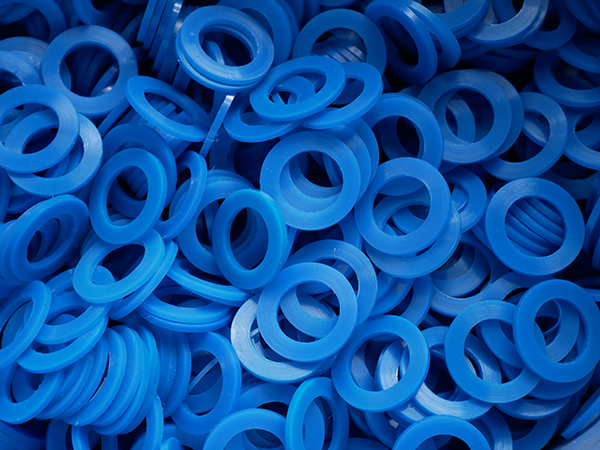
Custom Cast PU Washers Manufactured to Your Drawings
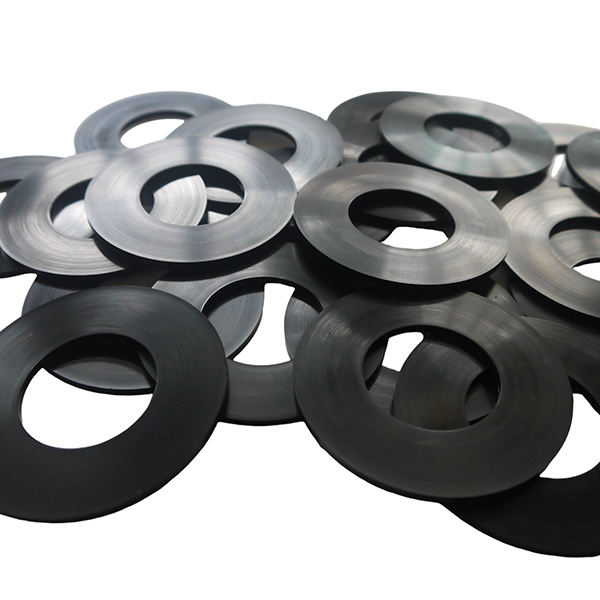
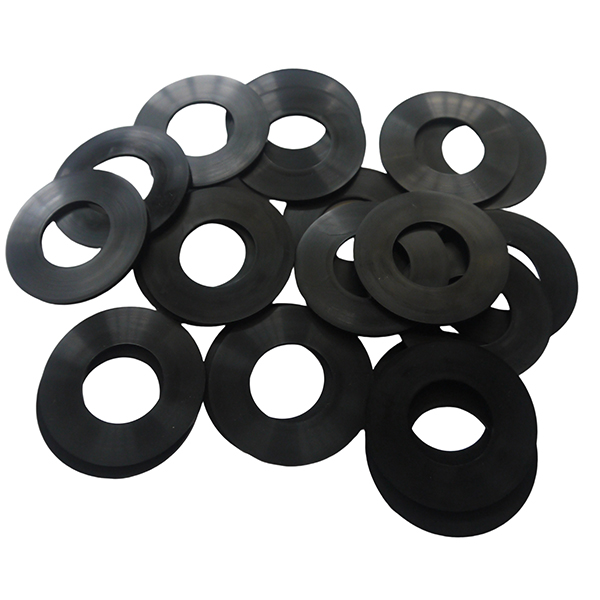
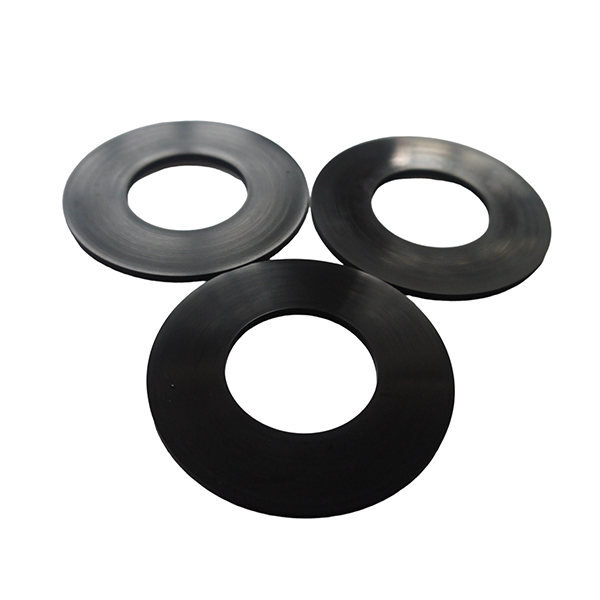
Pepsen manufactures custom polyurethane washers for industrial equipment, machinery assemblies and application-specific components. We produce cast polyurethane washers according to customer drawings and specifications, with dimensions, material hardness and washer geometry defined by the requirements of each application.
Whether you need flat washers, spacer washers or specially profiled polyurethane rings, we work from your technical drawings or physical samples to evaluate the part structure and manufacturing requirements. You can also explore our range of custom polyurethane products for other industrial applications.
Custom manufacturing options include:
Inside diameter (ID), outside diameter (OD) and thickness made to drawing
Specified polyurethane hardness
Flat, stepped and application-specific profiles
Material selection based on working load and operating conditions
Custom production for OEM equipment and replacement components
Send us your drawing or sample to discuss your polyurethane washer requirements.
Custom Polyurethane Washer Designs
A polyurethane washer is not always just a flat ring placed under a bolt. Depending on the assembly, it may provide cushioning, separate components, distribute contact pressure, isolate vibration or serve as part of a sealing arrangement.
The washer geometry and material properties should therefore be considered together with its actual function.
Flat Polyurethane Washers
Flat washers have a simple annular structure with a central hole. Their dimensions are defined by the inside diameter, outside diameter and thickness.
Depending on the assembly design, they may be used between metal components to provide a compliant contact layer, distribute local pressure or prevent direct contact between mating surfaces.
Polyurethane Spacer Washers
Spacer washers are used where a defined distance between assembled components needs to be maintained.
For these parts, thickness and dimensional consistency are particularly important. An incorrect thickness can affect component alignment, assembly clearance and the position of adjacent parts.
Custom Profiled Polyurethane Washers
Some equipment designs require washers with stepped sections, non-standard openings, different cross-sections or other application-specific geometries.
For these components, the drawing should clearly identify the critical dimensions and functional surfaces. We evaluate the part geometry before determining the appropriate manufacturing approach.
For other non-standard cast polyurethane components used in industrial equipment, see our range of custom cast polyurethane parts.
Selecting Polyurethane for Compression and Mechanical Loads
A polyurethane washer may remain under compression throughout the operating life of an assembly. Its performance depends not only on hardness but also on material formulation, washer dimensions, compression level and operating conditions.
Two issues deserve particular attention during material and design selection.
Compression Set and Long-Term Deformation
Compression set describes the permanent deformation remaining after a material has been compressed under specified conditions and subsequently allowed to recover.
For a washer installed under continuous clamping force, excessive permanent deformation may affect the original assembly dimensions and contact conditions.
In certain assemblies, this can contribute to reduced contact pressure, changes in component positioning or deterioration of a sealing arrangement.
However, compression set alone does not determine the remaining bolt preload or the service life of an assembly. These also depend on joint stiffness, fastener design, installation conditions and operating loads.
When compression set is important to the application, the material should be evaluated under conditions representative of the intended temperature, compression and exposure time.
Edge Tearing and Localized Stress
The inner and outer edges of a polyurethane washer may experience concentrated stresses during installation and operation.
This can become important when:
The washer has a relatively thin cross-section.
The inside diameter is small compared with the overall washer dimensions.
The component is installed with misalignment.
The washer is compressed against an uneven contact surface.
Assembly clearance allows material to move into an adjacent gap.
Material tear resistance, washer geometry and installation conditions should be considered together.
For demanding applications, the drawing and assembly details help determine whether additional attention is needed around the inner diameter, outer diameter or contact edges.
Polyurethane Washer Material Selection
Choosing a polyurethane material based only on Shore hardness can lead to an unsuitable design.
Hardness describes resistance to indentation under a specified test method. It does not independently establish compression set, tensile strength, tear resistance or long-term performance under a particular load.
When reviewing a custom polyurethane washer, we consider the following information.
Selection factor
Why it matters
Shore hardness
Influences material deformation under contact and compression
Compression set
Helps assess permanent deformation after compression
Tensile strength
Indicates resistance to tensile stress
Tear strength
Relevant to edge damage and crack propagation
Operating temperature
Affects material behavior and suitability
Chemical exposure
Helps determine compatibility with oils, fluids and other media
Working load
Helps establish the required mechanical performance
Washer dimensions
Influence contact area, deformation and assembly fit
The appropriate material depends on the combination of these requirements rather than one isolated property.
Where a particular performance requirement is critical, it should be defined before production and verified using an agreed test method.
Cast Polyurethane Washers vs. Rubber and TPU Washers
Polyurethane, conventional rubber and thermoplastic polyurethane (TPU) are different material systems. None is automatically the best choice for every washer application.
Consideration
Cast Polyurethane
Conventional Rubber
Injection-Molded TPU
Material system
Cast polyurethane elastomer
Depends on rubber type
Thermoplastic polyurethane
Manufacturing approach
Casting and curing
Rubber molding and other processes
Injection molding
Design considerations
Formulation, geometry and casting requirements
Rubber compound and application compatibility
TPU grade and injection-molding requirements
Material selection
Based on load, hardness and operating conditions
Based on rubber type and environmental exposure
Based on TPU grade and processing requirements
For custom equipment components, the selection should be based on actual operating conditions, required dimensions and the manufacturing route suitable for the part.
Pepsen focuses on customized cast polyurethane elastomer components. If your existing washer is made from another material, its dimensions, working conditions and performance requirements should be reviewed before considering a polyurethane replacement. You can learn more about ourcustom cast polyurethane manufacturing and product capabilities.
Custom Polyurethane Washer Manufacturing
Custom washer manufacturing starts with understanding the part drawing and its intended function.
The following information helps establish the manufacturing requirements.
1. Drawing and Dimensional Review
We use the customer drawing or physical sample to identify the washer geometry and required dimensions.
The main dimensions normally include:
Inside Diameter (ID)
Outside Diameter (OD)
Overall Thickness
Additional steps, grooves or profile dimensions where applicable
Critical dimensions and tolerances should be identified on the drawing, particularly where the washer fits into a specific assembly.
2. Material and Hardness Requirements
The specified Shore hardness is an important starting point for material selection.
However, if the washer operates under continuous compression, repeated loading or contact with oils and other chemicals, these conditions should also be considered.
Where the original material specification is unavailable, the application details and existing component can help guide the technical evaluation.
3. Manufacturing and Part Geometry
The washer geometry, dimensions and material requirements are reviewed together when determining the appropriate manufacturing approach.
For custom cast polyurethane parts, mold design and the characteristics of the finished geometry are important considerations.
4. Dimensional and Material Verification
The inspection requirements should reflect the drawing and the intended application.
Depending on the agreed specifications, relevant checks may include:
Inside and outside diameter
Overall thickness
Shore hardness
Visual appearance and surface condition
Additional material property tests where specified
For applications with critical compression or mechanical performance requirements, the relevant test method and acceptance criteria should be agreed before production.
Industrial Applications of Custom Polyurethane Washers
Custom polyurethane washers can be used in different mechanical assemblies, but their actual function depends on the equipment design.
Typical application areas include:
Industrial Machinery and Equipment Assemblies
Polyurethane washers may be incorporated into mounting and connection assemblies where a compliant material layer is required between components.
Relevant design considerations include compression load, contact area, washer thickness and assembly clearance.
Other polyurethane components, such as custom polyurethane bushings, may also be used in mechanical assemblies where cushioning, vibration isolation or controlled movement is required.
Material Handling and Conveyor Equipment
In material handling machinery, custom polyurethane components may be used around mounting points and mechanical connections.
For washer applications, the required dimensions and material properties depend on the equipment structure, operating loads and exposure conditions.
Certain hydraulic and heavy equipment designs use elastomeric components at mounting, support or isolation points.
Where polyurethane washers are considered as replacement components, the original part function must be established first. A washer used for mechanical cushioning should not automatically be treated as a pressure-retaining hydraulic seal.
What We Need to Quote Your Custom Polyurethane Washers
To evaluate a custom washer project, please provide as much of the following information as possible.
Required information
Details
Technical drawing
2D drawing or 3D file
Inside diameter
ID
Outside diameter
OD
Thickness
Overall thickness
Material hardness
Shore A or Shore D, if specified
Application
Equipment and installation position
Working load
Static or dynamic loading conditions
Operating temperature
Normal and maximum operating temperatures
Chemical exposure
Oil, hydraulic fluid or other media
Quantity
Prototype, trial batch or production requirement
If you do not have a complete material specification, the existing washer or a physical sample can help us understand the original component.
The more clearly the application and critical dimensions are defined, the easier it is to evaluate material suitability and manufacturing requirements.
Frequently Asked Questions
Can you manufacture custom polyurethane washers according to our drawings?
Yes. Pepsen focuses on customized cast polyurethane elastomer components. You can provide a technical drawing or physical sample for evaluation of the washer geometry, dimensions and material requirements.
What dimensions can be customized?
The inside diameter, outside diameter and thickness can be specified according to the customer drawing. Special profiles and additional geometric features can also be reviewed as part of the design evaluation.
How do I choose the correct Shore hardness?
The appropriate hardness depends on the working load, required deformation, contact area, washer thickness and operating environment. Shore hardness should not be selected independently of these conditions.
Are polyurethane washers suitable for continuous compression?
They can be considered for applications involving continuous compression, provided the material formulation, hardness and washer geometry are appropriate. Compression set should be evaluated when long-term deformation is a critical performance requirement.
Can polyurethane washers replace rubber washers?
In some applications, yes. However, the replacement decision should consider the original rubber type, operating temperature, chemical exposure, compression conditions and required mechanical properties. A direct material substitution should not be assumed suitable without evaluation.
What is the difference between cast polyurethane and injection-molded TPU washers?
Cast polyurethane elastomers and injection-molded TPU are different material systems with different processing methods. Their suitability depends on the part geometry, required material properties, production requirements and operating conditions.
What information is needed for a quotation?
A technical drawing or sample is a good starting point. Please also provide the required hardness, quantity, working conditions and any critical dimensional or material specifications.
Request a Quote for Custom Polyurethane Washers
Looking for a manufacturer for non-standard polyurethane washers?
Send Pepsen your drawing or sample, together with the required dimensions, hardness and application details.
Our team can review the part requirements and discuss the appropriate cast polyurethane manufacturing approach for your project.
Contact Pepsen to discuss your custom polyurethane washer requirements.