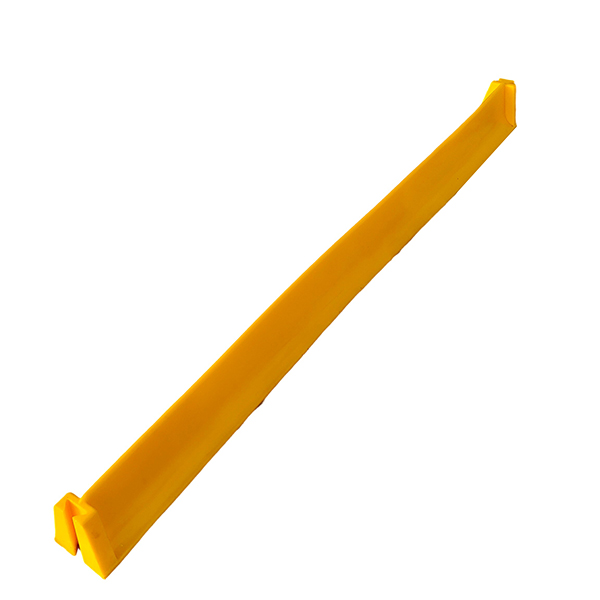
Low-grade PU and rubber wiper blades fail fast in industrial environments. They chip, swell in solvents, leave streaks on glass and coated panels, and force unplanned line stops that raise maintenance costs and waste production hours. Many factories replace blades every 2–3 weeks, tying up labor and slowing output across mining, printing, glass processing, and panel cleaning lines.
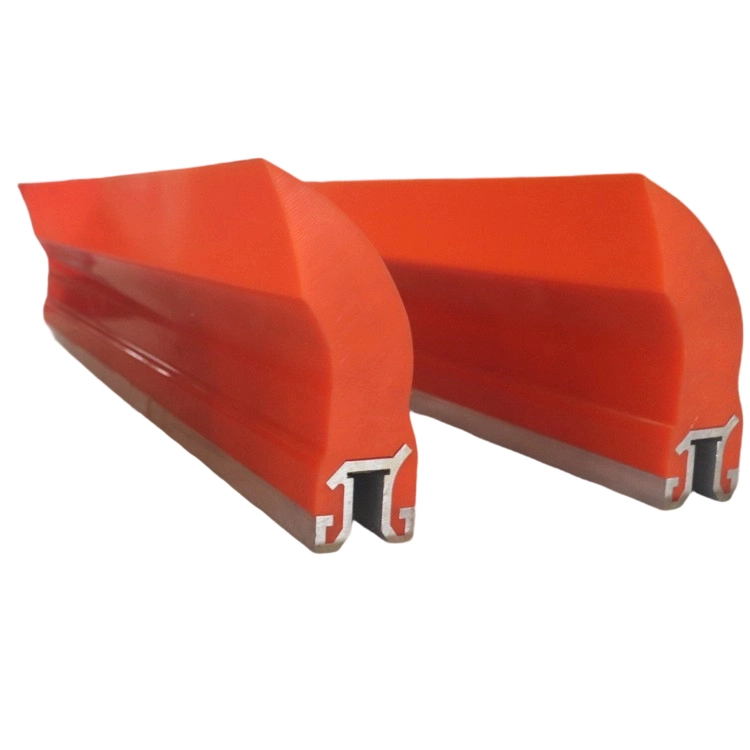
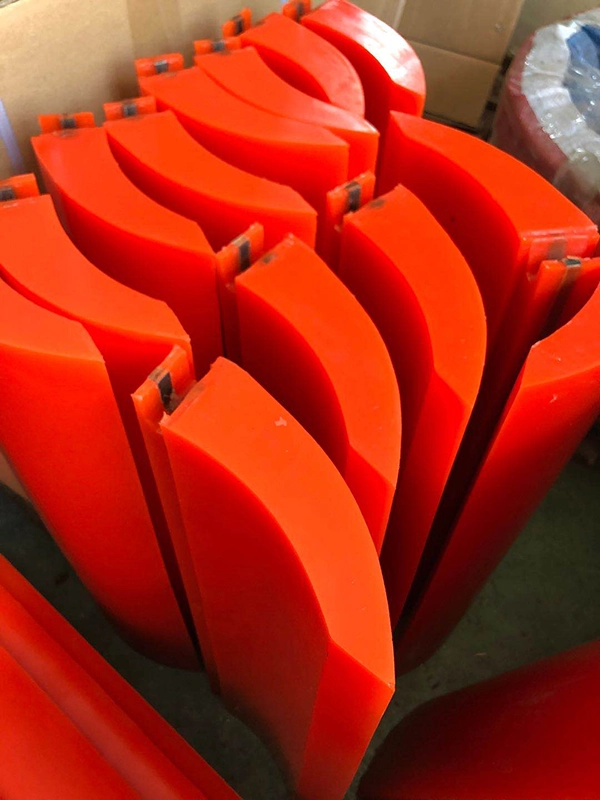
We produce cast polyurethane wiper blades using premium prepolymers and post-cured at 110°C for 12-16 hours. In our lab tests, our blades last 5–7x longer than standard rubber, maintain shape under dynamic load, and resist oil and mild solvents. As a 20+ year manufacturer, we deliver consistent, application-tailored parts that reduce downtime and extend service intervals.
Customization Options:
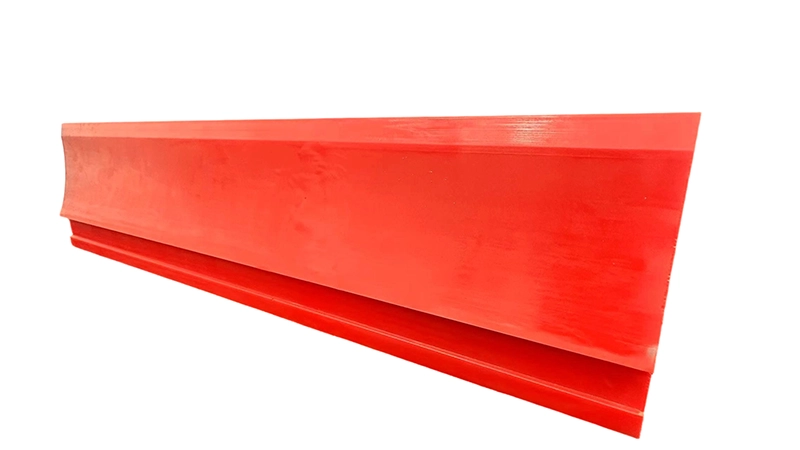
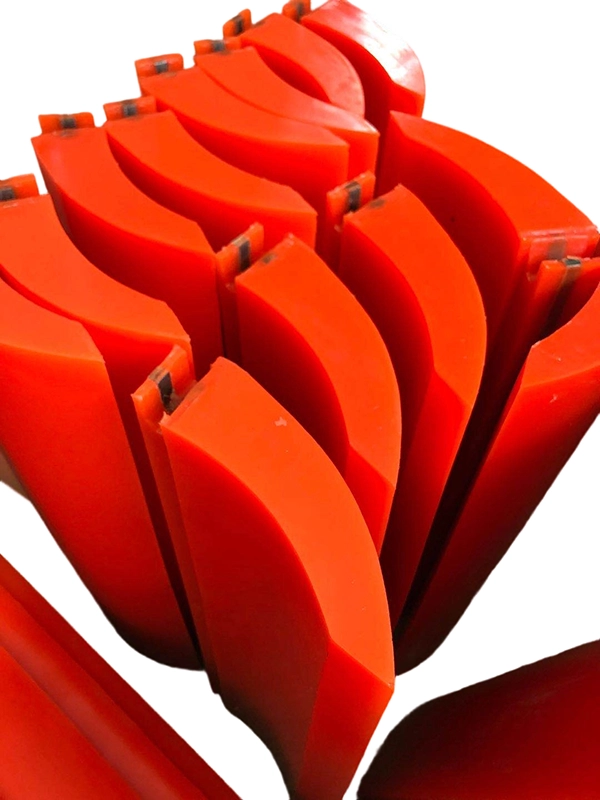
Our cast PU formulation lets us tune hardness, substrate and profile to match wiping pressure, chemical exposure and surface shape
Parameter
Options
Application & Industry
Hardness
60 Shore A to 75 Shore D
Precision squeegees to heavy mining scrapers
Insert / Backing
Steel, Aluminum, Plastic
Metal-bonded wipers for high-pressure washdown
Material Type
Polyether / Polyester /TDI / MDI
Moist environments, oil-lubricated equipment
Edge Geometry
Beveled, Square, Rounded, Double-lip
Slurry handling, Ink scraping, Belt cleaning
Profile
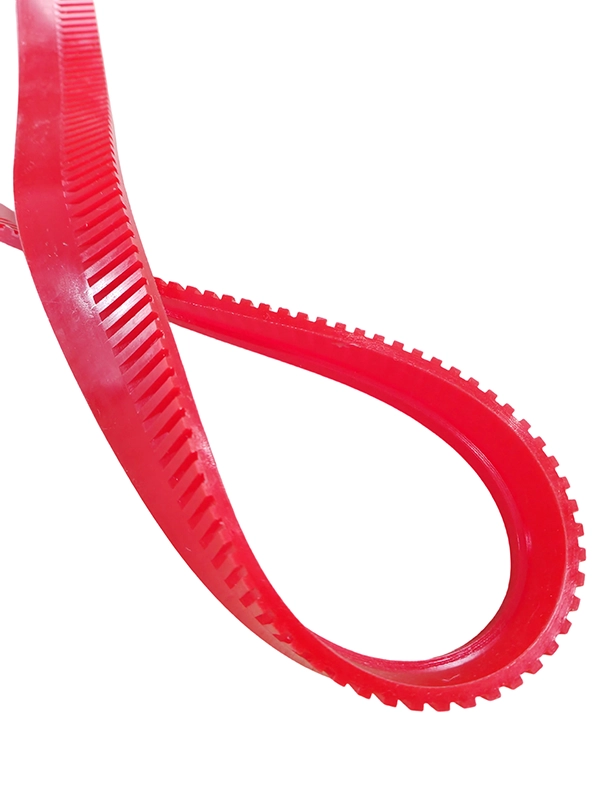
Flat, angled, serrated
Screen print, glass cleaning, material stripping
Industrial Applications: Beyond the Standard
Each application demands consistent edge stability and abrasion resistance to avoid streaking or premature replacement.
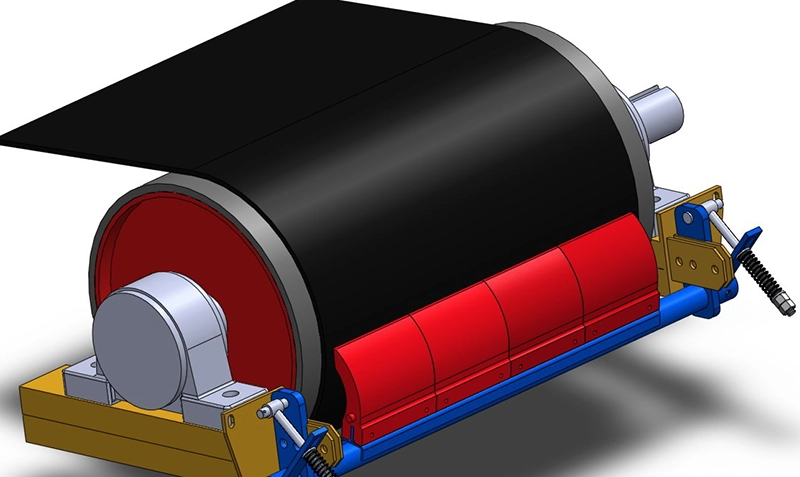
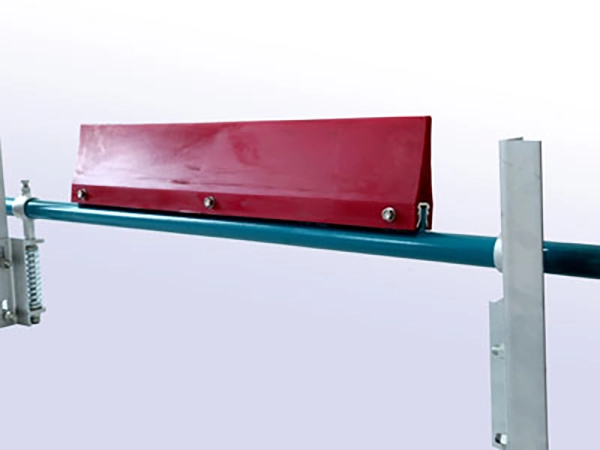
- Conveyor Belt Cleaning: Primary and secondary scrapers for mineral processing.
- Wastewater Treatment: Chemical-resistant wipers for primary clarifiers.
- Food Processing: FDA-compliant PU wipers for oily or acidic environments.
- Road Maintenance: Snow plow edges and street sweeper debris deflectors.
- Printing & Coating: Precision-ground edges for uniform ink and adhesive application.
Advantages of PU Wiper Blade
Performance comes from molecular structure, not marketing — our blades avoid the common failures of cheap alternatives.
- Superior Abrasion Resistance: Maintains edge sharpness longer than any rubber or cheap PU.
- Custom Bonding Strength: Chemical bonding to metal inserts exceeds the material’s tear strength.
- Low Compression Set: Wipers retain pressure against surfaces without permanent deformation.
- Wide Temp Range: Operates consistently from -40°C to +80°C without cracking.
The Science of Durability: How We Control PU Wiper Blade Performance
Every performance metric is locked through raw material formulation, curing process, 100% inspection and lab-verified testing rather than surface treatment or marketing adjustments.
- Raw Material Control
We only use low-free-monomer TDI/MDI prepolymers with NCO content controlled. This ensures consistent crosslink density across every batch.
- Curing Process Standardization
Post-cured at 110°C for 16 hours to lock compression set below 12%.
- 100% Dimensional Inspection
Tolerance controlled .
- 100% Hardness Check
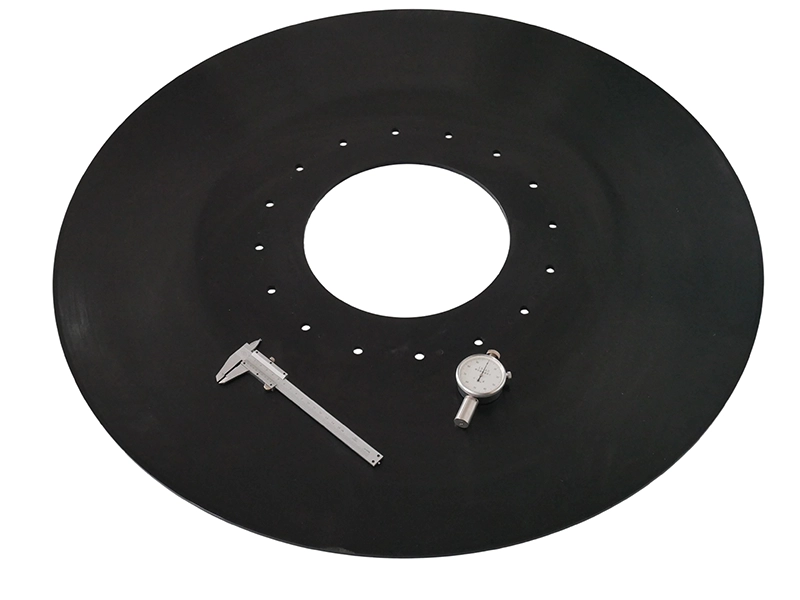
Hardness inspection on all parts
- Abrasion Testing (DIN 53516)
Abrasion loss <60 mm³ per tested cycle, verified on every production lot.
- Batch Traceability
Full production logs maintained for 3 years per ISO 9001:2015.
PU Wiper Blade Performance Cases
Field data from over 120 production lines proves cast polyurethane consistently outlasts commodity rubber and cheaper PU by 5–7 times in real working conditions.
- Client Pain Point: A glass factory replaced rubber wipers every 10 days due to streaking and edge wear.
- Our Intervention: Supplied 90A polyether PU wiper blades with 5mm thickness.
- Quantified Result: Service life extended to 65 days; downtime reduced by 82%
- Our Intervention: Switched to high-crosslink polyester cast PU.
- Quantified Result: No swelling after 90 days; print reject rate fell 3.1%.
How to Select the Right Polyurethane Wiper Blade?
Wrong hardness or material backbone is the top cause of short blade life; following these steps ensures performance matches actual operating conditions.
1. Choose Hardness by Wiping Pressure
Light cleaning: 70A–80A; Heavy scraping: 85A–95A Shore.
Failure Mode Comparison: Cast PU vs. Rubber & cheap PU
Most blade failures stem from material structure, not usage; cheap PU and rubber cannot match the crosslink stability of properly cast polyurethane.
Our Cast Polyurethane Wiper Blades
No edge rounding under 1800h cycles
Compression set <12%
No solvent swelling in mild chemicals
No plasticizer migration or hardening
Tear and chip resistant under dynamic stress
Typical Rubber / cheap PU
Edge wear within 2–3 weeks
Compression set >40% after heat exposure
Swells and deforms in solvents
Becomes brittle or softens over time
Chips easily under repeated impact
Why choose polyurethane over rubber for wiper blades?
Polyurethane is superior to rubber in demanding industrial environments due to its exceptional abrasion resistance, typically outlasting rubber by 3 to 10 times. Unlike rubber, cast polyurethane (PU) offers higher tear strength and better resistance to oils, chemicals, and ozone. This durability reduces maintenance downtime and replacement costs. Additionally, PU maintains its elasticity across a wider range of Shore hardness, allowing for more precise scraping and sealing performance in heavy-duty applications like mining and manufacturing.
How long do polyurethane conveyor wipers last?
The service life of a polyurethane conveyor wiper typically ranges from 2,000 to 4,000 operating hours, depending on the material abrasiveness and belt speed. Factors such as proper tensioning, belt condition, and environmental temperature play a critical role. High-quality cast polyurethane scrapers offer a lower Total Cost of Ownership (TCO) because they require fewer change-outs compared to cheaper rubber or TPU alternatives, ensuring consistent cleaning efficiency and protecting the conveyor belt from premature wear.
What is the best Shore hardness for PU scraper blades?
The optimal hardness depends on your specific application. 85 Shore A to 90 Shore A is the industry standard for most industrial scrapers, providing a balance of rigidity for material removal and flexibility to protect the belt. Softer grades (70A-80A) are ideal for delicate surfaces or liquid removal, while harder grades (95A+ or 60D) are reserved for heavy-duty primary scrapers dealing with caked-on ores or mud. Choosing the correct durometer prevents both bypass leakage and excessive friction heat.
Where to buy custom dimension polyurethane wipers?
The best place to buy custom polyurethane wipers is directly from a cast polyurethane manufacturer rather than a general distributor. Direct manufacturers provide DFM (Design for Manufacturing) feedback, custom mold fabrication, and precise material selection (like NDI or PTMEG systems). Look for suppliers that offer ISO 9001 certification, batch traceability, and low MOQs. A professional factory can typically provide a technical quote and prototype within 7-10 business days, ensuring the parts meet your exact engineering specifications.
Are you a manufacturer?
Yes. We are manufacturer. Welcome to visit our factory.
Can you introduce your customized process ?
Yes. The process includes Share needs → design & quote → prototype (opt) → production → delivery.
How do you control your product quality?
We have 10 inspectors to carry out raw material inspection, process control ,first article inspection and final inspection.
How do you monitor the production process to avoid delayed delivery?
We use the ERP system to execute orders, and can check the order status and expected delivery time at any time.
What is warranty of products?
All of products with 3-6 months guarantee (except very frequently wearing parts).
How do you deal with after sales service?
We will response in 24 hours with solutions such as replacement or reworking.
How do you deal with customers' molds?
We have dedicated personnel to sort out and maintain molds regularly.
What about the lifespan of molds?
20,000 times for compressions molds and 30,000 time for casting molds
How long can you keep customers' molds for free?
Due to the large quantity of molds, we can keep the molds for free for 2 to 3 years even if no order.
If the molds are damaged or reach the lifespan , who will be responsible for it ?
Customers only need to pay mold cost once. We will cover the cost if molds are damaged or reach the lifespan.