




Technical guide for designers, maintenance teams and industrial buyers
1. What is Cast Polyurethane (CPU)?
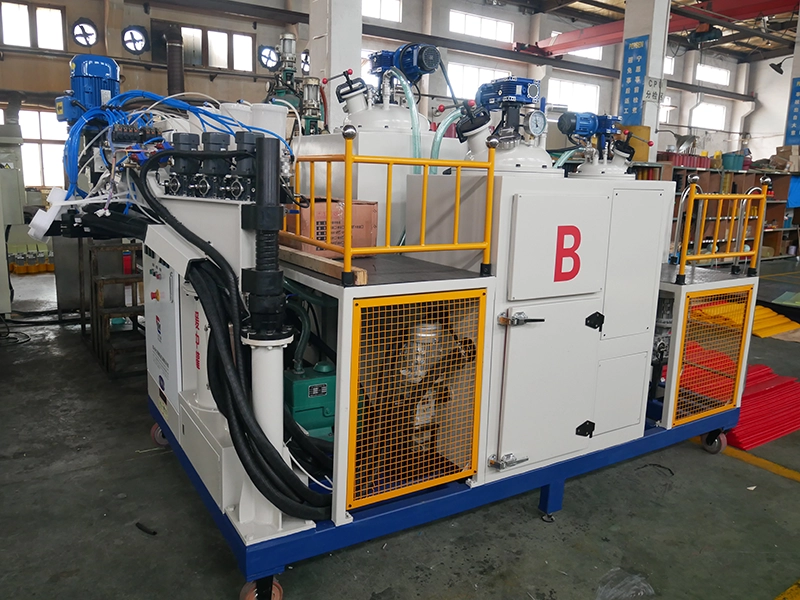
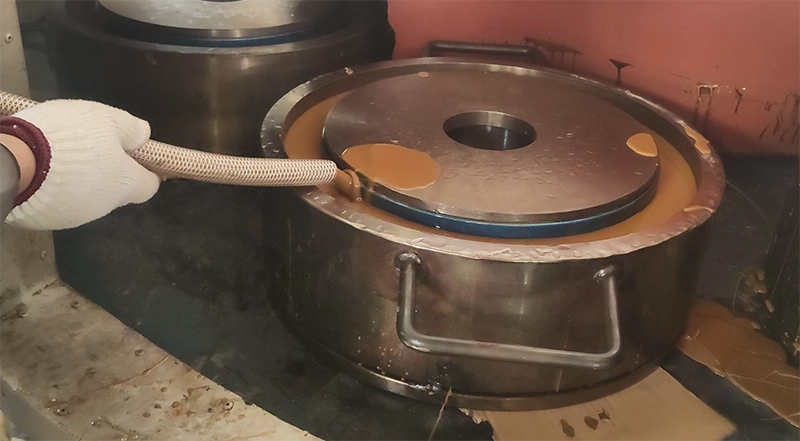
Cast polyurethane is a thermoset elastomer produced by metering and mixing reactive polyurethane components, removing entrained air when required, casting the liquid system into a mold, and completing the specified cure and post-cure cycle. Unlike thermoplastic polyurethane, a cured cast elastomer is cross-linked and is not remelted for reshaping.
Casting supports custom geometry, thick sections, metal bonding and a wide range of formulation choices. Tooling may use silicone, resin, aluminum, steel or another suitable material depending on tolerances, surface finish, quantity and cure conditions. Hardness and properties must be confirmed for the selected polyurethane system rather than assumed from the casting process alone.
2. Core Properties of Cast Polyurethane
The useful properties of cast polyurethane depend on chemistry, formulation, processing and test method. Procurement specifications should connect each property to a measurable operating requirement:
- Wear behavior: Abrasion, erosion, cutting and sliding wear are different mechanisms. Compare candidate grades with representative counterfaces, pressure, speed and debris.
- Formulation options: Hardness, color, conductivity, flame behavior and other features can be adjusted within grade-specific limits. Functional claims require supplier documentation and application testing.
- Environmental compatibility: Water, oils, solvents, UV exposure and temperature can affect polyurethane differently by chemistry and formulation. Confirm continuous and peak conditions, then review the heat-resistant polyurethane selection guide.
- Total cost: Tooling, part life, downtime, repair options, inspection and inventory all affect total cost. Use actual quotations and recorded service data instead of a universal savings percentage.
3. Industrial Applications of Cast Polyurethane
Cast polyurethane is used across many industries because geometry and formulation can be matched to a defined load, wear mode and environment. The examples below identify common components and the application data needed for selection.
3.1 Mining & Quarrying
Mining applications combine abrasion, impact, moisture and heavy loading. Material selection begins with ore type, particle size, impact angle, slurry conditions, temperature and maintenance access.
Wear liners and impact parts: Cast polyurethane can protect chutes, hoppers and selected equipment surfaces where the grade and thickness are matched to the wear mechanism and support structure.
Belt scraper blades: Specify belt speed, material carryback, blade angle, contact pressure, splice type and cleaning conditions. Hydrolysis or chemical resistance must be confirmed for the chosen grade.
Screen panels: Aperture design, hardness, panel support and feed conditions influence screening, wear and blinding. Validate throughput and service life on the actual material stream.
Cyclone and slurry liners: Select chemistry, thickness and attachment from slurry solids, velocity, particle size, temperature and cleaning requirements.
3.2 Marine & Offshore
Marine and offshore components may face water, salt, UV exposure, impact and cyclic loading. Confirm hydrolysis resistance, UV stabilization, pressure and applicable project requirements.
Cable protection: Polyurethane bend restrictors can control cable bend radius and protect against contact wear. Design requires cable diameter, minimum bend radius, loads, depth and installation method.
Dock bumpers and fender pads: Specify impact energy, geometry, mounting, frequency, water exposure and outdoor aging requirements.
Seals and protective components: Chemical compatibility must be checked against the exact fuel, oil, hydraulic fluid or cleaning agent, including concentration and temperature.
Deck pads and mats: Slip behavior depends on surface pattern, contamination, drainage and cleaning. Verify the intended use and any project-specific test requirement.
3.3 Material Handling & Warehousing
Material-handling components operate under repeated load, rolling contact and start-stop cycles. Provide load, speed, duty cycle, floor or belt surface and allowable deformation.
- Conveyor rollers: Define core dimensions, bearings, radial load, speed, traction, runout, surface finish and fluid exposure. Validate heat build-up in continuous service.
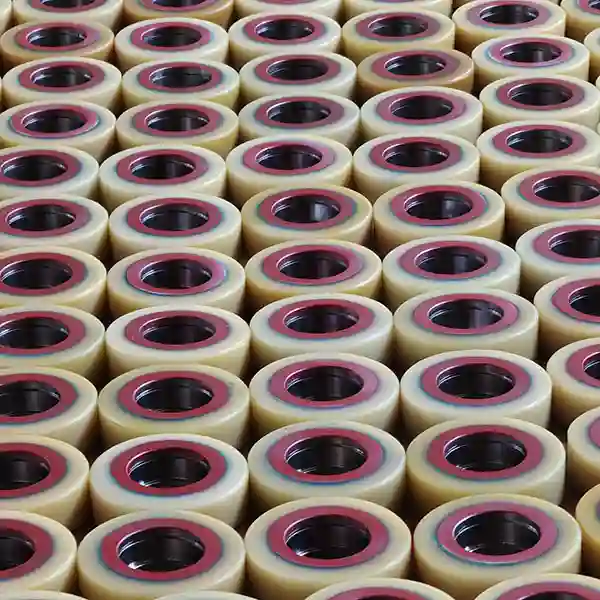
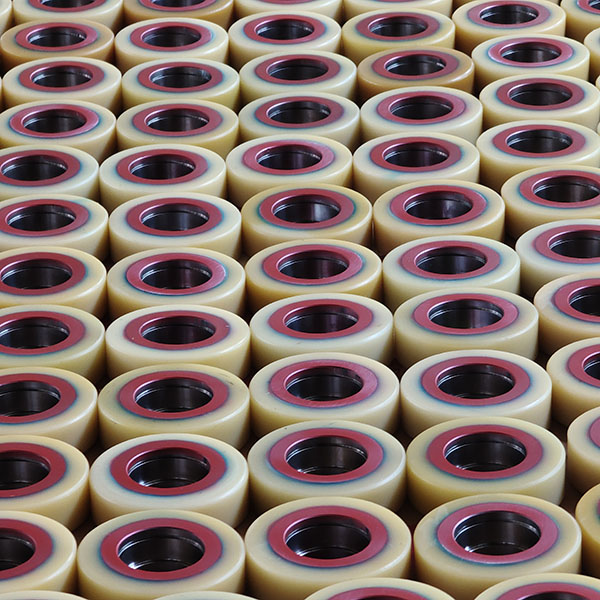
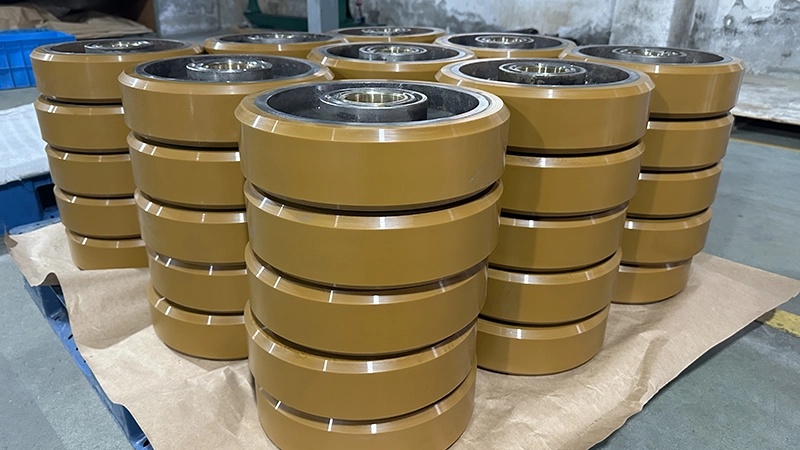
- Forklift and caster wheels: Select diameter, tread thickness, hardness and core design from wheel load, travel speed, floor condition, obstacles and duty cycle.
- Gripper pads: Specify product material, contact area, required friction, compression, marking limits and cleaning agents.
- Conveyor scrapers: Match blade geometry and grade to belt speed, conveyed product, temperature, splices and the required contact pressure.
3.4 Oil & Gas
Oil and gas service may combine pressure, abrasive solids, rapid decompression, hydrocarbons and sour-service exposure. Grade selection requires complete media and operating data.
- Valve and sealing components: Review pressure, extrusion gap, movement, gas composition, decompression rate and chemical compatibility before selecting polyurethane.
- Pipe protectors and handling parts: Define contact pressure, impact, dimensions, handling method and outdoor exposure.
- Pump wear components: Slurry composition, solids, pressure, speed, temperature and inspection interval determine whether a polyurethane grade is suitable.
- Pipeline pig products: Cups, discs and sealing elements are selected from pipe ID, bends, pressure, media, deposits and cleaning objective. See the pipeline pig product range.
3.5 Automation & Robotics
Automation components require repeatable dimensions, controlled friction and compatibility with the handled product. Specify cycle rate, load, precision, cleanliness and failure consequences.
- Robotic gripper pads: Select hardness and geometry from contact pressure, required grip, product fragility, marking limits and cleaning conditions.
- Transmission bushings and bearings: Polyurethane bushings can provide compliant support or isolation. Confirm load, movement, lubrication, temperature and wear surfaces.
- Wheels and rollers: Conductive or static-dissipative behavior requires a documented compound, resistance range, test method and grounding design.
- Guides and wear strips: Define contact material, speed, pressure, friction, debris and dimensional tolerances to manage tracking and wear.
3.6 Paper & Pulp
Paper and pulp equipment combines water, fibers, chemicals, speed and continuous duty. Polyether-based or other hydrolysis-resistant systems may be considered after media and temperature review.
- Press and process rollers: Specify nip load, speed, crown, surface finish, runout, cleaning chemistry and the allowable effect on the paper surface.
- Conveyor scrapers: Select the grade and blade design from moisture, pulp chemistry, temperature, contact pressure and service access.
- Mesh and fabric cleaners: Flexible cleaning elements require controlled contact so debris is removed without damaging the production surface.
- Pump and slurry components: Confirm solids, fiber content, velocity, pressure and chemical exposure; compare polyurethane with metal, rubber and other liner options.
3.7 Construction & Infrastructure
Construction components may face impact, abrasion, weather and concrete-processing chemicals. Structural loads and safety requirements must be handled by the equipment or project design.
- Concrete stamps: Urethane mats can reproduce textures and flex around edges. Pattern, mold, release agent, concrete mix and handling determine finish quality and reuse.
- Wear pads, scrapers and protective edges: Select from contact pressure, abrasive material, impact, mounting and replacement criteria. Do not substitute polyurethane for a structural metal part without engineering review.
- Isolation pads and non-structural bearing elements: Load, deflection, creep, temperature and applicable design standards must be defined by the project engineer.
- Snow-plow and equipment cutting edges: Polyurethane snow-plow blades can be specified for surface protection, noise and wear objectives. Provide blade dimensions, mounting, road surface, speed and temperature.
3.8 Food & Beverage Processing
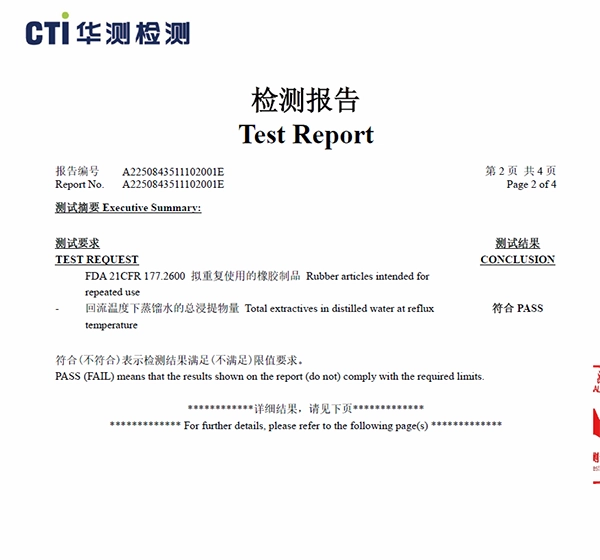
Food and beverage applications require a documented grade, intended-contact review, traceability and cleaning compatibility. Regulatory suitability cannot be inferred from the word polyurethane.
- Rollers, wheels and guides: Confirm the exact food-contact status, contact type, temperature, cleaning chemicals, color requirements and inspection plan.
- Scrapers and handling pads: Use a documented, cleanable formulation and validate wear, particle generation and sanitation procedures for the application.
- Filling-machine seals and components: Review pressure, movement, food or beverage media, cleaning cycle and the specific regulatory documentation required by the customer.
3.9 Agriculture & Farming
Agricultural equipment faces dirt, moisture, fertilizers, UV exposure and impact. Select by the component function and measured operating conditions.
- Wheels and traction components: Define load, soil or floor condition, speed, slip, outdoor exposure and the required interaction with the surface.
- Harvester wear parts: Auger, elevator and guide components require review of crop, debris, speed, abrasion and mounting.
- Irrigation seals and protective parts: Confirm water chemistry, pressure, temperature, UV exposure, fertilizer contact and required service interval.
- Livestock-equipment components: Cleanability, animal contact, chemical exposure and any regulatory requirement must be documented for the selected grade.
4. Cast Polyurethane vs. Alternative Materials
Compare cast polyurethane, TPU, rubber and metal against the same drawing, load case, environment, quantity and validation plan. The table shows selection considerations rather than universal rankings:
| Selection Factor | Cast Polyurethane | TPU | Rubber | Metal |
|---|---|---|---|---|
| Processing | Reactive liquid cast and cured | Melt processed | Molded, extruded or calendared | Machined, formed, cast or fabricated |
| Tooling and Volume | Often suitable for prototypes and custom low-to-medium volumes | Often selected for repeatable thermoplastic production | Varies by process and geometry | Varies by alloy, machining and fabrication |
| Properties | Formulation and cure specific | Grade and process specific | Compound and cure specific | Alloy and heat-treatment specific |
| Environment | Verify fluids, hydrolysis, UV and temperature | Verify grade-specific exposure limits | Verify compound-specific exposure limits | Verify corrosion, coating and temperature |
| Common Fit | Custom geometry, thick sections and bonded components | Repeatable thermoplastic parts | Flexible and damping components | Structural, stiff or high-temperature components |
See the casting vs. injection-molded polyurethane guide for process-selection questions.
5. FAQ: Cast Polyurethane for Industrial Use
How do I specify cast polyurethane for an industrial application? Provide a drawing or sample, dimensions and tolerances, load, speed or cycle rate, hardness or deformation target, continuous and peak temperature, fluids, wear mode, quantity and the current failure evidence.
What is the lead time for custom cast polyurethane parts? Lead time depends on drawing approval, material availability, tooling, sample validation, quantity, finishing and inspection. Confirm the schedule on the quotation for the specific project.
What is the minimum order quantity? MOQ depends on part size, material batch, tooling, inspection and finishing. Ask for a prototype, pilot and production quotation instead of assuming a universal quantity.
Can cast polyurethane replace metal? It may replace metal in selected wear, contact or protective functions, but structural strength, stiffness, creep, temperature and safety factors require engineering review.
Can samples be supplied for testing? Sample availability, cost and lead time depend on tooling and material requirements. Define the test method and acceptance criteria before ordering a trial.
6. How Pepsen Supports Custom Cast Polyurethane Projects
PEPSEN reviews the application data, drawing and failure mode before recommending a cast polyurethane system.
Project definition: Drawing review, tooling, sample planning, inspection requirements and quotation are aligned before production.
Grade selection: Chemistry and hardness are selected from the measured environment, not from an industry label alone.
Validation: For demanding mining, marine, handling or automation applications, define trial conditions, inspection records and acceptance criteria.