




A failed polyurethane-covered conveyor roller does not prove that one molding process is universally unsuitable. Delamination, wear or seizure can involve material grade, core preparation, bonding, geometry, load, heat, contamination and maintenance.
The comparison must also distinguish cast thermoset polyurethane from injection-molded thermoplastic polyurethane (TPU). Cast systems react and cross-link during cure; TPU pellets are melted, injected and solidified. Both processes can produce reliable parts when the material, tooling and design match the application.
Cast Thermoset PU vs. Injection-Molded TPU: Process Comparison
Use the table as a process-selection checklist. Final performance depends on the specified grade, supplier controls and representative testing.
| Factor | Cast Thermoset Polyurethane | Injection-Molded TPU | Selection Question |
|---|---|---|---|
| Material State | Reactive liquid system cross-links during cure | Thermoplastic pellets melt and solidify | Does the design require a thermoset or thermoplastic grade? |
| Tooling and Volume | Often considered for prototypes and custom low-to-medium volumes | Often considered for repeatable higher-volume production | What are the geometry, quantity, tolerance and mold-life targets? |
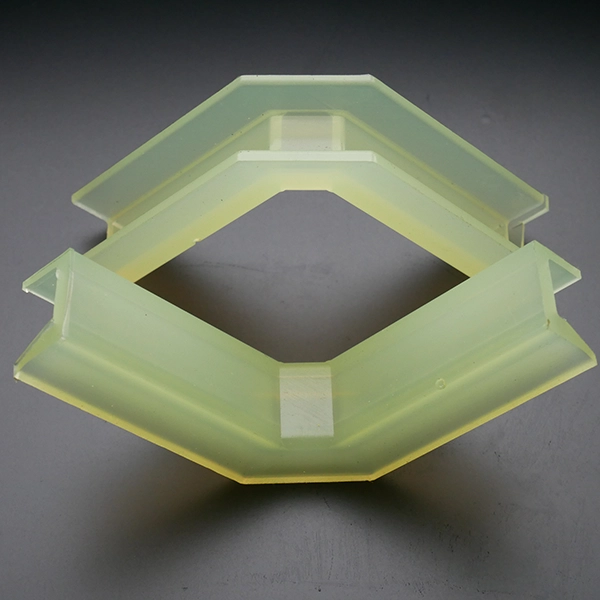
| Geometry | Supports thick sections and cast-on metal cores | Design follows melt flow, cooling and cycle requirements | Which process fits wall thickness, inserts and finishing? |
| Metal Bonding | Cast-on bonding systems can be used | Insert molding, mechanical retention or adhesives may be used | What load and qualification test must the interface pass? |
| Properties | Formulation, ratio, cure and post-cure specific | Grade, drying, melt history and cooling specific | Which test data represent the actual duty cycle? |
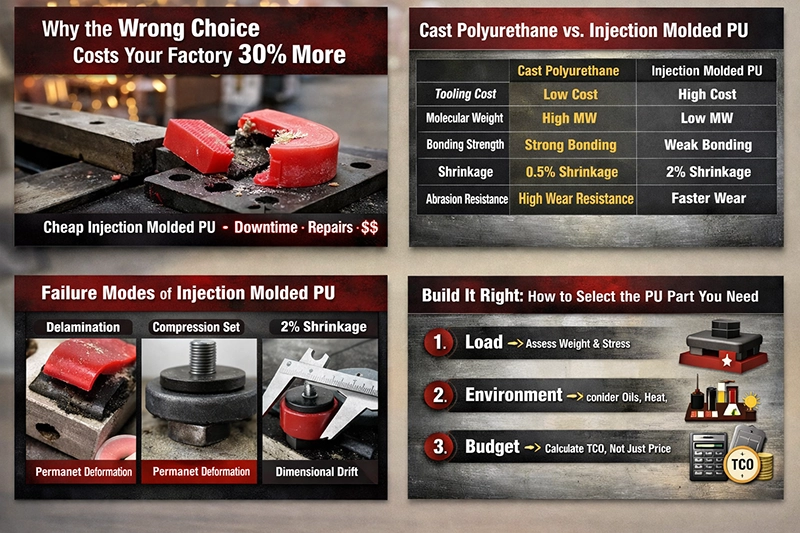
How Cast Thermoset PU Differs from Injection-Molded TPU
Injection molding melts a thermoplastic grade and fills a mold under controlled pressure and speed. Shear, melt temperature, moisture, residence time and cooling must be managed, but the process does not inherently create defective or broken polymer chains.
Casting meters and mixes reactive components, fills the mold at relatively low pressure, then follows a defined cure and post-cure cycle. Material ratio, degassing, mold temperature, cure, moisture control and finishing all affect the result.
Failure Analysis: Separate Material, Bonding and Design Causes
Common polyurethane failures should be classified from evidence rather than assigned to the molding process alone:
1. Bond Failure and Delamination
Bond failure on mining rollers may involve contamination, inadequate surface preparation, an incompatible primer or adhesive, cure deviations, edge stress, corrosion, overload or excessive heat. Teardown inspection and process records are required to identify the cause.
2. Compression Set, Creep and Heat Build-Up
Compression set and creep are grade-, temperature-, time- and load-dependent. Compare candidate thermoset and thermoplastic grades using the same test method, specimen geometry and conditioning, then validate the selected part under its actual duty cycle.
Selection Guide: Three Steps to Choose a Polyurethane Process
This framework connects process selection to the drawing, quantity, duty cycle and validation plan instead of a fixed cost penalty.
Step 1: Define Your Load & Duty Cycle
- Continuous or high-cycle loads: Compare dynamic heat build-up, fatigue, creep, compression set and dimensional stability for the proposed grades.
- Intermittent or lighter loads: Evaluate both processes against geometry, volume, tooling, surface finish and required properties.
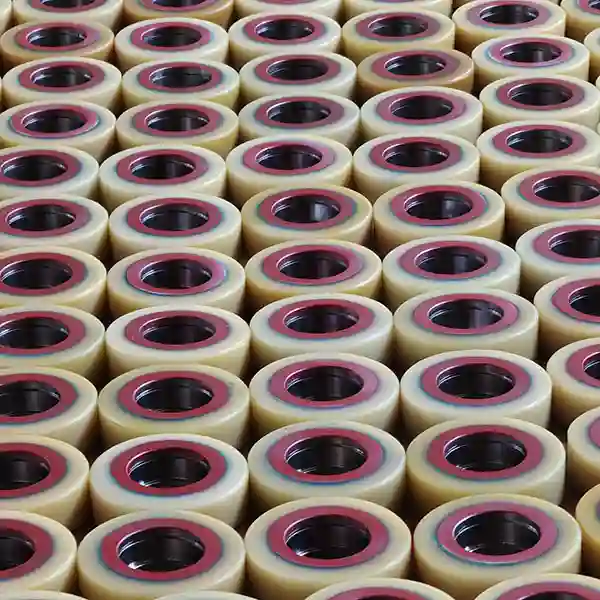
- Rollers, buffers and liners: Bonding, section thickness, finishing and repair requirements may favor casting, but the decision must be application-specific.
Step 2: Map Your Working Environment
- Temperature and outdoor exposure: Confirm the grade-specific continuous and peak temperatures, UV stabilization, water exposure and load.
- Vibration isolation: Specify stiffness, damping, frequency, amplitude, load and allowable compression set.
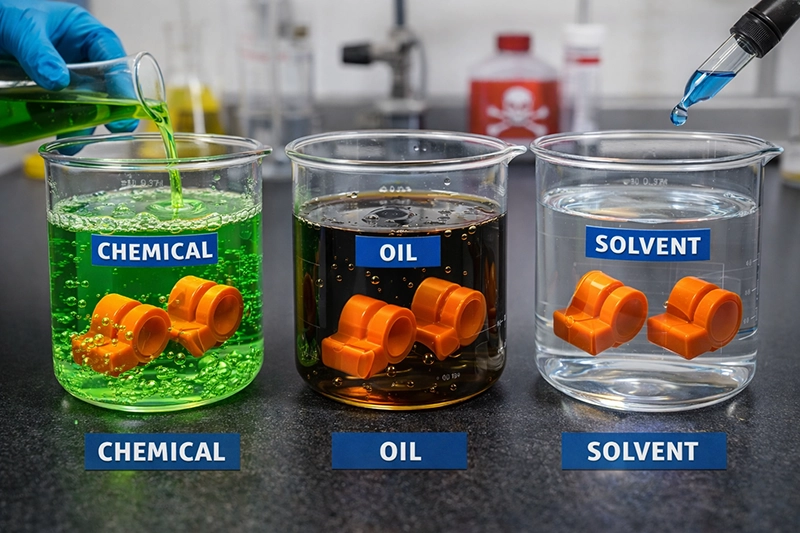
- Chemicals and cleaning agents: Verify the exact medium, concentration, temperature and exposure time for the proposed grade.
Step 3: Calculate Total Cost of Ownership (TCO), Not Upfront Price
- Tooling and unit cost: Obtain quotations for the actual drawing, material, quantity and inspection level.
- Operating cost: Use recorded service interval, downtime, changeover labor, repair and inventory rather than a universal percentage.
- Production volume: Casting may suit custom low-to-medium volumes and thick or bonded sections; injection molding may suit repeatable higher-volume thermoplastic parts. Tooling and part design determine the break-even point.
Industry Applications and Process-Selection Questions
The examples below show where polyurethane components are used and which requirements should drive the cast-versus-injection decision.
Marine & Shipping
- Dock-fender facings and impact pads: define impact energy, mounting, water exposure and inspection criteria
- Mooring-rope guide wheels: specify load, rope contact, speed, salt exposure, dimensions and bond requirements
- Hatch-cover seals: review compression, movement, UV, water and chemical exposure
- Deck and equipment dampers: define load, vibration, frequency, temperature and allowable deflection
- Process choice depends on geometry, quantity, material data and a validation test, not the marine label alone
Material Handling
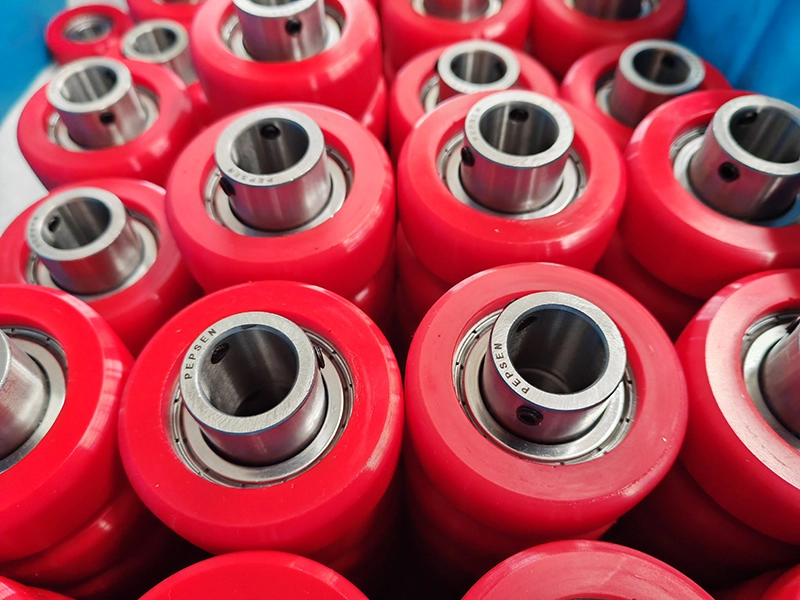
- Forklift and conveyor wheels: specify wheel load, speed, floor, debris, tread geometry and allowable wear
- Pallet rollers and conveyor pulleys: review load transfer, traction, runout, core design and bond method
- AGV drive wheels: define torque, speed, duty cycle, heat build-up, floor and traction requirements
- Pallet-truck load wheels: evaluate compression set, flat spotting, impact and bearing fit
- Polyurethane-coated bearings: specify coating geometry, load, speed, media, concentricity and finish
- Compare candidate grades and processes using the same acceptance criteria and service-trial conditions
Warehousing & Logistics
- Racking buffers: define impact energy, mounting, contact geometry and replacement criteria
- Shuttle-car wheels: specify load, acceleration, speed, duty cycle, floor and dimensional tolerances
- Sorting-line guides: review friction, product contact, wear, debris and hardness tolerance
- Lift-platform pads: define load, slip resistance, damping, oil exposure and inspection method
- Urethane rollers for omni and mecanum wheels: specify roller geometry, grip, load, speed and marking requirements
- Select the process from volume, geometry, repair strategy and tested performance rather than an assumed savings figure
Industrial Automation
- Robot gripper pads and tooling: define contact pressure, grip, marking, cleanliness and cycle rate
- Guide-rail stop buffers: specify impact energy, compression, rebound and temperature
- Vibration-isolation pads: define frequency, load, stiffness, damping and allowable creep
- Fixture liners: put dimensions, tolerances, surface finish and inspection method on the drawing
- Validate dimensional stability and wear under representative cycles before production release
Mining & Quarrying
- Vibrating-screen buffers: review frequency, amplitude, impact, temperature and mounting
- Crusher liners and wear bars: define rock or ore, particle size, angle, speed and replacement criteria
- Flotation and slurry components: confirm media, solids, velocity, chemistry, temperature and tear requirements
- Underground conveyor rollers: specify load, speed, abrasive contact, moisture and core bonding
- Compare service trials with recorded conditions; do not generalize one site result to every quarry
Oil & Gas
- Oilfield seals and pump components: require media, pressure, movement, temperature and decompression data
- Well-control equipment is safety-critical and must follow the applicable engineering, qualification and regulatory requirements
- Pipeline pig cups: define pipe ID, bends, pressure, media, deposits, travel distance and acceptance criteria
- Offshore mounts and pads: review load, vibration, saltwater, UV, temperature and mounting
- Select and qualify the complete part; do not infer pipeline performance from the molding process alone
Read the cast polyurethane properties, process and uses guide for additional specification details.
FAQ
These answers clarify common process-selection questions for industrial buyers and engineers.
Q: What’s the lead time difference for custom cast vs injection PU parts?
A: Lead time depends on tooling, material availability, quantity, sample approval, finishing and inspection. Compare project-specific quotations and schedules.
Q: Which is better for custom PU hardness for industrial wear parts?
A: Neither process is universally more precise in hardness. Specify the material grade, hardness scale, tolerance, conditioning and test method, then review supplier capability.
Q: What’s the molding cost difference for small batch custom PU parts?
A: Tooling cost depends on geometry, mold material, cavities, tolerances, volume and process. Obtain quotations for the same drawing and quantity.
Q: Which delivers better vibration isolation efficiency for heavy machinery?
A: Damping depends on the complete formulation, hardness, geometry, frequency, temperature and preload. Compare dynamic-property data or test representative parts.
Q: Should I use cast or injection molded PU for conveyor roller coating?
A: Cast thermoset polyurethane is often used for thick coverings and bonded metal cores, but injection or other processes may fit some designs. Review bonding, volume, finish, tolerances and service conditions.
Q: How does TCO compare between cast and injection molded PU?
A: Build TCO from tooling, unit cost, recorded service interval, downtime, labor, repair, scrap and inventory. There is no universal cost or life multiplier.
Q: Can injection molded PU match cast PU’s chemical resistance?
A: Chemical resistance is material-specific. Compare the exact thermoset and TPU grades at the actual concentration, temperature and exposure time.