



How to Choose Between Polyether and Polyester Polyurethane for Custom Industrial Parts
When buyers choose polyurethane for custom industrial parts, the real risk is usually not the drawing. It is the material system.
A part can match the required size and hardness and still fail too early if the polyurethane type does not fit the working condition. In actual projects, the first decision is often simple:
- choose polyether polyurethane when the part will face water, humidity, washdown, or outdoor exposure
- choose polyester polyurethane when the part will face dry abrasion, oil contact, or heavier mechanical wear
That is the starting point. The right choice depends on what will damage the part first during service, not on which material sounds better in general.
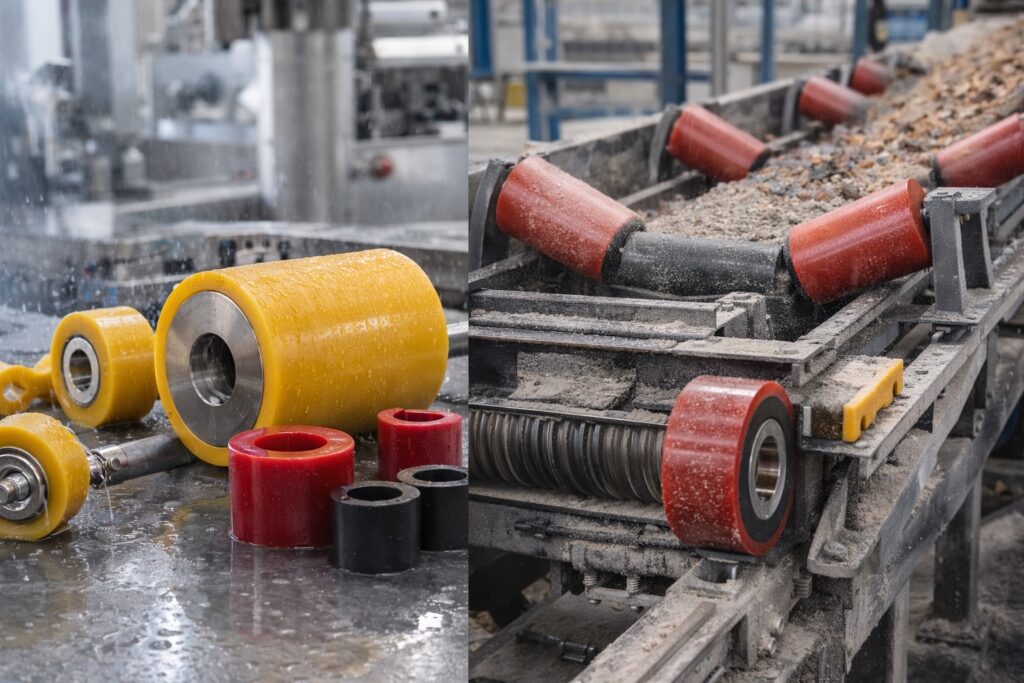
For buyers sourcing custom cast polyurethane parts such as bushings, rollers, wheels, linings, pads, and wear components, this decision affects service life, replacement frequency, and total operating cost.
Start With the Failure Risk, Not the Material Name
Many buyers begin by comparing hardness, color, or price. Those factors matter, but they do not tell you how the part will age in real service.
A better question is:
What is the main reason this part is likely to fail?
Usually, it is one of these:
- water or humidity
- hydrolysis-related aging
- dry abrasion
- oil contact
- repeated load and wear
- outdoor exposure
- heat combined with mechanical stress
Once that failure risk is clear, material selection becomes much easier.
Quick Selection Rule
Use this rule first:
Choose polyether polyurethane when:
- the part works in wet or humid conditions
- the part is used outdoors
- the application includes washdown or frequent cleaning
- long-term hydrolysis resistance matters
- the part sees repeated moisture exposure
Choose polyester polyurethane when:
- the part works in a relatively dry environment
- abrasion resistance is a main priority
- the part sees oil or grease contact
- the application involves higher mechanical wear
- the part must handle stronger dry-service stress
This is not a universal rule for every project, but it is the most practical starting point for industrial buyers.
Why the Difference Matters
Two polyurethane parts can look almost the same. They may even have the same hardness. That does not mean they will perform the same way.
The difference between polyether and polyester polyurethane shows up in service:
- one may last longer in wet conditions
- one may hold up better under dry abrasive wear
- one may be more suitable for outdoor exposure
- one may resist oil and mechanical stress more effectively in certain applications
That is why buyers should not approve material based only on hardness or appearance.
Side-by-Side Comparison
| Item | Polyether Polyurethane | Polyester Polyurethane |
|---|---|---|
| Wet environment suitability | Better | Lower |
| Hydrolysis resistance | Better | Lower |
| Outdoor moisture exposure | Better | Lower |
| Abrasion resistance | Good | Often better |
| Oil resistance | Good | Often better |
| Mechanical strength | Good | Often higher |
| Dry wear applications | Good | Often preferred |
| Humid service life | Better | More caution needed |
| Typical selection direction | Wet, humid, outdoor | Dry, abrasive, oil-contact |
When Polyether Polyurethane Is the Better Choice
Polyether polyurethane is usually the safer option when moisture is part of the real operating condition.
That includes:
- parts used in humid factories
- components exposed to washdown
- outdoor wheels or supports
- wet-process equipment
- parts exposed to condensation or repeated wet-dry cycles
In these cases, buyers are not only choosing a material. They are trying to avoid early aging caused by moisture-related conditions.
Typical parts that often use polyether
- custom polyurethane bushings in humid service
- polyurethane rollers in wet processing lines
- wheels used outdoors
- pads and buffers exposed to cleaning or weather
- cast polyurethane parts used near water or slurry splash zones
If a part will live in a wet environment for a long time, polyether is often the better place to start.
When Polyester Polyurethane Is the Better Choice
Polyester polyurethane is often selected when the main issue is wear, not moisture.
That usually includes:
- dry conveying systems
- abrasive contact surfaces
- rollers under stronger mechanical wear
- wear pads and strips
- parts exposed to oils in controlled indoor environments
In these cases, buyers usually want stronger abrasion performance and solid mechanical behavior under repeated contact stress.
Typical parts that often use polyester
- industrial rollers
- heavy-duty wheels
- scrapers
- wear strips
- dry-service linings
- pads and blocks under repeated load
If the application is dry, abrasive, and wear-driven, polyester is often the stronger option.
What Happens When Buyers Choose the Wrong System
This is where many projects lose money.
The part may pass incoming inspection. It may fit the assembly. It may even run well at first. But if the material system is wrong, the real problem shows up later.
Common results of a wrong material choice
- shorter service life
- faster aging in humid conditions
- more frequent replacement
- unstable performance over time
- unnecessary maintenance downtime
- repeated redesign or reordering
That is why material choice should be based on service condition, not only on hardness or price.
How to Choose for Different Custom Parts
1. Custom Polyurethane Bushings
Bushings usually work under load, movement, and vibration. Buyers often focus on dimensions and hardness first, but the operating environment matters just as much.
Check these points first
- static and dynamic load
- indoor or outdoor use
- water or humidity exposure
- oil or grease contact
- compression and rebound requirements
Practical selection
If the bushing works in wet, humid, or outdoor conditions, start with polyether polyurethane.
If it works in a drier environment where wear and mechanical load are the bigger concerns, polyester polyurethane may be the better fit.
2. Custom Polyurethane Rollers
Rollers fail for different reasons depending on the line.
Some fail because of moisture and cleaning. Others fail because of abrasion, pressure, or oil contact. Buyers should decide based on line conditions, not only on roller hardness.
Check these points first
- line speed
- load per roller
- wet or dry operation
- contact material
- oil, solvent, or chemical exposure
- temperature
- abrasion level
Practical selection
For wet processing lines, humid plants, or washdown conditions, polyether is often safer.
For dry abrasive service and stronger mechanical wear, polyester is often preferred.
3. Polyurethane Wheels
For wheels, service condition changes everything. A wheel used outdoors or in wet service should not be selected the same way as one used indoors on a dry industrial floor.
Check these points first
- load per wheel
- travel speed
- indoor or outdoor use
- floor condition
- oil, water, or cleaning exposure
- operating temperature
Practical selection
For outdoor or wet-contact applications, polyether often gives better long-term stability.
For indoor dry wear applications, polyester is often a strong choice.
4. Polyurethane Linings and Wear Parts
Linings, wear pads, scrapers, and similar parts usually face either wet service or dry abrasive service. That makes the choice more direct.
Check these points first
- slurry or dry bulk contact
- abrasion intensity
- splash or immersion conditions
- chemical or oil exposure
- replacement interval expectations
Practical selection
For wet service and hydrolysis-related risk, choose polyether first.
For dry abrasive wear, polyester is often the better direction.
What Buyers Often Get Wrong
Choosing by hardness alone
Hardness is important, but it does not tell the whole story. Two parts with the same hardness can behave very differently in wet, abrasive, or oily service.
Copying an old part without checking why it failed
A sample or old drawing is useful, but it does not prove the original material was right. Many buyers reorder a part that already had a material mismatch.
Ignoring humidity because the part is not submerged
A part does not need to sit in water to have moisture-related problems. Humid air, repeated cleaning, condensation, and outdoor exposure all matter.
Focusing too much on initial price
A cheaper material is not cheaper if the part needs to be replaced more often.
Sending too little information for quotation
If the supplier only receives size and hardness, the quote may be technically incomplete. Material recommendation depends on application details.
What Buyers Should Send Before Asking for a Recommendation
If you want a more accurate recommendation between polyether and polyester polyurethane, send more than a drawing.
At minimum, send:
- part drawing or sample
- dimensions and tolerances
- target hardness
- load information
- movement type
- service temperature
- indoor or outdoor use
- water, humidity, slurry, oil, or chemical exposure
- abrasion condition
- metal bonding or insert details
- expected order quantity
- photos of the actual application if available
The more accurate the input, the more accurate the material recommendation.
A Simple Way to Make the Decision
If you need a fast first judgment, use this:
Start with polyether polyurethane if:
- the part will face water
- humidity is high
- the application is outdoors
- cleaning and washdown are routine
- hydrolysis resistance is a concern
Start with polyester polyurethane if:
- the application is mostly dry
- abrasive wear is the main problem
- oil contact is involved
- the part sees repeated mechanical wear
- stronger dry-service performance is the priority
Then confirm the final choice based on actual load, speed, temperature, and media exposure.For custom industrial polyurethane parts, the better material is the one that matches the real failure risk.
If moisture, humidity, washdown, or outdoor service is the main concern, polyether polyurethane is often the better direction. If dry abrasion, oil contact, and stronger mechanical wear are the main concerns, polyester polyurethane is often preferred.
That decision affects more than material cost. It affects service life, downtime, and replacement frequency.
For buyers ordering custom cast polyurethane parts, it is better to confirm the material system before production than to correct the problem after installation.
FAQ
Which is better for wet environments, polyether or polyester polyurethane?
Polyether polyurethane is usually the better choice for wet or humid service because it generally offers better hydrolysis resistance and better long-term performance under moisture exposure.
Which is better for dry abrasive applications?
Polyester polyurethane is often preferred for dry abrasive service where wear resistance and mechanical strength are the main priorities.
Is polyether polyurethane better for outdoor use?
In many industrial applications, yes. If the part will face rain, humidity, or repeated outdoor moisture exposure, polyether is often the safer starting point.
Is polyester polyurethane better for rollers and wheels?
It often is in dry industrial environments where abrasion and mechanical wear are the main concerns. The final choice still depends on the actual line condition and exposure.
Can two polyurethane parts with the same hardness perform differently?
Yes. Hardness alone does not determine service life. Moisture, abrasion, oil exposure, and temperature can all affect how the material performs.
What should I send to get an accurate recommendation?
Send the drawing, dimensions, hardness target, working load, temperature range, service environment, and any exposure to water, oil, slurry, or chemicals.
Is the cheaper polyurethane option always the better buying decision?
No. If the material is not matched to the application, shorter service life and more replacements can increase total cost.
What is the biggest mistake buyers make when choosing polyurethane material?
A common mistake is choosing by hardness or price alone without checking what will actually damage the part first during service.
Need custom polyurethane parts?
Send your drawing, dimensions, hardness, load, and service condition to get a more accurate material recommendation and factory quotation.