




In material handling systems, roller failures rarely happen at a convenient time. In high-speed logistics operations running around the clock, one failed component can create a chain reaction across an entire line.
Repeated polyurethane delamination on a sorting conveyor is a symptom, not a complete diagnosis. The underlying cause may involve heat build-up, bond preparation, contamination, geometry, overload or a combination of factors.
Instead of supplying another replacement roller, we began with a failure analysis.
The goal was simple: identify why the rollers were failing and determine whether the issue came from material selection, bonding methods, or manufacturing processes.
The following workflow explains how to diagnose the failure, redesign the roller and define a validation plan without assuming that one material change will solve every application.
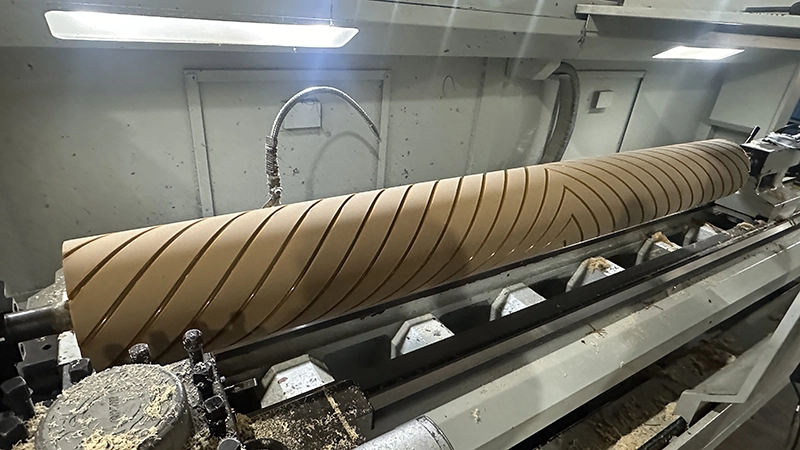
Define the Failure Problem
Document the actual line speed, load, duty cycle, start-stop pattern, ambient conditions and roller temperature before selecting a replacement.
Record the conveyor speed at normal operation and peak throughput; do not rely only on the equipment nameplate.
Record the typical service interval and the failure location on each returned roller.
The most common issue was polyurethane delamination — the polyurethane layer separating completely from the steel core.
For the maintenance department, the roller itself was only part of the cost.
The bigger impact included:
- unexpected line stoppages
- emergency maintenance work
- spare part inventory pressure
- reduced throughput
- labor and downtime costs
A useful teardown inspection compares several failed rollers and documents where separation began, the condition of the bond line and any signs of heat, contamination or overload.
Failure Analysis
Two areas commonly require close inspection.
Internal Heat Build-Up
Identify the existing polyurethane chemistry, hardness and cure history when records are available.
Under continuous loading at high speed, repeated compression can generate internal heat through hysteresis.
If heat is not dissipated, it can accelerate changes in the polyurethane and bond system.
Temperature evidence must be confirmed with operating measurements and bond-line inspection rather than inferred from delamination alone.
For applications with continuous cycling, hysteresis becomes more important than many buyers realize.
A material that performs well under static conditions can behave very differently under dynamic loading.
Poor Steel Surface Preparation
After the remaining polyurethane is removed, inspect the full metal bonding surface.
Look for polished areas, corrosion, residual adhesive, oil or inconsistent blasting.
Record the surface-preparation method and profile using the applicable bonding-agent and process requirements.
A uniform, clean profile supports repeatable bonding.
Insufficient surface preparation can reduce mechanical anchoring and leave the bond vulnerable to contamination.
Bond durability depends on the complete preparation, primer, adhesive, casting and cure process.
Corrective Redesign Process
A corrective design should address the documented failure mode, not simply reproduce the previous roller with a different hardness.
Surface Preparation
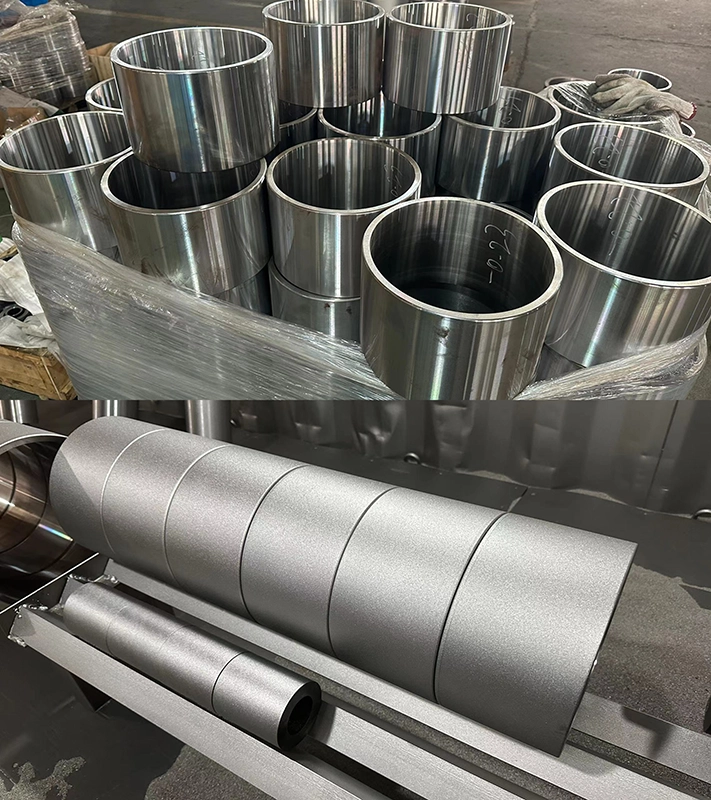
Remove the failed covering and prepare the metal core using a controlled cleaning and blasting process compatible with the selected bonding system.
Specify and verify the required surface profile according to the bonding-agent supplier’s process instructions.
A controlled profile increases usable contact area and supports consistent adhesive coverage.
Immediately after blasting, bonding agents were applied under controlled conditions to avoid contamination or surface oxidation.
Polyurethane Material Selection
Select the polyurethane system from the measured load, speed, heat build-up, traction, abrasion, chemical exposure and environmental conditions.
Choose hardness from the required deformation, contact pressure and grip; hardness alone does not predict dynamic performance.
For high-cycle rollers, material screening should include hysteresis, fatigue, tear behavior and bond compatibility.
Candidate formulations should be validated under representative dynamic loading before release.
Increasing hardness alone was not the objective.
The goal was to improve long-term stability while maintaining traction and wear performance.
Precision Grinding
At higher conveyor speeds, small dimensional errors can create vibration and uneven loading.
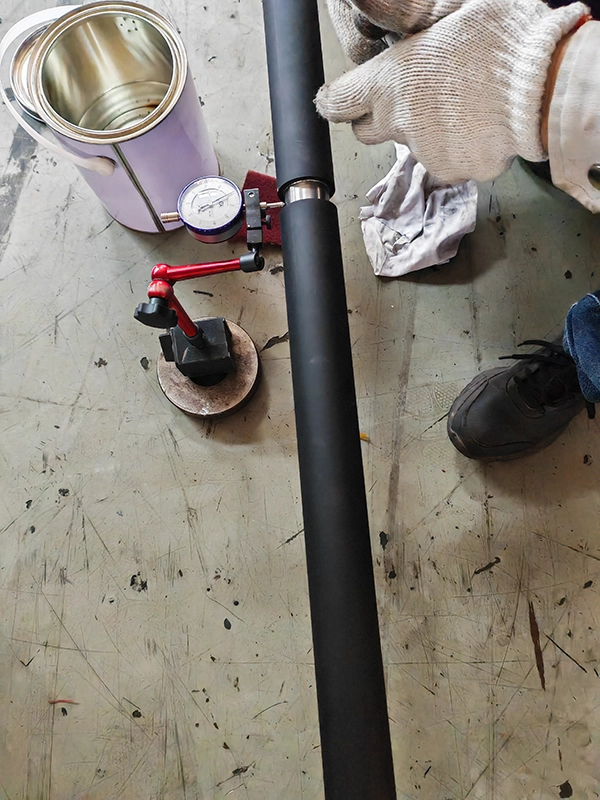
Excessive runout can increase vibration and accelerate wear in bearings, surfaces and bond interfaces.
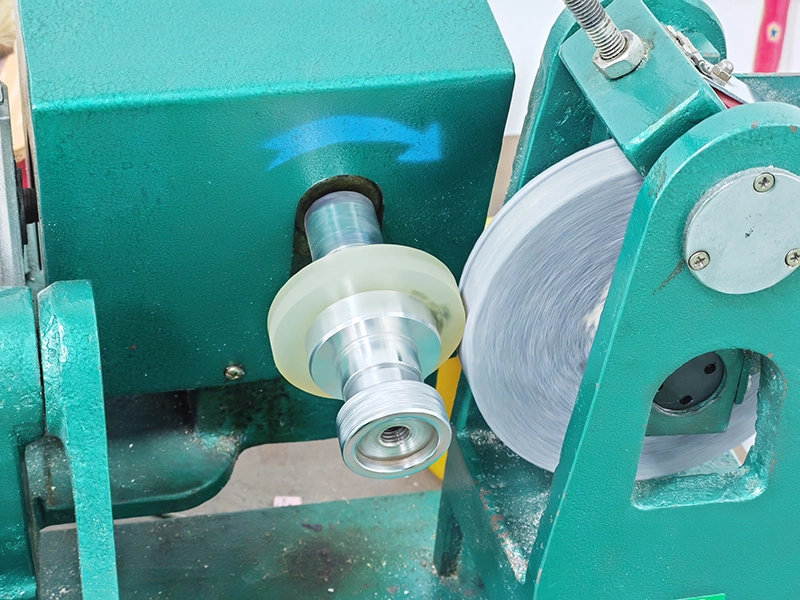
Where the drawing requires it, finish the cured roller by controlled cylindrical grinding.
Define total indicated runout, outside diameter, cylindricity and surface finish on the approved drawing.
Inspect and record the finished dimensions using calibrated equipment.
Dimensional control supports stable tracking and repeatable installation.
Redesign Control Plan
| Control Area | Common Risk | Redesign Requirement |
|---|---|---|
| Polyurethane System | Selected without dynamic-duty data | Match chemistry to load, speed and environment |
| Hardness | Chosen as a stand-alone value | Specify from deformation, grip and contact pressure |
| Bond Preparation | Unverified cleaning or surface profile | Document preparation, primer and cure controls |
| Dimensions | No agreed runout or finish criteria | Define OD, runout and surface finish on the drawing |
| Validation | Visual inspection only | Record dimensions and complete a controlled service trial |
Validation Before Installation
Validate redesigned rollers through documented inspection and a controlled service trial.
During the trial, monitor:
- bond-line condition and signs of edge lifting
- surface wear, cuts and localized heat damage
- roller temperature and vibration at representative loads
- outside diameter, runout and tracking
- service interval and failure mode
Compare the trial results with the defined acceptance criteria before approving a wider rollout.
The objective is not simply a longer calendar life.
The objective is stable operation with fewer unplanned interruptions and a failure mode that can be understood and controlled.
Engineering Takeaways
When polyurethane rollers fail, the material is not always the real problem.
Bond performance depends on several factors working together:
- material selection
- surface preparation
- bonding process
- dimensional accuracy
Changing only the polyurethane often addresses the symptom rather than the cause.
In high-speed applications, small process details tend to determine long-term service life.
Explore PEPSEN polyurethane rollers or send a failed sample and operating data for review.
+
Polyurethane Rollers FAQ
Q1: What is the ideal Shore hardness range for industrial polyurethane rollers?
A: There is no single ideal range. Select hardness from load, contact area, required deformation, traction, speed, floor or belt surface and duty cycle. Ask the supplier to confirm the proposed grade and tolerance on the drawing.
Q2: Polyurethane rollers vs. rubber rollers: Which is better for heavy-duty applications?
A: Neither is universally better. Polyurethane can offer useful abrasion, load and chemical-resistance options, while rubber may be preferred for heat dissipation, flexibility or a particular friction requirement. Compare both materials against the actual load, speed, temperature, media and maintenance target.
Q3: What causes polyurethane to delaminate or peel away from a metal core?
A: Delamination can result from contamination, inadequate surface preparation, an incompatible bonding system, cure deviations, excessive heat build-up, overload, edge stress or corrosion. Confirm the cause through teardown inspection and process records.
Q4: Can you replace or recoat the polyurethane on our existing steel or aluminum cores?
A: Existing metal cores can often be recoated if they pass dimensional, material and damage inspection. The worn covering is removed, the core is prepared and the new polyurethane is bonded and cast to the approved drawing. Cost savings depend on core condition, machining and logistics.
Q5: What is the maximum operating temperature for custom urethane rollers?
A: The allowable temperature depends on polyurethane chemistry, hardness, load, speed, exposure time and surrounding media. Provide continuous and peak temperatures; the supplier should confirm a grade-specific operating window and validation method.
Q6: How do you achieve tight dimensional tolerances on custom molded polyurethane rollers?
A: Casting is followed by machining or cylindrical grinding when the drawing requires tighter outside-diameter, concentricity, cylindricity, surface-finish or runout controls. The achievable tolerance depends on roller size, core design, material hardness and inspection method.
Q7: Are polyurethane rollers resistant to industrial chemicals, oils, and moisture?
A: Resistance depends on the polyurethane chemistry and the actual concentration, temperature and exposure time. Ether-based polyurethane is often considered for moisture and hydrolysis resistance, while ester-based grades may offer different abrasion and oil-resistance characteristics. Confirm compatibility with the exact chemical or cleaning agent through supplier data and testing.
Q8: What information do you need to provide an accurate RFQ quote for custom urethane rollers?
A: To provide an accurate engineering quote and material recommendation, we require:
- A technical 2D/3D drawing showing all dimensions and tolerances.
- The desired Shore Hardness (or details about the load/grip requirements).
- Core material specification (e.g., Carbon Steel, Aluminum, Stainless Steel).
- Operational environment details (operating speed, load capacity, temperature, and chemical exposure).
Request Polyurethane Rollers Quote
For a polyurethane roller quotation, provide a drawing or sample, dimensions and tolerances, core material, required hardness or grip, load, speed, continuous and peak temperature, chemical exposure, quantity and the observed failure mode.
PEPSEN can review the operating data and recommend a material, bonding process, finishing method and inspection plan for the application.