




Unter Materialtransport Systemen treten Rollenausfälle selten zu einem günstigen Zeitpunkt auf. In Hochgeschwindigkeits-Logistikbetrieben, die rund um die Uhr laufen, kann ein einziges ausgefallenes Bauteil eine Kettenreaktion in einer ganzen Linie auslösen.
Wiederholte Polyurethan-Delaminationen an einem Sortierförderband sind ein Symptom, keine vollständige Diagnose. Die zugrunde liegende Ursache kann in Wärmeentwicklung, unzureichender Klebevorbereitung, Verunreinigungen, der Geometrie, Überlastung oder einer Kombination dieser Faktoren liegen.
Anstatt eine weitere Ersatzrolle zu liefern, begannen wir mit einer Fehleranalyse.
Das Ziel war einfach: herauszufinden, warum die Walzen ausfielen, und festzustellen, ob das Problem mit der Materialauswahl, den Klebemethoden oder den Herstellungsprozessen zusammenhing.
Der folgende Arbeitsablauf erläutert, wie man den Fehler diagnostiziert, die Walze neu konstruiert und einen Validierungsplan definiert, ohne anzunehmen, dass eine Materialänderung jede Anwendung lösen wird.
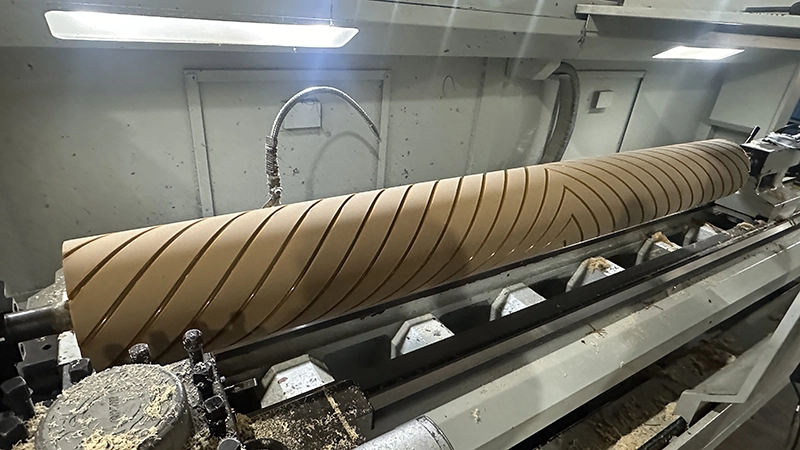
Definiere das Fehlerproblem
Dokumentieren Sie die tatsächliche Bandgeschwindigkeit, die Belastung, den Arbeitszyklus, das Start-Stopp-Muster, die Umgebungsbedingungen und die Walzentemperatur, bevor Sie ein Ersatzteil auswählen.
Erfassen Sie die Förderbandgeschwindigkeit im Normalbetrieb und bei maximalem Durchsatz; verlassen Sie sich nicht nur auf das Typenschild des Geräts.
Notieren Sie das typische Wartungsintervall und die Fehlerstelle an jeder zurückgesendeten Rolle.
Das häufigste Problem war die Delaminierung des Polyurethans - die Polyurethanschicht löste sich vollständig vom Stahlkern.
Für die Wartungsabteilung war die Walze selbst nur ein Teil der Kosten.
Zu den größeren Auswirkungen gehören:
- Unerwartete Linienunterbrechungen
- Notfall-Wartungsarbeiten
- Druck auf den Ersatzteilbestand
- geringerer Durchsatz
- Kosten für Arbeit und Ausfallzeiten
Eine sinnvolle Demontageinspektion vergleicht mehrere defekte Walzen und dokumentiert, wo die Trennung begann, den Zustand der Klebefuge sowie Anzeichen von Hitze, Verunreinigungen oder Überlastung.
Fehleranalyse
Zwei Bereiche erfordern üblicherweise eine genaue Überprüfung.
Interne Wärmeentwicklung
Ermitteln Sie, sofern Aufzeichnungen verfügbar sind, die bestehende Polyurethan-Chemie, Härte und Aushärtungshistorie.
Bei kontinuierlicher Belastung mit hoher Geschwindigkeit kann es durch wiederholte Kompression aufgrund von Hysterese zu innerer Wärme kommen.
Wird die Wärme nicht abgeführt, kann dies zu beschleunigten Veränderungen im Polyurethan und im Bindemittelsystem führen.
Der Nachweis der Temperatur muss durch Betriebsmessungen und die Inspektion der Klebefuge bestätigt werden und darf nicht allein aus der Delamination abgeleitet werden.
Bei Anwendungen mit kontinuierlichen Zyklen ist die Hysterese wichtiger als vielen Käufern bewusst ist.
Ein Material, das sich unter statischen Bedingungen gut verhält, kann sich unter dynamischer Belastung ganz anders verhalten.
Schlechte Vorbereitung der Stahloberfläche
Nachdem die restlichen Polyurethanreste entfernt wurden, ist die gesamte Metallverbindungsfläche zu überprüfen.
Achten Sie auf polierte Stellen, Korrosion, Klebstoffreste, Öl oder ungleichmäßiges Strahlen.
Dokumentieren Sie die Oberflächenvorbereitungsmethode und das Oberflächenprofil unter Verwendung des entsprechenden Bindemittels und der Prozessanforderungen.
Ein gleichmäßiges, sauberes Profil unterstützt wiederholbare Verbindungen.
Eine unzureichende Oberflächenvorbereitung kann die mechanische Verankerung verringern und die Verbindung anfällig für Verunreinigungen machen.
Die Haltbarkeit der Verbindung hängt vom gesamten Vorbereitungs-, Grundierungs-, Klebstoff-, Gieß- und Aushärtungsprozess ab.
Korrektur-Neugestaltungsprozess
Eine Korrekturkonstruktion sollte den dokumentierten Ausfallmechanismus berücksichtigen und nicht einfach die vorherige Walze mit einer anderen Härte nachbilden.
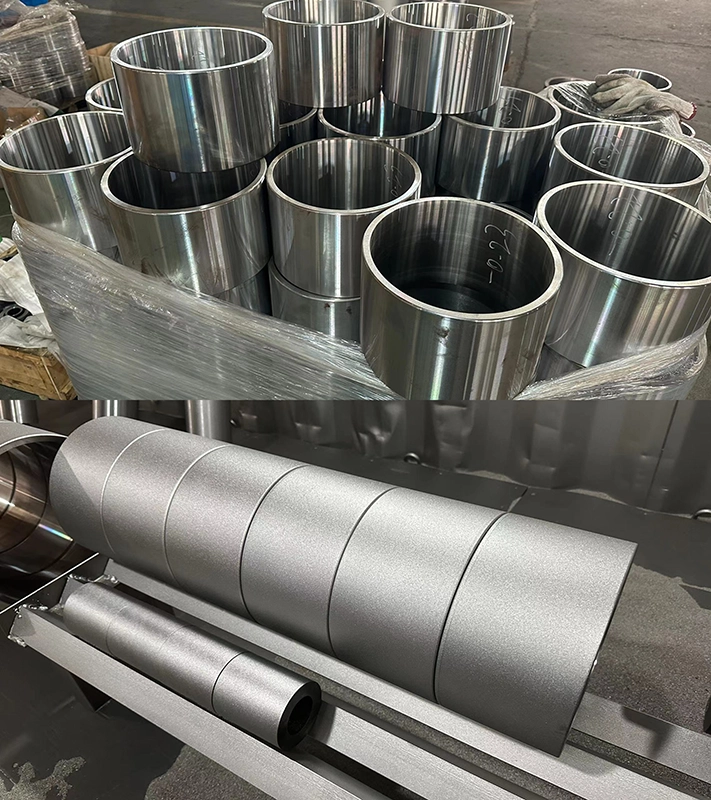
Vorbereitung der Oberfläche
Entfernen Sie die defekte Beschichtung und bereiten Sie den Metallkern mit einem kontrollierten Reinigungs- und Strahlverfahren vor, das mit dem gewählten Verbindungssystem kompatibel ist.
Das erforderliche Oberflächenprofil ist gemäß den Prozessanweisungen des Klebstofflieferanten festzulegen und zu überprüfen.
Ein kontrolliertes Profil vergrößert die nutzbare Kontaktfläche und unterstützt eine gleichmäßige Klebstoffabdeckung.
Unmittelbar nach dem Strahlen wurden unter kontrollierten Bedingungen Bindemittel aufgetragen, um Verunreinigungen oder Oberflächenoxidation zu vermeiden.
Auswahl des Polyurethanmaterials
Wählen Sie das Polyurethansystem anhand der gemessenen Belastung, Geschwindigkeit, Wärmeentwicklung, Traktion, Abriebfestigkeit, chemischen Belastung und Umgebungsbedingungen aus.
Wählen Sie die Härte anhand der erforderlichen Verformung, des Kontaktdrucks und der Griffigkeit; die Härte allein sagt die dynamische Leistung nicht voraus.
Bei der Materialprüfung für hochzyklische Walzen sollten Hysterese, Ermüdung, Reißverhalten und Bindungskompatibilität berücksichtigt werden.
Kandidatenformulierungen sollten vor ihrer Freigabe unter repräsentativer dynamischer Belastung validiert werden.
Die Erhöhung der Härte allein war nicht das Ziel.
Ziel war es, die langfristige Stabilität zu verbessern und gleichzeitig die Traktion und das Verschleißverhalten zu erhalten.
Präzisionsschleifen
Bei höheren Förderbandgeschwindigkeiten können bereits kleine Maßabweichungen Vibrationen und ungleichmäßige Belastung verursachen.
Übermäßiger Rundlauf kann Vibrationen verstärken und den Verschleiß an Lagern, Oberflächen und Verbindungsstellen beschleunigen.
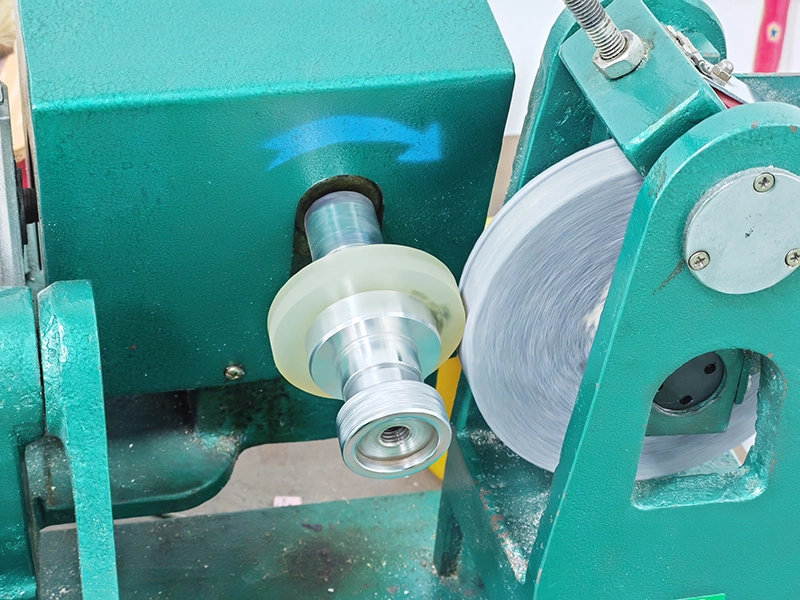
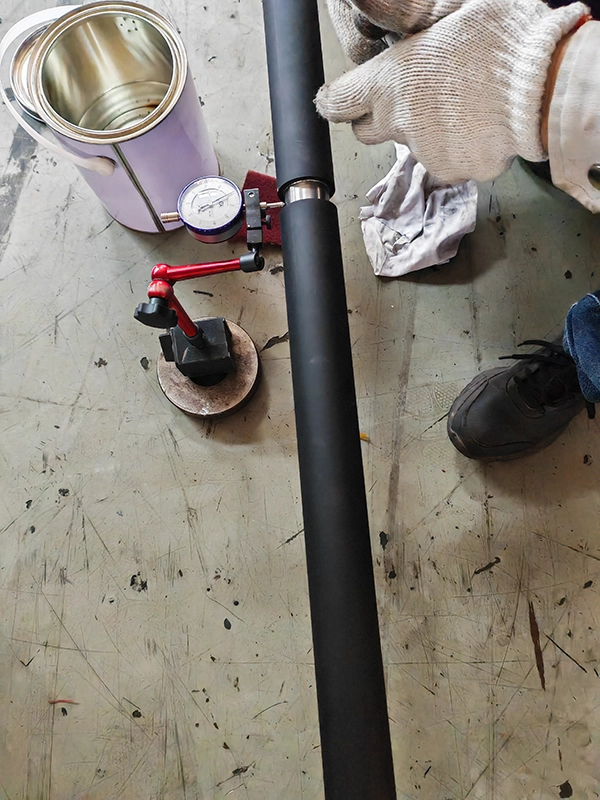
Sofern die Zeichnung es erfordert, wird die ausgehärtete Walze durch kontrolliertes Rundschleifen fertiggestellt.
Definieren Sie den gesamten angezeigten Rundlauf, den Außendurchmesser, die Zylindrizität und die Oberflächenbeschaffenheit in der genehmigten Zeichnung.
Die fertigen Abmessungen werden mithilfe kalibrierter Geräte geprüft und dokumentiert.
Die Maßkontrolle unterstützt eine stabile Nachführung und wiederholbare Installation.
Neugestaltung des Kontrollplans
| Kontrollbereich | Gemeinsames Risiko | Neugestaltungsanforderung |
|---|---|---|
| Polyurethansystem | Ausgewählt ohne dynamische Arbeitszeitdaten | Chemie an Belastung, Geschwindigkeit und Umgebung anpassen |
| Härte | Als eigenständiger Wert ausgewählt | Spezifizieren Sie aus Verformung, Griffigkeit und Kontaktdruck |
| Bondvorbereitung | Nicht verifizierte Reinigung oder Oberflächenprofil | Dokumentenvorbereitung, Grundierung und Aushärtungskontrollen |
| Abmessungen | Keine vereinbarten Auslauf- oder Zielkriterien | Definieren Sie Außendurchmesser, Rundlauf und Oberflächenbeschaffenheit in der Zeichnung. |
| Validierung | Nur Sichtprüfung | Abmessungen erfassen und einen kontrollierten Serviceversuch durchführen |
Validierung vor der Installation
Die neu gestalteten Walzen werden durch eine dokumentierte Inspektion und einen kontrollierten Betriebstest validiert.
Während des Prozesses Folgendes überwachen:
- Zustand der Klebefuge und Anzeichen von Kantenablösung
- Oberflächenverschleiß, Schnitte und lokale Hitzeschäden
- Walzentemperatur und Vibration bei repräsentativen Lasten
- Außendurchmesser, Rundlauf und Spurgenauigkeit
- Wartungsintervall und Ausfallmodus
Vergleichen Sie die Ergebnisse der Testphase mit den festgelegten Akzeptanzkriterien, bevor Sie eine breitere Einführung genehmigen.
Das Ziel ist nicht einfach nur eine längere Lebensdauer.
Ziel ist ein stabiler Betrieb mit weniger ungeplanten Unterbrechungen und einem Ausfallmodus, der verstanden und kontrolliert werden kann.
Wichtigste Erkenntnisse aus dem Ingenieurwesen
Wenn Polyurethanrollen versagen, ist nicht immer das Material das eigentliche Problem.
Die Leistung einer Anleihe hängt vom Zusammenspiel mehrerer Faktoren ab:
- Materialauswahl
- Oberflächenvorbereitung
- Klebeprozess
- Abmessungsgenauigkeit
Der Austausch des Polyurethans ist oft nur eine Symptombekämpfung, nicht aber eine Ursachenbekämpfung.
Bei Hochgeschwindigkeitsanwendungen sind es oft kleine Prozessdetails, die die langfristige Lebensdauer bestimmen.
Entdecken Sie PEPSEN Polyurethanrollen oder senden Sie ein fehlerhaftes Muster und die zugehörigen Betriebsdaten zur Überprüfung ein.
+
Polyurethan-Rollen FAQ
Q1: Was ist der ideale Shore-Härtebereich für industrielle Polyurethanrollen?
A: Es gibt keinen allgemeingültigen idealen Härtebereich. Die Härtewahl hängt von Belastung, Kontaktfläche, erforderlicher Verformung, Zugkraft, Geschwindigkeit, Boden- oder Bandoberfläche und Betriebsdauer ab. Bitten Sie den Lieferanten, die vorgeschlagene Härteklasse und Toleranz in der Zeichnung zu bestätigen.
F2: Polyurethanrollen vs. Gummirollen: Was ist besser für Schwerlastanwendungen?
A: Keines der beiden Materialien ist generell besser. Polyurethan bietet nützliche Eigenschaften hinsichtlich Abrieb-, Belastungs- und Chemikalienbeständigkeit, während Gummi aufgrund seiner Wärmeableitung, Flexibilität oder bestimmter Reibungsanforderungen bevorzugt werden kann. Vergleichen Sie beide Materialien hinsichtlich der tatsächlichen Belastung, Geschwindigkeit, Temperatur, des Mediums und der Wartungsanforderungen.
Frage 3: Was verursacht die Delamination oder das Ablösen von Polyurethan von einem Metallkern?
A: Delamination kann durch Verunreinigungen, unzureichende Oberflächenvorbereitung, ein inkompatibles Bindemittelsystem, Aushärtungsabweichungen, übermäßige Wärmeentwicklung, Überlastung, Kantenspannungen oder Korrosion verursacht werden. Die Ursache ist durch eine Demontageinspektion und die Auswertung der Prozessdokumentation zu ermitteln.
F4: Können Sie das Polyurethan auf unseren vorhandenen Stahl- oder Aluminiumkernen ersetzen oder neu beschichten?
A: Vorhandene Metallkerne können oft neu beschichtet werden, sofern sie die Maß-, Material- und Schadensprüfung bestehen. Die abgenutzte Beschichtung wird entfernt, der Kern vorbereitet und das neue Polyurethan gemäß der genehmigten Zeichnung aufgebracht und vergossen. Die Kostenersparnis hängt vom Zustand des Kerns, der Bearbeitung und der Logistik ab.
F5: Wie hoch ist die maximale Betriebstemperatur für kundenspezifische Urethanrollen?
A: Die zulässige Temperatur hängt von der Polyurethan-Zusammensetzung, der Härte, der Belastung, der Geschwindigkeit, der Einwirkzeit und dem umgebenden Medium ab. Geben Sie die Dauer- und Spitzentemperaturen an; der Lieferant sollte ein sortenspezifisches Betriebsfenster und eine Validierungsmethode bestätigen.
F6: Wie erreichen Sie enge Maßtoleranzen bei kundenspezifisch geformten Polyurethanrollen?
A: Nach dem Gießen erfolgt die spanende Bearbeitung oder das Rundschleifen, wenn die Zeichnung engere Vorgaben hinsichtlich Außendurchmesser, Rundlaufgenauigkeit, Zylindrizität, Oberflächengüte oder Rundlauf erfordert. Die erreichbare Toleranz hängt von der Walzengröße, der Kernkonstruktion, der Materialhärte und dem Prüfverfahren ab.
F7: Sind Polyurethanrollen beständig gegen Industriechemikalien, Öle und Feuchtigkeit?
A: Die Beständigkeit hängt von der chemischen Zusammensetzung des Polyurethans sowie von der tatsächlichen Konzentration, der Temperatur und der Einwirkungszeit ab. Polyurethan auf Etherbasis Es wird häufig auf Feuchtigkeits- und Hydrolysebeständigkeit geprüft, während Ester-basierte Sorten unterschiedliche Abrieb- und Ölbeständigkeitseigenschaften aufweisen können. Die Kompatibilität mit der jeweiligen Chemikalie oder dem Reinigungsmittel sollte anhand von Lieferantenangaben und Tests bestätigt werden.
F8: Welche Informationen benötigen Sie, um ein genaues RFQ-Angebot für kundenspezifische Urethanwalzen zu erstellen?
A: Um ein genaues technisches Angebot und eine Materialempfehlung abgeben zu können, benötigen wir Folgendes:
- Eine technische 2D/3D-Zeichnung mit allen Abmessungen und Toleranzen.
- Die gewünschte Shore-Härte (oder Einzelheiten über die Anforderungen an die Belastung/Griffigkeit).
- Spezifikation des Kernmaterials (z. B. Kohlenstoffstahl, Aluminium, Edelstahl).
- Angaben zur Betriebsumgebung (Betriebsgeschwindigkeit, Tragfähigkeit, Temperatur und chemische Belastung).
Angebot für Polyurethan-Rollen anfordern
Für ein Angebot für eine Polyurethanwalze benötigen wir eine Zeichnung oder ein Muster, Angaben zu Abmessungen und Toleranzen, Kernmaterial, erforderlicher Härte bzw. Griffigkeit, Belastung, Geschwindigkeit, Dauer- und Spitzentemperatur, chemischer Belastung, Menge und der beobachteten Ausfallart.
PEPSEN kann die Betriebsdaten prüfen und ein Material, ein Verbindungsverfahren, eine Oberflächenbehandlungsmethode und einen Prüfplan für die Anwendung empfehlen.