




En aplicaciones de manipulación de materiales sistemas, los fallos de los rodillos rara vez se producen en un momento oportuno. En operaciones logísticas de alta velocidad que funcionan las 24 horas del día, un componente averiado puede crear una reacción en cadena en toda una línea.
La delaminación repetida del poliuretano en una cinta transportadora de clasificación es un síntoma, no un diagnóstico completo. La causa subyacente puede estar relacionada con la acumulación de calor, la preparación de la unión, la contaminación, la geometría, la sobrecarga o una combinación de factores.
En lugar de suministrar otro rodillo de repuesto, comenzamos con un análisis de fallos.
El objetivo era sencillo: identificar por qué fallaban los rodillos y determinar si el problema provenía de la selección de materiales, los métodos de unión o los procesos de fabricación.
El siguiente flujo de trabajo explica cómo diagnosticar la falla, rediseñar el rodillo y definir un plan de validación sin asumir que un solo cambio de material resolverá todas las aplicaciones.
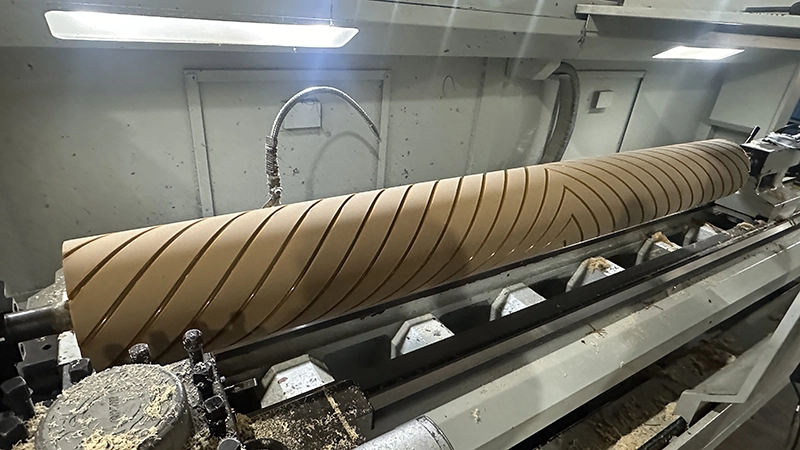
Defina el problema de falla
Documente la velocidad real de la línea, la carga, el ciclo de trabajo, el patrón de arranque y parada, las condiciones ambientales y la temperatura del rodillo antes de seleccionar un repuesto.
Registre la velocidad de la cinta transportadora en funcionamiento normal y en el momento de máxima producción; no se fíe únicamente de la información que figura en la placa de características del equipo.
Registre el intervalo de servicio típico y la ubicación de la falla en cada rodillo devuelto.
El problema más común era la delaminación del poliuretano, es decir, la separación completa de la capa de poliuretano del núcleo de acero.
Para el departamento de mantenimiento, el rodillo en sí era sólo una parte del coste.
El mayor impacto incluyó:
- paradas inesperadas de la línea
- trabajos urgentes de mantenimiento
- presión del inventario de piezas de recambio
- rendimiento reducido
- costes de mano de obra y tiempo de inactividad
Una inspección de desmontaje útil compara varios rodillos averiados y documenta dónde comenzó la separación, el estado de la línea de unión y cualquier signo de calor, contaminación o sobrecarga.
Análisis de fallos
Hay dos áreas que suelen requerir una inspección minuciosa.
Acumulación de calor interno
Identificar la composición química, la dureza y el historial de curado del poliuretano existente cuando se disponga de registros.
Bajo carga continua a alta velocidad, la compresión repetida puede generar calor interno por histéresis.
Si el calor no se disipa, puede acelerar los cambios en el poliuretano y en el sistema de unión.
La evidencia de temperatura debe confirmarse mediante mediciones de funcionamiento e inspección de la línea de unión, en lugar de inferirse únicamente a partir de la deslaminación.
Para aplicaciones con ciclos continuos, la histéresis adquiere más importancia de lo que muchos compradores creen.
Un material que funciona bien en condiciones estáticas puede comportarse de forma muy diferente bajo cargas dinámicas.
Mala preparación de la superficie del acero
Una vez retirados los restos de poliuretano, inspeccione toda la superficie de unión metálica.
Busque áreas pulidas, corrosión, residuos de adhesivo, aceite o arenado irregular.
Registre el método y el perfil de preparación de la superficie utilizando el agente adhesivo y los requisitos del proceso aplicables.
Un perfil uniforme y limpio favorece una adhesión repetible.
Una preparación insuficiente de la superficie puede reducir el anclaje mecánico y dejar la unión vulnerable a la contaminación.
La durabilidad de la unión depende de la preparación completa, la imprimación, el adhesivo, el vertido y el proceso de curado.
Proceso de rediseño correctivo
Un diseño correctivo debe abordar el modo de fallo documentado, y no simplemente reproducir el rodillo anterior con una dureza diferente.
Preparación de la superficie
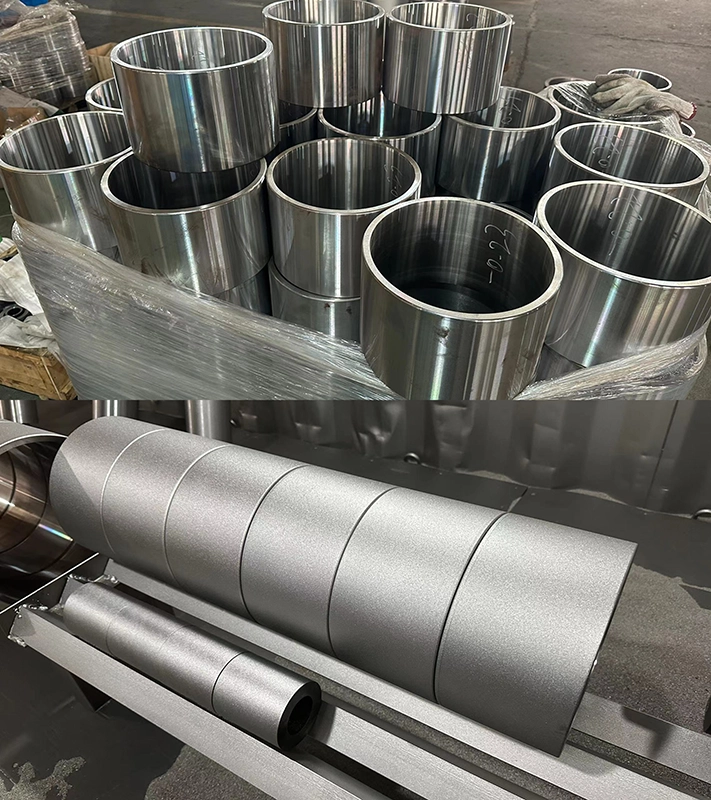
Retire el revestimiento dañado y prepare el núcleo metálico mediante un proceso controlado de limpieza y granallado compatible con el sistema de unión seleccionado.
Especifique y verifique el perfil de superficie requerido de acuerdo con las instrucciones de proceso del proveedor del agente adhesivo.
Un perfil controlado aumenta la superficie de contacto útil y garantiza una cobertura adhesiva uniforme.
Inmediatamente después del chorreado, se aplicaron agentes adhesivos en condiciones controladas para evitar la contaminación o la oxidación de la superficie.
Selección de materiales de poliuretano
Seleccione el sistema de poliuretano en función de la carga medida, la velocidad, la acumulación de calor, la tracción, la abrasión, la exposición química y las condiciones ambientales.
Elija la dureza en función de la deformación requerida, la presión de contacto y el agarre; la dureza por sí sola no predice el rendimiento dinámico.
Para rodillos de alto ciclo, la evaluación del material debe incluir histéresis, fatiga, comportamiento al desgarro y compatibilidad de la unión.
Las formulaciones candidatas deben validarse bajo cargas dinámicas representativas antes de su comercialización.
Aumentar la dureza por sí solo no era el objetivo.
El objetivo era mejorar la estabilidad a largo plazo, manteniendo al mismo tiempo las prestaciones de tracción y desgaste.
Rectificado de precisión
A velocidades de cinta transportadora más elevadas, pequeños errores dimensionales pueden generar vibraciones y una carga desigual.
Una excentricidad excesiva puede aumentar la vibración y acelerar el desgaste de los cojinetes, las superficies y las interfaces de unión.
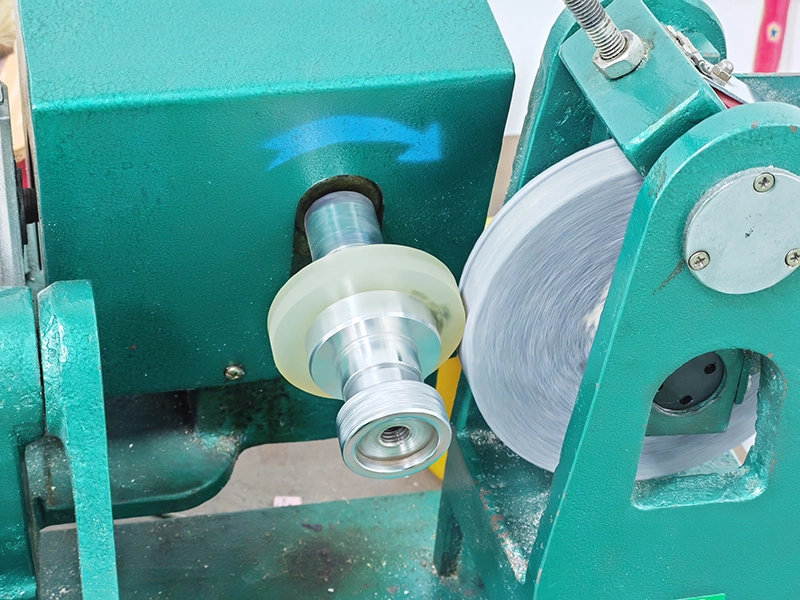
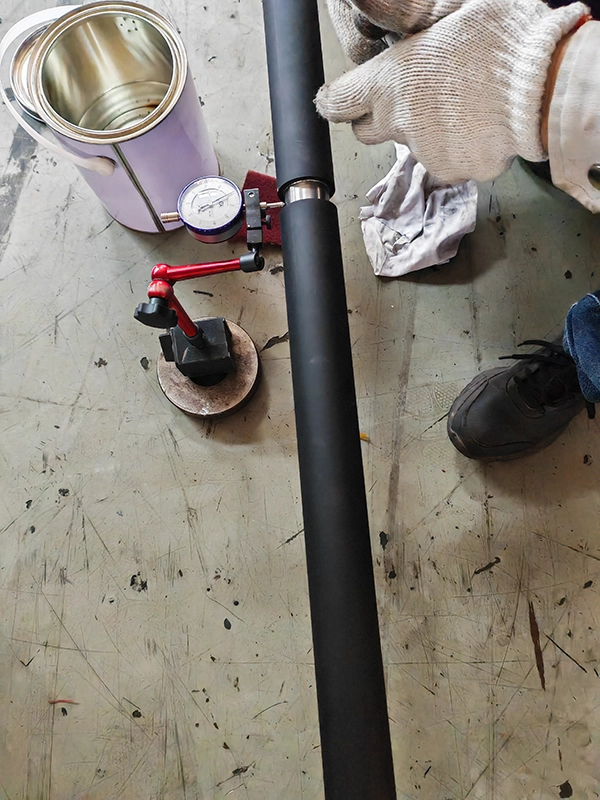
Cuando el dibujo lo requiera, termine el rodillo curado mediante un rectificado cilíndrico controlado.
En el plano aprobado, defina la desviación total indicada, el diámetro exterior, la cilindricidad y el acabado superficial.
Inspeccione y registre las dimensiones finales utilizando equipos calibrados.
El control dimensional permite un seguimiento estable y una instalación repetible.
Plan de control de rediseño
| Área de control | Riesgo común | Requisito de rediseño |
|---|---|---|
| Sistema de poliuretano | Seleccionado sin datos de servicio dinámico | Adaptar la química a la carga, la velocidad y el entorno. |
| Categoría de dureza | Elegido como un valor independiente | Especificar a partir de la deformación, el agarre y la presión de contacto. |
| Preparación de bonos | Perfil de limpieza o superficie no verificado | Preparación de documentos, imprimación y controles de curado |
| Dimensiones | No hay criterios acordados para la salida o la llegada. | Defina el diámetro exterior, la excentricidad y el acabado superficial en el dibujo. |
| Validación | Inspección visual únicamente | Registrar las dimensiones y completar una prueba de servicio controlada. |
Validación antes de la instalación
Validar los rodillos rediseñados mediante una inspección documentada y una prueba de servicio controlada.
Durante el ensayo, supervise:
- estado de la línea de unión y signos de desprendimiento de los bordes
- Desgaste superficial, cortes y daños por calor localizados.
- Temperatura y vibración del rodillo bajo cargas representativas
- diámetro exterior, desviación y seguimiento
- Intervalo de servicio y modo de fallo
Compare los resultados de la prueba con los criterios de aceptación definidos antes de aprobar una implementación a mayor escala.
El objetivo no es simplemente una mayor duración del calendario.
El objetivo es lograr un funcionamiento estable con menos interrupciones no planificadas y un modo de fallo que pueda comprenderse y controlarse.
Conclusiones de ingeniería
Cuando los rodillos de poliuretano fallan, el material no siempre es el verdadero problema.
El rendimiento de los bonos depende de varios factores que actúan conjuntamente:
- selección de materiales
- preparación de la superficie
- proceso de adhesión
- precisión dimensional
Cambiar sólo el poliuretano suele solucionar el síntoma más que la causa.
En las aplicaciones de alta velocidad, los pequeños detalles del proceso suelen determinar la vida útil a largo plazo.
Explora PEPSEN rodillos de poliuretano o envíe una muestra fallida y los datos de funcionamiento para su revisión.
+
Rodillos de poliuretano FAQ
P1: ¿Cuál es el intervalo de dureza Shore ideal para los rodillos industriales de poliuretano?
A: No existe un rango ideal único. Seleccione la dureza en función de la carga, el área de contacto, la deformación requerida, la tracción, la velocidad, la superficie del suelo o la cinta transportadora y el ciclo de trabajo. Solicite al proveedor que confirme el grado y la tolerancia propuestos en el plano.
P2: Rodillos de poliuretano frente a rodillos de caucho: ¿Cuál es mejor para aplicaciones pesadas?
A: Ninguno es universalmente mejor. El poliuretano puede ofrecer opciones útiles de resistencia a la abrasión, la carga y los productos químicos, mientras que el caucho puede preferirse por su disipación de calor, flexibilidad o un requisito de fricción específico. Compare ambos materiales en función de la carga, la velocidad, la temperatura, el medio y el mantenimiento previstos.
P3: ¿Qué causa que el poliuretano se delamine o se despegue de un núcleo metálico?
A: La delaminación puede deberse a contaminación, preparación inadecuada de la superficie, un sistema de unión incompatible, desviaciones en el curado, acumulación excesiva de calor, sobrecarga, tensión en los bordes o corrosión. Confirme la causa mediante una inspección de desmontaje y los registros del proceso.
P4: ¿Pueden sustituir o recubrir de nuevo el poliuretano de nuestros núcleos de acero o aluminio existentes?
A: Los núcleos metálicos existentes a menudo pueden recubrirse si superan la inspección dimensional, de material y de daños. Se retira el recubrimiento desgastado, se prepara el núcleo y se adhiere y moldea el nuevo poliuretano según el plano aprobado. El ahorro de costes depende del estado del núcleo, el mecanizado y la logística.
P5: ¿Cuál es la temperatura máxima de funcionamiento de los rodillos de uretano personalizados?
A: La temperatura admisible depende de la composición química del poliuretano, su dureza, la carga, la velocidad, el tiempo de exposición y el medio circundante. Se deben indicar las temperaturas máximas y continuas; el proveedor debe confirmar el rango de temperatura operativa y el método de validación específicos para cada grado.
P6: ¿Cómo se consiguen tolerancias dimensionales estrictas en los rodillos de poliuretano moldeados a medida?
A: Tras la fundición, se procede al mecanizado o al rectificado cilíndrico cuando el plano exige un control más estricto del diámetro exterior, la concentricidad, la cilindricidad, el acabado superficial o la excentricidad. La tolerancia alcanzable depende del tamaño del rodillo, el diseño del núcleo, la dureza del material y el método de inspección.
P7: ¿Los rodillos de poliuretano son resistentes a los productos químicos industriales, los aceites y la humedad?
A: La resistencia depende de la composición química del poliuretano, así como de la concentración, la temperatura y el tiempo de exposición. Poliuretano a base de éter Se suele considerar su resistencia a la humedad y la hidrólisis, mientras que los grados a base de ésteres pueden ofrecer diferentes características de resistencia a la abrasión y al aceite. Confirme la compatibilidad con el producto químico o agente de limpieza específico mediante los datos del proveedor y las pruebas correspondientes.
P8: ¿Qué información necesitan para proporcionar un cotización RFQ preciso para rodillos de uretano a medida?
A: Para proporcionar un cotización de ingeniería y una recomendación de material precisos, necesitamos:
- Un dibujo técnico 2D/3D que muestre todas las dimensiones y tolerancias.
- El deseado Dureza Shore (o detalles sobre los requisitos de carga/agarre).
- Especificación del material del núcleo (por ejemplo, acero al carbono, aluminio, acero inoxidable).
- Detalles del entorno operativo (velocidad de funcionamiento, capacidad de carga, temperatura y exposición química).
Solicitar cotización de rodillos de poliuretano
Para obtener un presupuesto para un rodillo de poliuretano, proporcione un dibujo o muestra, dimensiones y tolerancias, material del núcleo, dureza o agarre requeridos, carga, velocidad, temperatura continua y máxima, exposición química, cantidad y el modo de fallo observado.
PEPSEN puede analizar los datos de funcionamiento y recomendar un material, un proceso de unión, un método de acabado y un plan de inspección para la aplicación.