


Mining equipment works in one of the most punishing operating environments in industry. Sharp ore, sliding abrasion, slurry erosion, heavy impact loads, moisture, chemicals, and continuous duty can destroy poorly selected wear parts long before the scheduled maintenance window. For this reason, choosing polyurethane for mining is not simply a matter of picking a hard material. The right solution depends on the wear mechanism, part geometry, working environment, and the balance between durability, elasticity, and downtime cost. Polyurethane is widely used in mining for liners, screen components, bushings, wheels, rollers, and other custom cast parts because it combines abrasion resistance, load-bearing capacity, and formulation flexibility in a way that many traditional materials cannot.
Why Material Selection Fails in High Abrasion Mining Conditions
Many failures in mining applications happen because the buyer focuses on only one property, usually hardness. In practice, high abrasion performance depends on a combination of factors. A part may need to resist sliding wear from ore, repeated impact from large particles, hydrolysis in wet conditions, chemical attack from slurry, or tearing at bonded edges. A material that performs well in one situation may fail quickly in another. Mining polyurethane parts are commonly used in hydrocyclone liners, slurry pump liners, chute liners, hopper liners, screen panels, scrapers, bushings, and other wear components, which means the selection process must be tied to the actual duty cycle rather than a generic “wear-resistant” label.
Start with the Real Wear Mechanism
Before selecting a polyurethane system, define what is actually damaging the part.
Sliding Abrasion
This is common in chute liners, hopper liners, transfer points, and scraper-related parts. Fine or medium particles continuously slide across the surface and gradually remove material. In these cases, abrasion resistance is the first priority, but cut resistance and resilience also matter because sharp ore can cause surface tearing over time. Mining polyurethane liners and wear sheets are often used here because they are designed for abrasive handling points in mining and aggregate systems.
Slurry Erosion and Wet Abrasion
This is typical in slurry pumps, hydrocyclones, and mineral processing equipment. The material must resist wet abrasion, particle impact, and chemical exposure at the same time. In these environments, formulation choice becomes critical, especially when acidic or alkaline slurry is involved. Pepsen’s mining and slurry-related polyurethane liner pages specifically position these parts for slurry pump operation, hydrocyclones, and abrasive wet-process equipment.
Impact Plus Abrasion
Large ore particles, drop points, and dynamic loading zones can break down a material that is hard but brittle. In these areas, impact resilience is as important as wear life. For mining applications such as suspended monorail wheels, heavy-duty transport, or impact-prone elastomer components, the site highlights specialized abrasion-resistant formulas and high-performance systems intended for both wear and dynamic load conditions.
Choose the Right Polyurethane Chemistry
Not all polyurethane elastomers behave the same way. One of the most important decisions is whether the application needs a polyether-based or polyester-based system.
Polyether Urethane
Polyether urethane is usually the better choice when mining conditions include water, humidity, slurry, or hydrolysis risk. It is commonly selected for wet mineral processing conditions where long-term water exposure can damage less suitable elastomer systems. The site’s material guide explains that polyether-based polyurethane is one of the main polyurethane categories used across mining, rollers, bushings, and linings.
Polyester Urethane
Polyester urethane is often chosen where higher cut resistance, oil resistance, and mechanical strength are needed, provided the hydrolysis environment is controlled. In dry abrasive handling zones, certain polyester systems may offer an excellent balance of toughness and wear resistance. Polyurethane formulation choice should therefore be matched to whether the mine is dealing with dry ore transfer, wet slurry circulation, or mixed-service exposure.
Do Not Choose by Hardness Alone
Hardness matters, but it is not the whole answer. In mining, a higher Shore hardness does not automatically mean longer life. An overly hard part may resist indentation but lose resilience, making it more likely to crack, chip, or fail under impact. A softer formulation may absorb shock better, protect adjacent equipment, and last longer in dynamic conditions.
As a practical rule:
| Application Type | Typical Selection Focus |
|---|---|
| Chute and hopper liners | Abrasion resistance, cut resistance, part thickness, backing support |
| Slurry pump liners | Wet abrasion, hydrolysis resistance, chemical stability, dimensional fit |
| Bushings and suspension parts | Load-bearing capacity, rebound, compression set, tear strength |
| Wheels and rollers | Abrasion resistance, grip, dynamic load capacity, heat build-up |
| Bonded wear parts | Adhesion strength, substrate preparation, impact fatigue |
The site’s product range shows that polyurethane is supplied in many mining-relevant forms, including rollers, bushings, liners, bonded components, sheets, rods, and custom molded parts, which reinforces why hardness must be considered together with the actual part function.
Consider Whether the Part Needs Metal Bonding
In mining, many polyurethane parts are not stand-alone elastomer blocks. They are bonded to steel inserts, metal cores, or backing plates. This is common for drive wheels, coated rollers, structural bushings, and some wear liners. If the part operates under torque, impact, or repeated compression, bond quality becomes a key part of service life. A strong polyurethane formula can still fail early if the metal preparation, adhesive system, or interface design is not suitable. Pepsen specifically lists urethane-to-metal components and custom cast bonded solutions among its main product capabilities.
Match the Material to the Part, Not Just the Industry
Mining includes many different component types, and each one needs a different decision path.
Polyurethane Liners
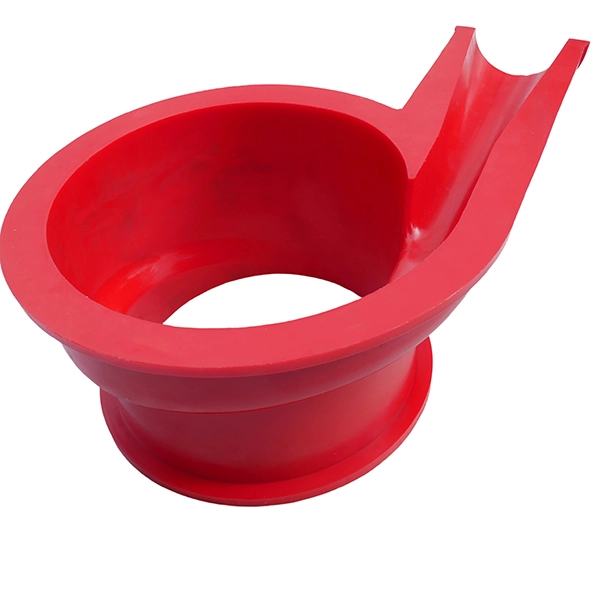
For chute liners, hopper liners, ball mill liners, slurry pipe liners, and hydrocyclone spares, buyers should focus on abrasion pattern, particle size, thickness, fastening method, and whether the part sees wet or dry material flow. The site’s polyurethane lining category specifically targets chutes, hoppers, slurry systems, hydrocyclones, flotation wear parts, and grinding-related uses.
Polyurethane Bushings
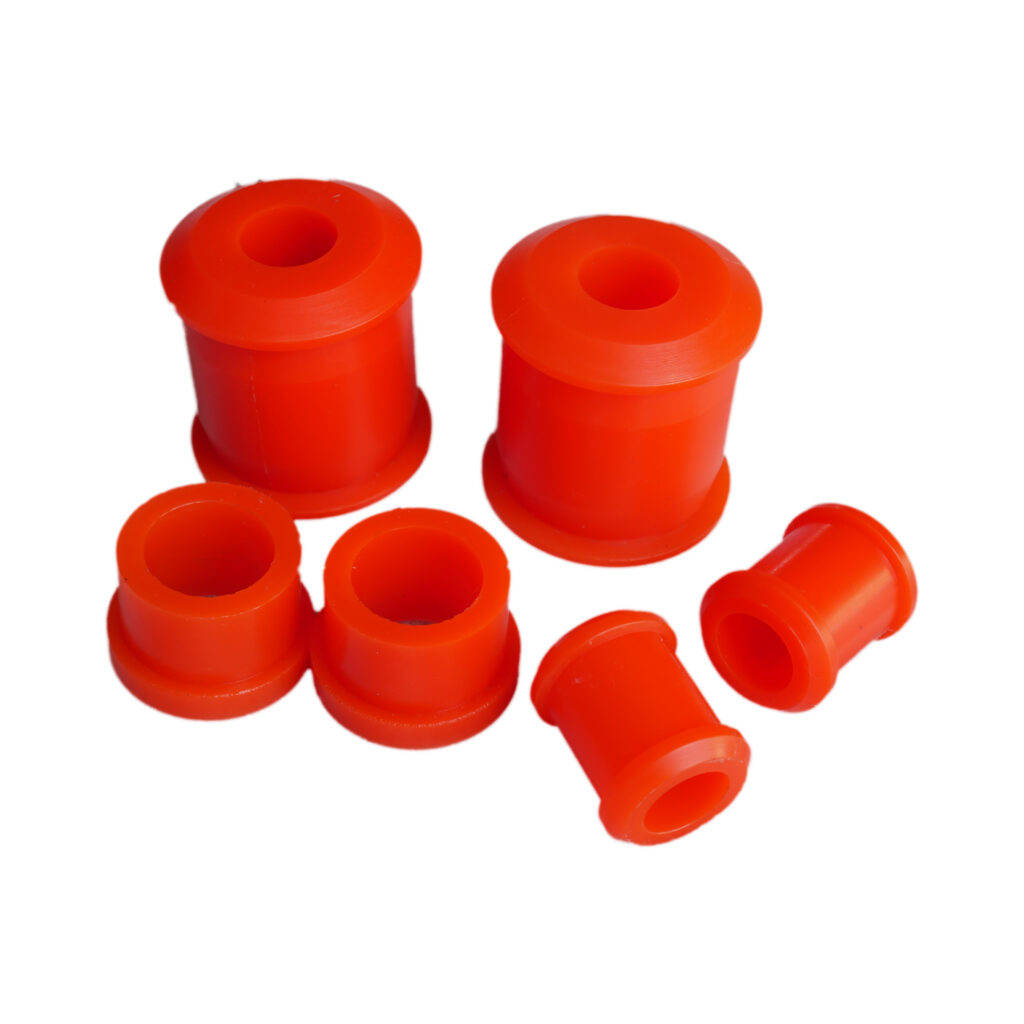
For bushings in mining and heavy equipment, hardness is only one variable. The real selection process should also consider radial load, oscillation frequency, heat generation, contamination, and whether the goal is vibration damping or stiffness. The site’s bushings and custom cast pages position polyurethane bushings for industrial and heavy-duty uses, including mining-related conditions.
Polyurethane Wheels and Rollers
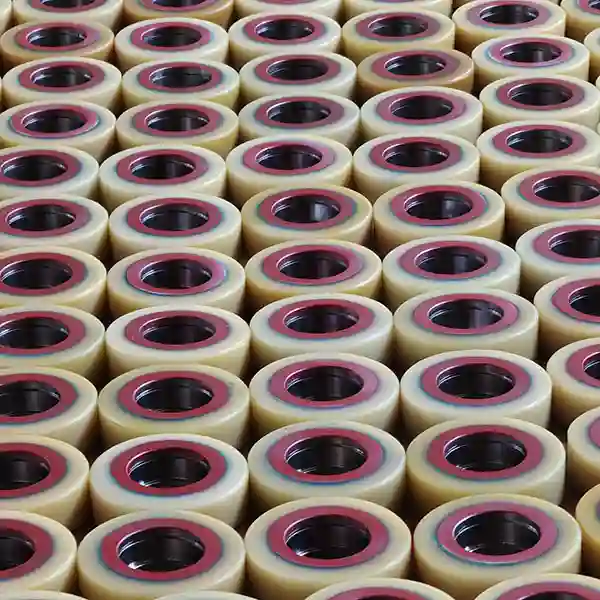
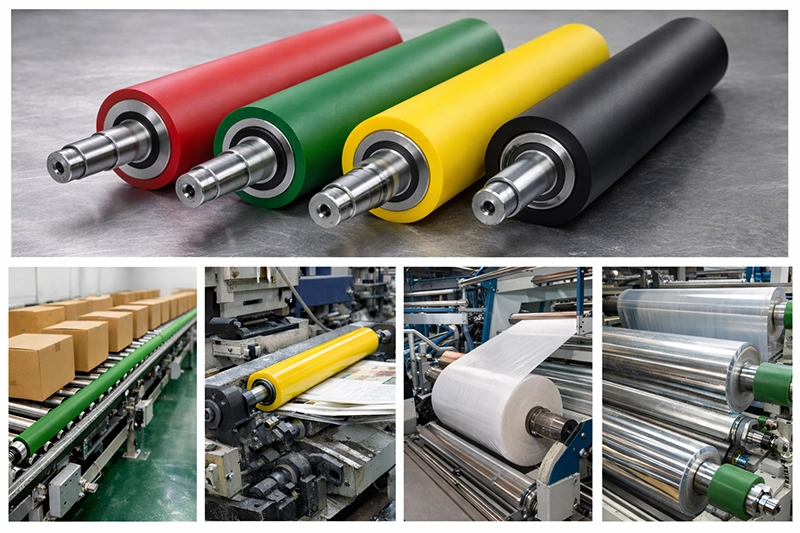
For wheels and rollers used in mining transport systems or heavy-duty material handling, important factors include load per wheel, surface speed, cut risk, anti-static or flame-retardant requirements, and whether the wheel is running on rail, steel, or another contact surface. The site’s mining-focused abrasion article specifically mentions specialized wheels for mining crane suspended monorail systems and highlights flame-retardant and anti-static requirements in coal-mine-related conditions.
Check the Service Environment Before Quoting
A good mining polyurethane quote should not be based on dimensions alone. To avoid trial-and-error purchasing, buyers should prepare the following information before ordering custom parts:
- Part drawing or sample
- Current material in use
- Failure mode of the existing part
- Ore type and particle size
- Wet or dry service condition
- Exposure to acid, alkali, oil, or other chemicals
- Operating temperature
- Impact severity
- Load, speed, or pressure
- Need for metal insert or bonding
- Required hardness range
- Expected service life target
This approach fits the supplier’s OEM and custom manufacturing model, which is built around drawings, samples, and application-specific casting for wheels, rollers, bushings, liners, and other molded parts.
Look at Downtime Cost, Not Only Unit Price
In mining, the lowest part price is often the highest operating cost. A liner, bushing, or roller that wears out early can create unscheduled shutdowns, labor cost, lost throughput, and repeated maintenance. Pepsen’s mining page explicitly frames polyurethane as a way to reduce maintenance burden and extend service life in mining wear components, and it states that mines use polyurethane linings and elastomer parts to reduce unscheduled downtime in harsh ore and slurry conditions.
When evaluating suppliers, buyers should compare:
- expected wear life
- replacement frequency
- installation complexity
- bond stability
- consistency between batches
- ability to adjust formula for the real application
That is usually a more useful purchasing model than comparing only price per piece.
A Practical Selection Path
For most high abrasion mining projects, the selection logic can be simplified into five steps:
- Identify the main failure mode
Sliding wear, slurry erosion, impact, tear, bonding failure, or chemical attack. - Define the service environment
Wet or dry, temperature range, slurry chemistry, UV exposure, and contamination. - Choose the polyurethane family
Polyether for hydrolysis-prone wet service; polyester or other specialized systems for dry wear, mechanical strength, or other targeted properties where suitable. - Set the part structure
Solid cast, metal-backed, coated, segmented, sheet-based, or replaceable insert design. - Validate hardness and formulation by application
Not by generic catalog preference.
Choosing polyurethane for high abrasion mining applications requires more than selecting a “wear-resistant” grade. The right decision comes from matching the polyurethane system to the exact failure mechanism, service environment, and component type. In mining, that usually means evaluating abrasion pattern, impact load, slurry exposure, hydrolysis risk, bonding structure, and maintenance cost together. For liners, bushings, rollers, wheels, and custom molded components, a correctly selected polyurethane system can improve wear life, reduce shutdown frequency, and make replacement cycles more predictable. Pepsen’s mining-focused product range and custom cast capability are built around these kinds of heavy-duty applications, including liners, slurry components, rollers, bushings, and urethane-to-metal parts.
FAQ
1. What type of polyurethane is better for wet mining conditions?
Polyether-based polyurethane is commonly preferred for wet mining, slurry, and hydrolysis-prone environments because it is generally better suited to long-term water exposure than systems chosen mainly for dry service.
2. Is higher hardness always better for abrasion-resistant mining polyurethane parts?
No. Higher hardness can improve indentation resistance, but it may reduce resilience in impact-heavy mining conditions, so hardness should be selected together with wear mode, load, and part structure.
3. What mining parts are commonly made from polyurethane?
Common mining polyurethane parts include chute liners, hopper liners, slurry pump liners, hydrocyclone liners, screen components, wheels, rollers, bushings, scrapers, and other custom molded wear parts.
4. What information should buyers provide for custom polyurethane mining parts?
The most useful quotation inputs are drawing or sample, dimensions, hardness target, working load, ore type, wet or dry condition, slurry chemistry, temperature, and whether the part includes a metal insert or bonded structure. This fits the custom casting model used for mining-related polyurethane parts.
5. Can polyurethane replace rubber or metal in high abrasion mining applications?
In many mining applications, polyurethane is selected as an alternative because it can combine wear resistance, elasticity, and lighter weight across liners, rollers, and other custom parts, but the final choice depends on the specific wear mechanism and operating condition