



When engineers and procurement teams in mining, construction, and pipeline industries look for durable, long-lasting components, polyurethane molding materials often become the first choice. But with so many hardness grades, material types, and customization options available, choosing the right polyurethane can be confusing.
In this blog, we break down Shore hardness, polyurethane grades, and practical selection criteria to help you make the right choice for your equipment and application.
1. What Are Polyurethane Molding Materials?
Polyurethane molding materials refer to liquid polyurethane systems that are cast or molded into finished parts. These materials are typically used in cast polyurethane manufacturing (also called CPU – cast polyurethane elastomer).
Polyurethane are formed through a chemical reaction between polyols and isocyanates, creating a highly durable polymer network. The resulting material behaves like rubber but offers significantly improved wear resistance and load capacity.
Unlike conventional rubber materials, polyurethane offers a much wider hardness range, typically from Shore A 20 to Shore D 75, allowing engineers to design components that range from soft cushioning pads to rigid structural parts.
2. Polyester vs. Polyether: The Two Main Polyurethane Grades
Not all polyurethanes are the same. The two most common types are:
Polyester Polyurethane
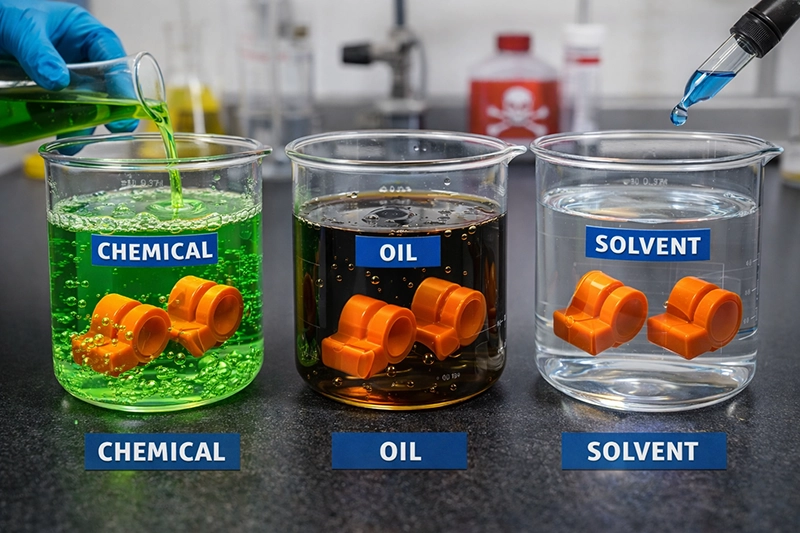
- Excellent oil and chemical resistance
- Higher abrasion resistance
- Good for dry, oily environments
- Not ideal for constant moisture
Polyether Polyurethane
- Excellent hydrolysis resistance
- Better in wet and humid environments
- Good flexibility at low temperatures
- Less resistant to strong oils
Choosing between them depends on your working environment.
2. Key Properties of Polyurethane
Polyurethane molding materials are widely specified in industrial design because they deliver a combination of properties that most elastomers cannot match.
2.1 Outstanding Abrasion Resistance
Polyurethane is known for its exceptional wear resistance. In many industrial tests, polyurethane shows significantly lower abrasion loss than conventional rubber materials.
This makes it ideal for applications involving:
- abrasive particles
- sliding contact
- high-friction environments
For example:
- mining screen panels
- slurry pump components
- conveyor belt scrapers
2.2 High Load-Bearing Capacity
Compared with standard elastomers, polyurethane can withstand higher compressive loads without permanent deformation.
This characteristic allows engineers to design polyurethane components for:
- heavy-duty wheels
- industrial rollers
- structural wear pads
2.3 Wide Hardness Range
Polyurethane can be formulated across an extremely broad hardness spectrum:
| Hardness Range | Typical Characteristics |
|---|---|
| 20–50 Shore A | Soft and flexible |
| 60–80 Shore A | Elastic with moderate strength |
| 85–95 Shore A | High wear resistance |
| 60–75 Shore D | Rigid structural materials |
This flexibility allows polyurethane to replace rubber, nylon, UHMWPE, and even metal in some cases.
2.4 Excellent Tear Strength and Elastic Memory
Polyurethane can stretch 300–800% before breaking, making it highly resistant to tearing under dynamic loads.
In addition, polyurethane elastomers have excellent rebound resilience, meaning they return to their original shape after compression.
This is particularly important for:
- impact pads
- shock absorbers
- buffer blocks
3. Understanding Shore Hardness in Polyurethane
One of the most frequently asked questions from buyers and engineers is:
“What Shore hardness should I choose?”
Shore hardness measures the resistance of a material to indentation, indicating how soft or rigid an elastomer is.
Polyurethane typically uses two scales:
- Shore A – soft elastomers
- Shore D – rigid polyurethane materials
Typical Industrial Hardness Ranges
| Hardness | Typical Applications |
|---|---|
| 60A–70A | seals, cushioning parts |
| 80A–90A | rollers, scraper blades |
| 90A–95A | mining wear parts |
| 60D–75D | structural components |
Most industrial polyurethane components fall in the 70A–95A range, balancing flexibility with durability.
However, hardness alone does not determine performance. Two polyurethane materials with the same hardness may behave differently depending on formulation.
Important factors include:
- tensile strength
- rebound resilience
- compression set
- tear strength
This is why material selection should be based on application conditions rather than hardness alone.
4. Industry Applications of Polyurethane Molding Materials
Polyurethane is used across many industries due to its combination of durability, elasticity, and wear resistance.
Below are several industries where cast polyurethane elastomers are widely used.
4.1 Mining and Aggregate Industry
Mining environments expose materials to extreme abrasion and heavy impact.
Common polyurethane molded components include:
- polyurethane screen panels
- hydrocyclone liners
- slurry pump liners
- conveyor belt scrapers
- wear plates
Polyurethane outperforms traditional rubber in abrasive applications because it can last several times longer in wear conditions.
Typical hardness:
85A–95A
4.2 Bulk Material Handling
Material handling systems often use polyurethane components for noise reduction and durability.
Examples include:
- conveyor rollers
- buffer pads
- guide rollers
- chute liners
Polyurethane is particularly suitable for conveying sand, coal, grain, aggregates, and ore because it resists both abrasion and impact.
Typical hardness:
80A–95A
4.3 Industrial Wheels and Rollers
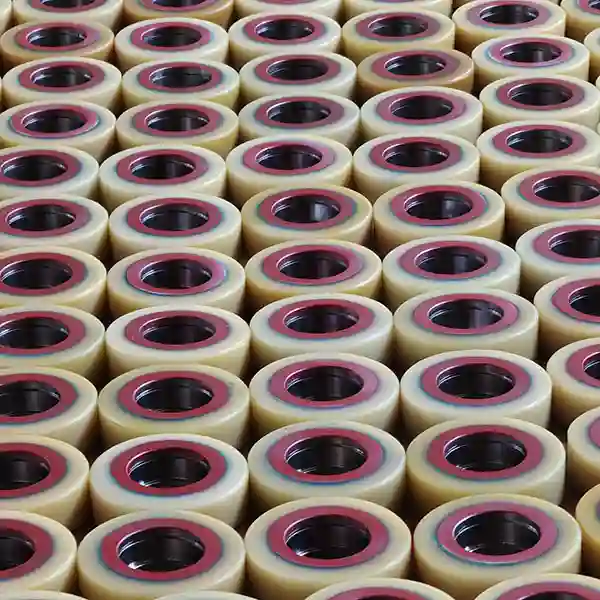
One of the most common applications for polyurethane molding materials is industrial wheels and rollers.
Typical products:
- forklift wheels
- pallet truck wheels
- conveyor rollers
- printing rollers
Polyurethane is preferred because it offers:
- high load capacity
- lower rolling resistance
- excellent wear life
Typical hardness:
90A–75D
4.4 Oil and Gas / Pipeline Industry
Polyurethane elastomers are widely used in pipeline and drilling applications.
Examples:
- pipeline pigs
- sealing discs
- scraper cups
- protective coatings
These components require:
- chemical resistance
- abrasion resistance
- flexibility
Polyether polyurethane formulations are often preferred in wet environments.
Typical hardness:
80A–95A
4.5 Automotive and Machinery
Polyurethane components also appear in many automotive and mechanical systems.
Examples include:
- suspension bushings
- shock absorber pads
- vibration dampers
- sealing rings
Polyurethane helps reduce vibration while maintaining high durability.
Typical hardness:
60A–80A
5. Polyurethane vs Other Elastomer Materials
When selecting industrial elastomers, engineers often compare polyurethane with rubber or thermoplastic materials.
Polyurethane vs Rubber
| Property | Polyurethane | Rubber |
|---|---|---|
| Abrasion resistance | Excellent | Moderate |
| Load capacity | High | Medium |
| Tear strength | High | Moderate |
| Chemical resistance | Good | Depends on rubber type |
| Cost | Slightly higher | Lower |
Polyurethane is often chosen because it can last significantly longer in abrasive environments than traditional rubber.
Polyurethane vs TPU
| Property | Cast PU | TPU |
|---|---|---|
| Wear resistance | Excellent | Good |
| Customization | High | Limited |
| Processing | Casting | Injection / extrusion |
| Best use | Heavy industrial parts | Consumer products |
Cast polyurethane elastomers are typically used in heavy-duty industrial applications, while TPU is common in molded consumer components.
6. Common Mistakes When Choosing Polyurethane
- Picking a harder grade than needed
- Ignoring moisture or oil exposure
- Choosing based only on price
- Not testing with samples before full production
7. Real-World Case Study
A mining client was replacing rubber dig tube ends every month. We recommended custom polyester polyurethane with Shore 85A.
Result:
- Replacement cycle extended to 6 months
- Maintenance costs reduced by 50%
- Less equipment downtime
8. Frequently Asked Questions (FAQ)
1. What Shore hardness is best for polyurethane parts?
Most industrial polyurethane components use 70A to 95A hardness. Softer materials provide flexibility, while harder materials improve wear resistance.
2. Does higher hardness mean better durability?
Not always.
Higher hardness usually improves wear resistance, but it can also:
- reduce flexibility
- increase brittleness
- increase stress concentration
Material formulation and working conditions must be considered.
3.Polyurethane vs. Rubber: Which Lowers Your Operating Costs?
Rubber has a lower initial cost, but polyurethane often delivers better long-term value.
- Polyurethane lasts 3–10 times longer
- Less downtime for replacement
- Lower maintenance costs over time
- Better performance in harsh conditions
4. What information should be provided when requesting custom polyurethane parts?
To help suppliers select the correct material, engineers should provide:
- working temperature
- load conditions
- abrasion level
- chemical exposure
- required hardness
- drawing or CAD file
5. Can polyurethane replace metal or plastic parts?
Yes, in many cases.
Polyurethane is often used as a lightweight alternative to metal or plastic when applications require:
- impact absorption
- wear resistance
- noise reduction