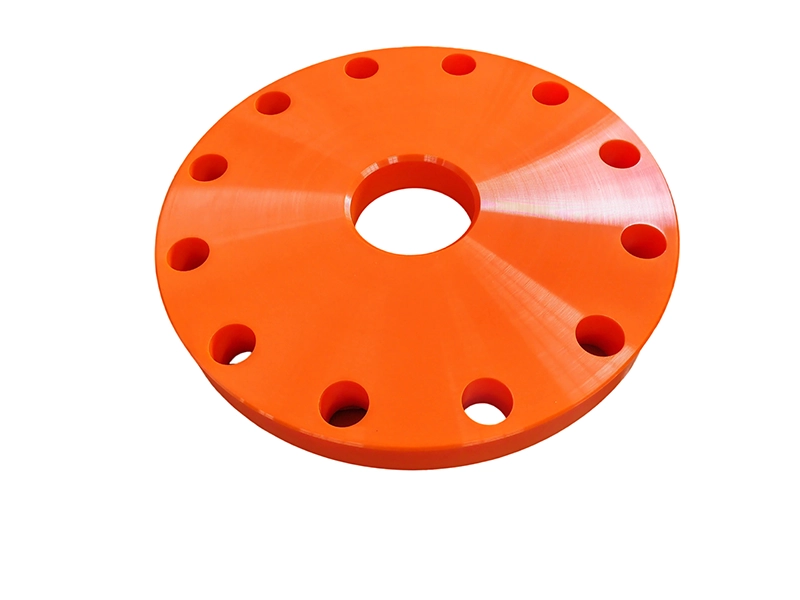
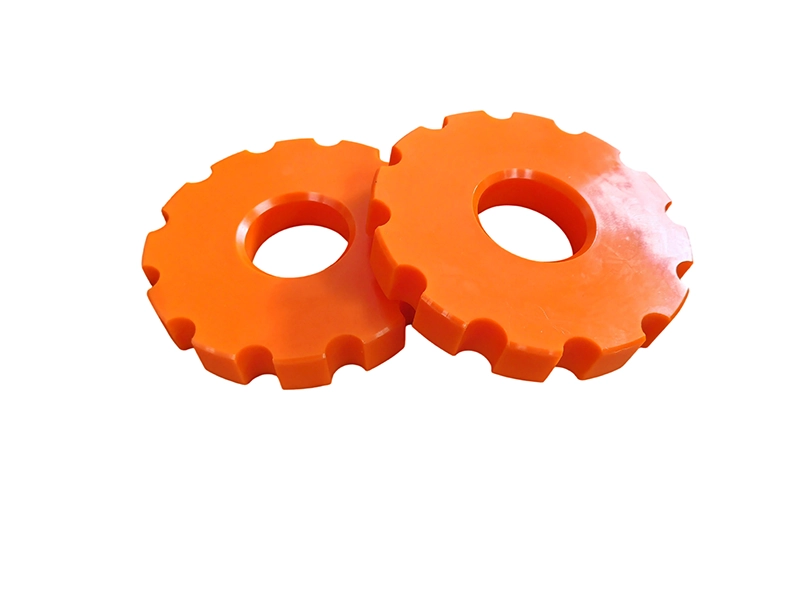
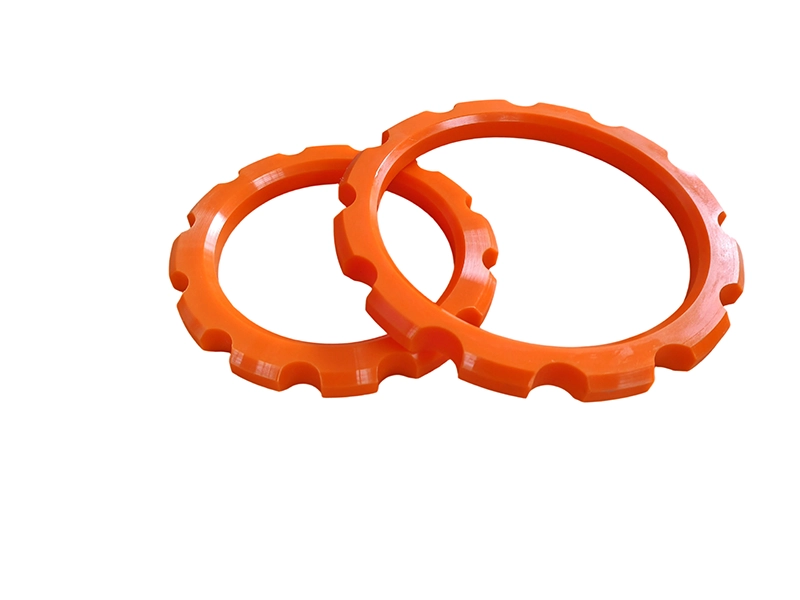
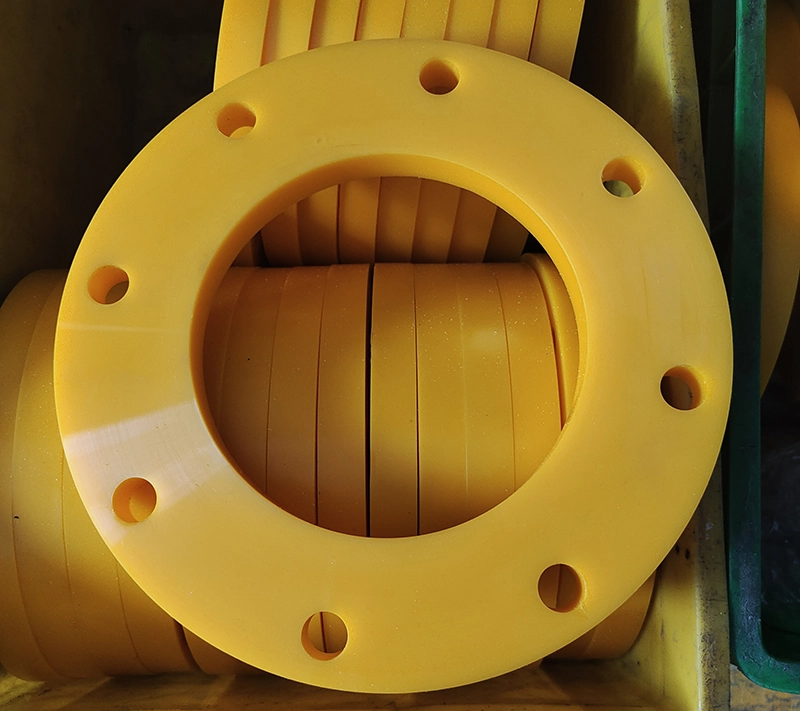
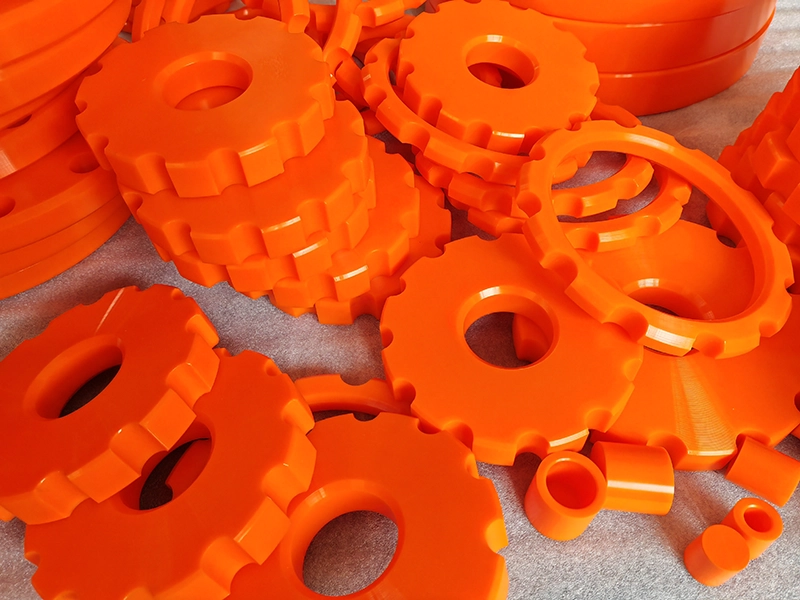
Our heavy‑duty cast polyether‑based polyurethane transition spacers are precision‑molded positioning and isolation components designed for industrial pipe connections, flanges and fittings.
Specially developed to address the most common long‑term failure issues of traditional pipe spacers, our PU transition spacers deliver stable dimensional stability, anti‑swelling performance and vibration resistance under harsh underground, chemical and cyclic temperature working conditions.
Custom Molded PU Pipe Transition Spacers Hardness, Core & Application Tailoring for Industrial Piping OEMs
We design durometer, core material, and dimensional tolerance to match pipeline vibration and chemical exposure requirements for oil‑gas, water, and chemical‑process pipe fitting OEM assemblies.
reinforced PU transition spacers for high‑pressure piping, metal‑core pipe fitting buffers
Operating Temperature Range
−40 °C to 120 °C
heat‑resistant PU pipe spacers for steam piping, cold‑climate municipal water line isolators
Dimensional Tolerance
precision molded
tight‑tolerance PU transition spacers for precision industrial pipe fitting assemblies
Chemical Resistance Grade
Hydrolysis‑Resistant / Oil‑Resistant PU
oil‑gas pipe fitting spacers, chemical‑resistant PU pipeline transition gaskets
Polyurethane Transition Spacers Industrial Piping & Fitting Application Scenarios for Process & Municipal Systems
Our cast‑PU transition spacers isolate pipe‑joint vibration and absorb shear stress across oil‑gas, municipal water, chemical processing, and HVAC industrial piping assemblies globally.
– Oil‑gas pipeline flange joint gap isolation for on‑site assembly stability
– Municipal water main pipe fitting vibration buffering for long‑term underground deployments
– Chemical‑plant process piping transition spacing resisting corrosive fluid exposure
– OEM custom pipe fitting transition components for global piping equipment manufacturers
Key Technical Advantages of Cast PU Transition Spacers Over Rubber/TPU Pipe Isolators
Lab‑verified 2.5 MPa tear strength and 4× longer service life make our PU spacers outperform low‑grade rubber and TPU alternatives under cyclic pipeline loads.
– −40 °C to 120 °C thermal stability eliminates low‑temp brittleness vs standard rubber spacers
– Low‑compression‑set PU formulation prevents permanent deformation in high‑pressure pipe joints Hydrolysis‑resistant grade options avoid water‑induced degradation in underground piping systems
– 4× longer service life cuts quarterly replacement costs for industrial piping maintenance teams
Why Choose Our Factory‑Direct PU Transition Spacers for Piping OEM & Procurement Teams
ISO‑certified factory direct supply, industry‑standard low‑MOQ sampling, and tiered bulk pricing deliver stable sourcing for industrial piping procurement and OEM engineering partners.
– ISO 9001 / 14001 / 45001 certified batch‑traceable production matching global industrial quality requirements
– Standard industrial MOQ starting at 50 units with industry‑typical
– 7–10‑day lead time for custom molded parts
– Free 1–2 unit real‑world production samples for engineer field validation and third‑party lab testing
– OEM private‑label molding support for integration with branded industrial pipe fitting product lines
– 20‑year PU material engineering support for pipe joint failure troubleshooting and DFM design feedback
– Volume‑based tiered pricing aligned with standard industrial bulk procurement contract structures
Industrial OEM Case Studies: PU Transition Spacers Solving Pipe Fitting Premature Wear Failures
Two verified 2024–2025 industrial piping OEM deployments document real service‑life improvements by replacing rubber/TPU spacers with standard‑grade industrial cast‑PU alternatives.
Oil‑Gas Pipeline Component OEM (North American Client, Q3 2025)
– Client Pain Point: Commercial 60 Shore A rubber spacers suffered shear wear under high‑vibration flange service, requiring quarterly replacement and unplanned site downtime.
– Our Technical Intervention: Switched to commercially available 85 Shore A chemical, oil and solvent‑resistant cast‑PU formulated to standard industrial tear‑strength ranges, precision molded to ±0.1 mm tolerance.
– Quantified Result: Spacer replacement frequency reduced from quarterly to annual; site‑level unplanned maintenance downtime significantly lowered per real‑world service records.
European Municipal Water Pipeline Contractor (Q4 2024)
– Quantified Result: No spacer‑related leakage or degradation reported after 18 months of continuous underground real‑world deployment.
– Client Pain Point: Commodity TPU spacers degraded via hydrolysis in underground wet service, triggering joint leakage and costly excavation repair cycles.
– Our Technical Intervention: Deployed hydrolysis‑resistant industrial cast‑PU spacers proven for underground water service in global municipal piping applications.
This parameter‑driven guide uses commercially standard PU ranges to match hardness, chemical grade, and temperature tolerance to real industrial pipeline operating conditions.
Step 1: Define Continuous Operating Temperature Range
45–60 Shore A general‑purpose PU for −20 °C to 60 °C standard municipal water piping service
80–95 Shore A high‑stiffness industrial PU for elevated‑temperature process piping up to 110 °C
Based on 20‑year field failure data, we map top real‑world pipe spacer failure modes and apply commercially proven industrial PU formulations to mitigate each risk category.
– Shear Wear / Tear Failure (Rubber Spacers): Low shear resistance under cyclic vibration → Mitigated using standard industrial cast‑PU with proven higher tear resistance than commodity rubber
– Compression‑Set Deformation (TPU Spacers): Permanent flattening under sustained pipe joint pressure → Mitigated by low‑compression‑set industrial PU grades meeting global commercial performance benchmarks
– Hydrolysis Degradation (Generic TPU): Water‑exposed underground service polymer breakdown → Mitigated with hydrolysis‑resistant industrial PU formulations widely used in municipal piping
– Thermal Brittleness (Standard Rubber): Cold‑climate cracking → Mitigated by standard industrial cast‑PU with proven low‑temperature flexibility down to −35 °C
Do you use cast polyurethane or TPU for pipe transition spacers?
We only use industrial cast PU, not TPU/rubber, for better shear resistance and long‑term pipeline stability.
What Shore A hardness and temperature range do your PU transition spacers support?
Standard 45–95 Shore A; continuous service range −35°C to 110°C for most industrial piping conditions.
What certifications can you provide for industrial piping and oil‑gas projects?
ISO 9001/14001/45001 certified; test reports and batch traceability available.
Can you customize PU spacers for underground water, chemical plant and oil‑gas high‑pressure piping?
Yes, we tailor oil‑resistant, hydrolysis‑resistant grades for underground, chemical and high‑pressure applications.
Can you support OEM private labeling and CAD‑based custom dimensional molding?
We provide OEM labeling and precision molding per customer CAD drawings for pipe fitting OEM partners.
How does cast PU compare with rubber spacers in service life and total ownership cost?
Cast PU delivers far longer service intervals and lower hidden maintenance cost than standard rubber spacers.