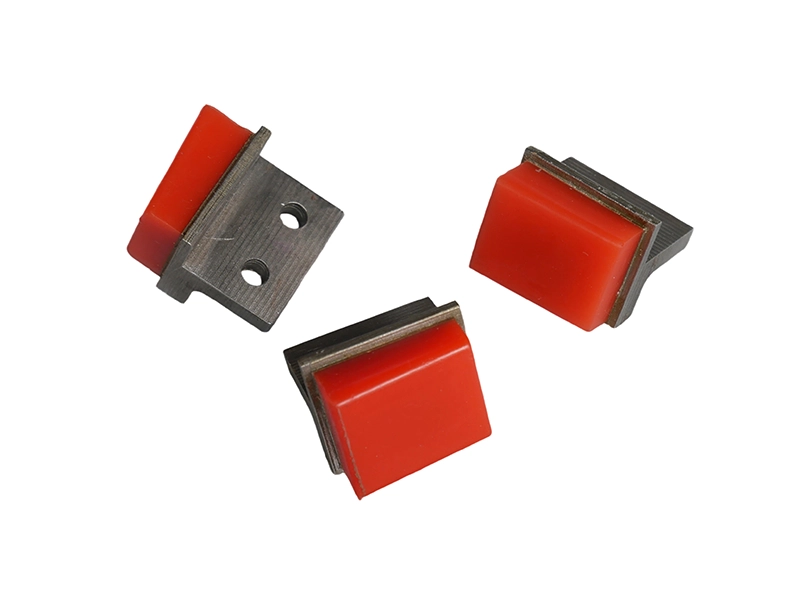
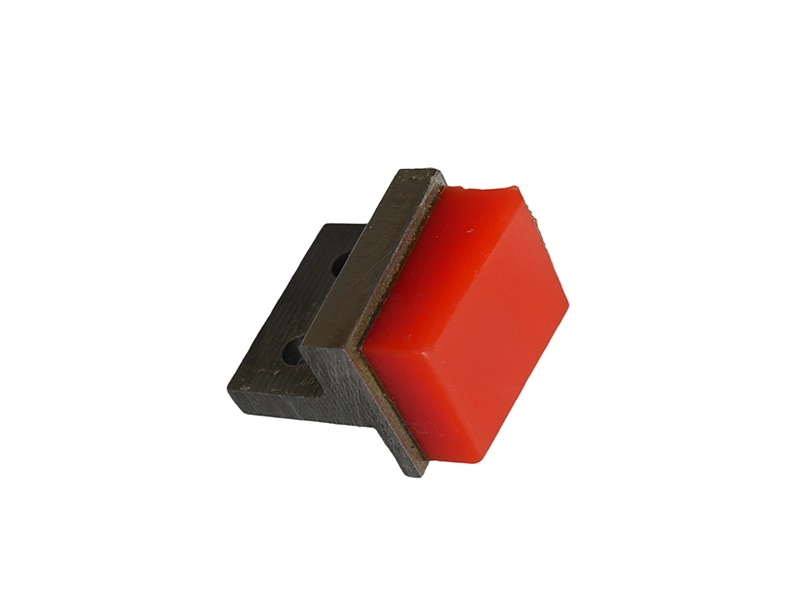
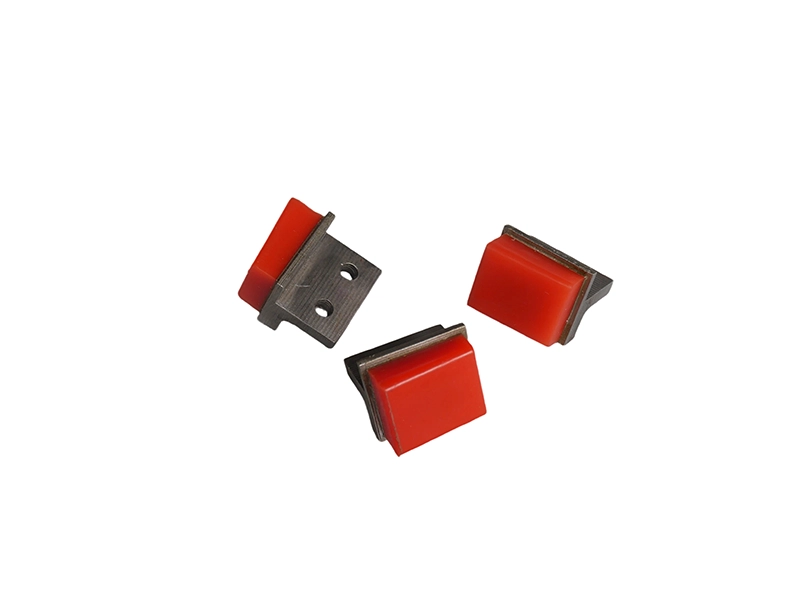
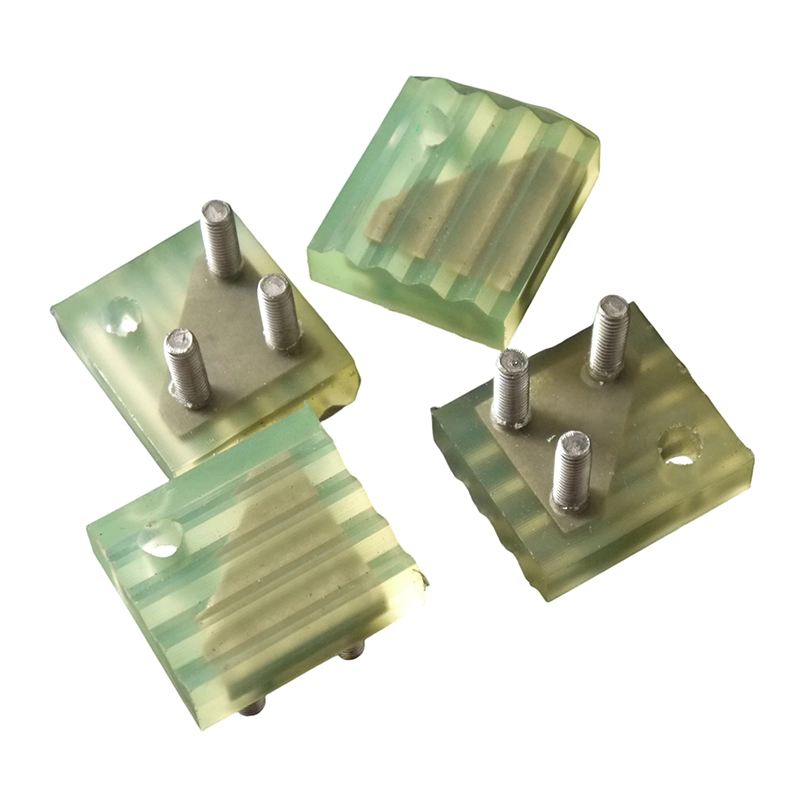
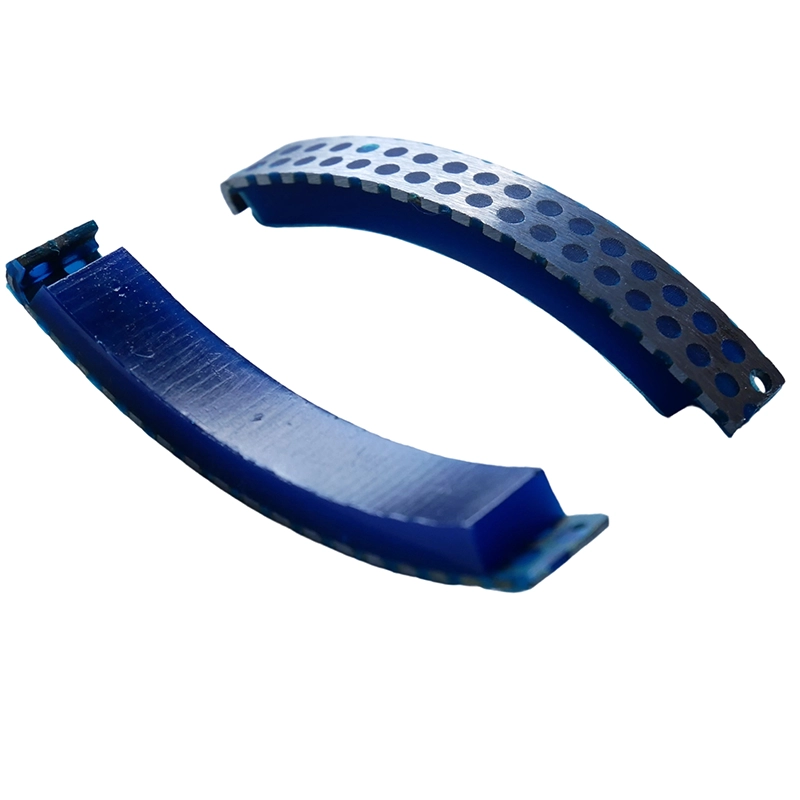
Industrial automation failures rarely happen because a gripper cannot hold a part once. They happen because repeated cycles create surface damage, polyurethane wear, deformation, or unexpected downtime. Engineers searching for custom polyurethane clamps and grippers for robotic systems, manipulación de materiales equipment, and automated production lines need materials that maintain grip performance under continuous loading, vibration, and abrasive environments.
Fabricamos cast polyurethane clamps and grippers using engineering-grade polyurethane elastomers instead of low-end TPU or rubber alternatives. For each OEM application, we review Shore hardness, formulation, bonding structure, and dimensional requirements against the actual operating conditions, including robotic handling, logistics automation, steel processing, and industrial assembly equipment.
Custom Polyurethane Clamps and Grippers Specification Options
Custom polyurethane clamps and grippers require precise selección de materiales, hardness adjustment, core design, and application matching to achieve reliable gripping force, wear resistance, and long service life in demanding industrial environments.
Parámetro personalizado
Available Range / Options
Typical Industrial Application
Dureza del poliuretano
Selected for the load, contact surface, and required compliance
Soft grippers for delicate products, high hardness PU clamps for steel handling
Polyurethane Material Type
Polyester PU / Polyether PU / Customized formulations
Food packaging handling, glass handling, sheet metal gripping
Temperatura de funcionamiento
Specified for the actual operating temperature and formulation
Cold storage automation, factory production equipment
Size Customization
CNC mold design based on drawings or samples
Replacement PU clamps for legacy equipment
Tolerance Control
Customized according to drawing requirements
Precision robotic tooling and automated assembly systems
Color Identification
Black, blue, orange, customized colors
Production line identification and maintenance management
Bonding Structure
Chemical bonding between PU and metal substrate
Heavy-duty clamps exposed to vibration and impact
Production Method
Custom cast polyurethane molding
OEM industrial components requiring durability
Industrial Applications of Custom Polyurethane Clamps and Grippers for Automation Systems
Polyurethane clamps and grippers are used in automated handling systems where the selected elastomer must balance grip stability, wear resistance, compliance, and surface protection.
Aplicaciones orientativas
Robotic gripper pads for automated manufacturing lines.
Polyurethane clamps for sheet metal handling equipment.
PU gripping jaws for CNC loading and unloading systems.
Material handling grippers for logistics automation.
Protective clamps for glass, aluminum, and precision components.
Anti-slip polyurethane fixtures for assembly equipment.
Custom PU holding blocks for industrial machinery.
Replacement polyurethane clamp pads for OEM maintenance.
Industries We Serve
Mining and heavy industrial equipment.
Automotive manufacturing.
Steel processing.
Warehouse automation.
Packaging machinery.
Electronics assembly.
Construction equipment.
Technical Advantages of Cast Polyurethane Clamps and Grippers
Cast polyurethane can be formulated for different hardness, abrasion, and recovery requirements. Suitability should be confirmed against the handled part, cycle conditions, contaminants, and operating temperature.
Engineering Advantages
Higher abrasion resistance for repetitive gripping cycles.
Adjustable hardness from soft cushioning to rigid clamping applications.
Better resistance against permanent deformation under compression.
Improved resistance against oil, grease, and industrial contaminants.
Excellent vibration absorption during mechanical operation.
Reduced product damage caused by excessive gripping force.
Custom bonding capability with steel or aluminum cores.
Application Example: Evaluating Gripper Wear in Automated Handling Equipment
This application example outlines how an automated handling operator can evaluate a custom cast polyurethane gripper when existing pads show tearing, deformation, or inconsistent surface protection.
Application: Automated handling equipment
Handled parts: Metal components
Original Problem
The customer used rubber gripping pads on an automated production line.
Observed issues:
– Existing pads showed edge tearing during repeated use.
– Grip force decreased due to permanent deformation.
– Cycle frequency: Record actual cycles per shift and peak operating periods.
– Component load: Record part weight, contact area, and gripping force.
– Working environment: Oil mist and metal dust exposure.
Nuestra intervención técnica
We analyzed the failed components and identified:
– Insufficient tear resistance of rubber material.
– Excessive compression deformation.
– Poor recovery after repeated loading.
We redesigned the component using:
– Modified gripping surface geometry.
– Cast polyurethane elastomer.
– Shore hardness selected for the required grip, compliance, and load.
– Reinforced metal core bonding structure.
Validation Result
Testing method:
– Compression recovery evaluation.
– Abrasion comparison testing.
– Dimensional inspection after simulated cycling.
Result comparison:
Performance Item
Original Rubber Pad
Customized Cast PU Gripper
Categoría de dureza
Variable rubber hardness
Controlled Shore A hardness
Comportamiento al desgaste
Faster surface degradation
Improved abrasion resistance
Compression Recovery
Higher permanent deformation
Better elastic recovery
Service Interval
Maintenance-driven replacement
Evaluate through application trials
Note: Actual service life depends on load, cycle frequency, temperature, and contamination level.
How to Choose Polyurethane Gripper Material, Hardness, and Structure for Industrial Applications
Selecting polyurethane clamps and grippers requires matching hardness, formulation, gripping geometry, and operating environment instead of simply choosing the lowest-cost material option.
Step 1: Define the Application Load
Recommended evaluation:
– Part weight and gripping force.
– Contact pressure.
– Mechanical impact level.
– Daily operating cycles.
Typical guidance:
Delicate surfaces: prioritize compliance and contact-area design.
General industrial handling: balance grip, recovery, and wear requirements.
Heavy-duty gripping: evaluate load, impact, core support, and allowable deflection.
Step 2: Evaluate Surface Protection Requirements
Consider:
– Is the handled product easily scratched?
– Is anti-slip performance required?
– Is vibration absorption necessary?
Recommended designs:
– Soft PU surface layer for delicate products.
– Textured PU surface for increased friction.
– Reinforced PU structure for heavy components.
Step 3: Check Environmental Conditions
Review:
– Temperature range.
– Oil exposure.
– Chemical contact.
– Outdoor conditions.
Material selection:
Poliuretano de poliéter may be considered for moisture-related environments after compatibility testing.
Polyester polyurethane may suit applications where resistencia a la abrasión is a priority and the environment is compatible.
Customized formulations for chemical exposure.
Step 4: Confirm OEM Drawing Requirements
Indique:
2D drawings.
3D CAD files.
Existing failed samples.
Operating conditions.
We evaluate:
Bonding structure.
Mold design.
Shrinkage allowance.
Dimensional tolerance.
What polyurethane hardness is recommended for industrial grippers?
There is no single hardness for every industrial gripper. Select it from the part weight, contact area, gripping force, surface sensitivity, temperature, contaminants, and cycle rate, then validate the choice with an application sample.
Can polyurethane clamps replace rubber gripping pads?
Polyurethane can replace a rubber gripping pad when its formulation, hardness, geometry, and operating environment are suitable. Compare candidate materials for grip, wear, compression recovery, contamination, and surface-marking risk before approving production.
Do you provide OEM polyurethane clamps based on drawings?
Yes. We manufacture custom cast polyurethane clamps from CAD drawings, samples, and technical specifications, including mold design and metal insert bonding.
What material and compliance documentation is available for polyurethane grippers?
Available documentation depends on the selected formulation and supplier records. State the destination market, restricted-substance requirements, and any food-contact or pharmaceutical conditions so the required declarations or test reports can be reviewed before an order.
How do you control bond integrity between a polyurethane pad and a metal insert?
Metal cores are cleaned and prepared, paired with a compatible bonding system, and processed under controlled casting and cure conditions. The joint design should be verified against the actual load, temperature, contaminants, and failure mode; application testing is recommended for critical parts.
How can polyurethane clamps reduce marking on polished metal sheets?
Material formulation, hardness, contact geometry, surface texture, and controlled clamping pressure all affect marking. Compatibility should be checked on the actual finish and with the expected oils, dust, and cleaning agents before production approval.
What causes edge chunking on gripper pads, and how do you prevent it in design?
Edge chunking can result from concentrated shear, sharp corners, excessive deflection, impact, contamination, or a formulation that does not match the duty. Review load paths, add appropriate radii and support, select the elastomer from operating data, and confirm the design through representative trials.