




On any production floor, the real cost of a roller isn’t its price tag, it’s the downtime it causes. If you’re replacing rubber rollers every few months, you’re not just paying for new parts. You’re burning man-hours on changeovers, losing output, and dealing with inconsistent line performance that could be avoided.
At Shanghai Pepsen, we’ve spent over 20 years testing polyurethane products in harsh, real-world conditions: conveyor systems, packaging lines, metal processing, and heavy-duty material handling. The results are consistent across every application: switching from standard rubber to our engineered cast polyurethane rollers extends service life by 300% to 500%.
Below is the practical, field-proven breakdown of why polyurethane outlasts and outperforms rubber, and why it makes better financial sense for your operation.
1. Far Better Abrasion Resistance
Rubber wears by shedding material. Under constant friction, it heats up, breaks down, and gradually loses diameter and grip. Over time, that means uneven contact, poor tracking, and early replacement.
Our polyurethane formulations are built for high-wear environments. Under ISO 4649 abrasion testing, PU loses roughly four times less material than common rubber compounds under the same stress. Whether your rollers run against sharp parts, abrasive dust, or continuous surface contact, PU holds its shape and performance far longer.
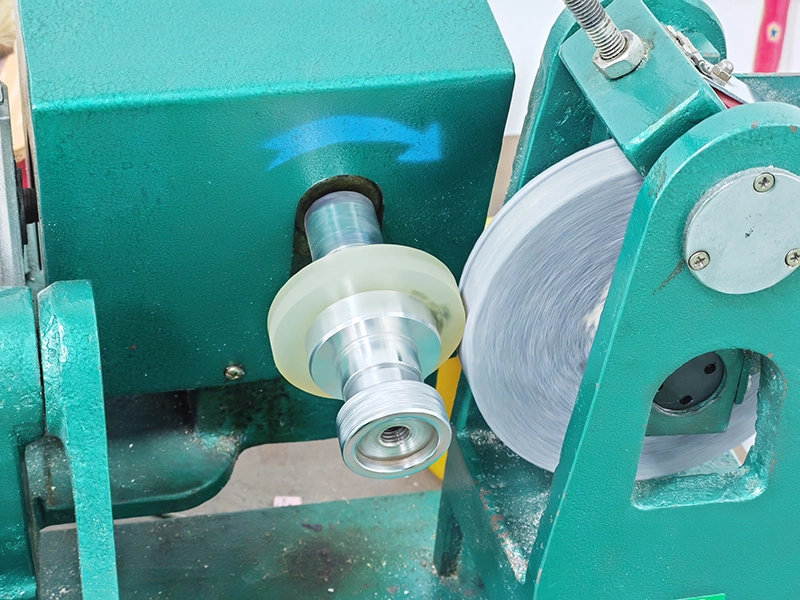
2. Heavy Loads — No Permanent Flat Spots
Anyone who runs rubber rollers knows the flat-spot problem. Let a heavy load sit on rubber overnight, and it stays deformed. The next time you start the line, you get vibration, noise, uneven wear, and even premature bearing failure.
Polyurethane handles higher loads with excellent resistance to compression set, tested in accordance with ISO 815. It flexes under pressure but returns to its original shape without permanent damage. That’s why PU rollers are the reliable choice for AGVs, heavy conveyors, and any system where consistent performance is non-negotiable. Learn more about "Heavy-Duty Polyurethane Idler Rollers for Belt Conveyor Systems".
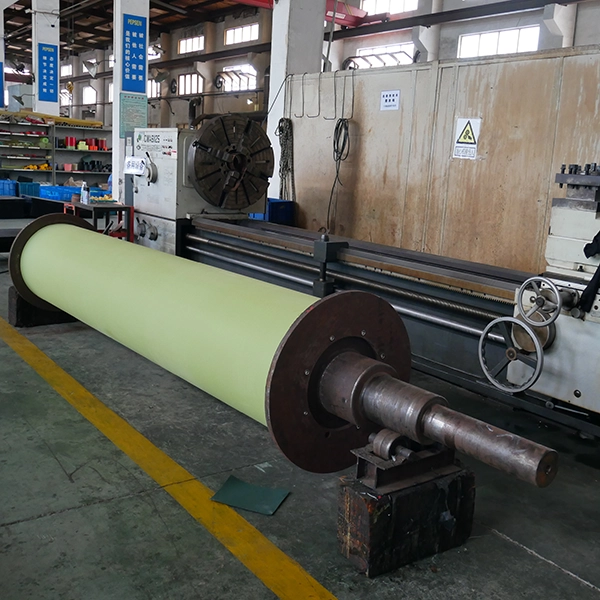
3. Chemical & Oil Resistance Rubber Lacks
Rubber doesn’t hold up to real industrial fluids. Oils, greases, solvents, and washdown chemicals make it swell, soften, go sticky, or crack without warning. One exposure can end a roller’s life entirely.
Polyurethane naturally resists most mineral oils, industrial solvents, and mild chemicals, verified under ISO 1817 testing standards. In metalworking, food processing, packaging, and coating operations—where rollers regularly contact lubricants or cleaning agents—PU stays stable. Rubber breaks down; polyurethane keeps working.
4. Total Cost of Ownership (TCO): What Procurement Actually Cares About
Upfront cost tricks a lot of teams into choosing rubber. But over a full service life, the math flips completely.
| Feature | Standard Rubber Roller | Polyurethane Roller |
|---|---|---|
| Initial Cost | 1.0x (Lower) | 2.5x (Higher) |
| Service Life | 3–6 Months | 18–36 Months |
| Maintenance Labor | High (frequent swaps) | Minimal |
| Annual ROI | Poor | Average 40% cost savings |
Even with a higher purchase cost, PU delivers a much lower cost per operating hour.
"Ensuring zero downtime starts with superior core adhesion. For a deeper look at how we prevent common failures like de-bonding, refer to our [Technical Procurement FAQ Guide]."
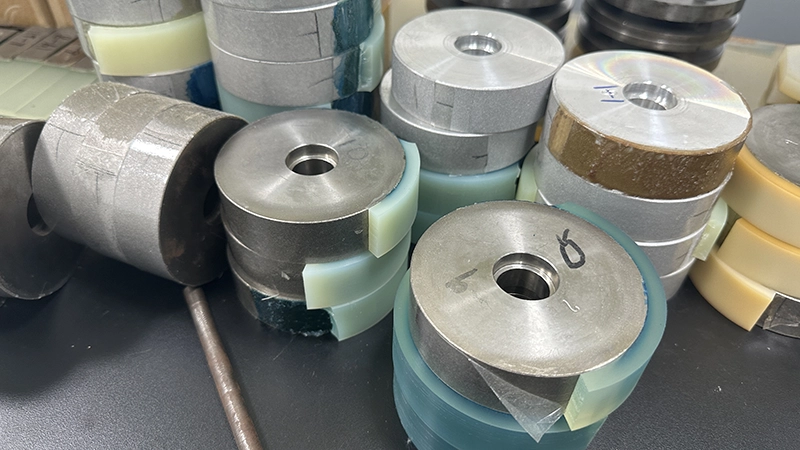
5. Field Example: 90-Day Rubber Swaps → 14+ Months of PU Service
A large packaging facility was replacing rubber drive rollers every 90 days due to heavy abrasion. We installed our custom 95 Shore A precision-ground polyurethane rollers as a direct replacement.
After 14 months of continuous runtime, the rollers showed no measurable wear. No unplanned shutdowns. No extra maintenance. No repeated parts orders. Just consistent, trouble-free performance.
"We used to dread the quarterly roller swaps, but since switching to Pepsen’s PU rollers, we haven't touched the line in over a year. The reliability is a game-changer for our maintenance team." — Plant Manager, Global Packaging Solutions
Final Thought: Is Polyurethane Right for Your Line?
If your operation involves heavy loads, high speeds, abrasion, oils, or chemicals, rubber simply isn’t built to keep up. Polyurethane isn’t just a better material—it’s a way to cut downtime and lower long-term costs.
Every application is different. Whether you need an aluminum core for lighter weight, a specific hardness for better grip, or a fully custom profile, our engineering team can help you select the right formulation without guesswork.
FAQ
Are polyurethane rollers food safe?
Yes, we offer FDA-compliant polyurethane rollers designed for meat, poultry, bakery, and packaging applications. These formulations meet strict food-contact standards with no leaching or contamination.
Can PU rollers be recoated?
Absolutely. Worn PU rollers can be stripped, re-bonded, and re-cast with new polyurethane material, extending core life and reducing replacement costs by up to 50% compared to buying new rollers.
How long do polyurethane rollers typically last?
In most industrial environments, our PU rollers last 18–36 months, which is 3–5 times longer than standard rubber rollers.