



Custom PU Roller Wheels for a Vietnam Equipment Customer: Solving Tolerance, Traction and Bonding Challenges
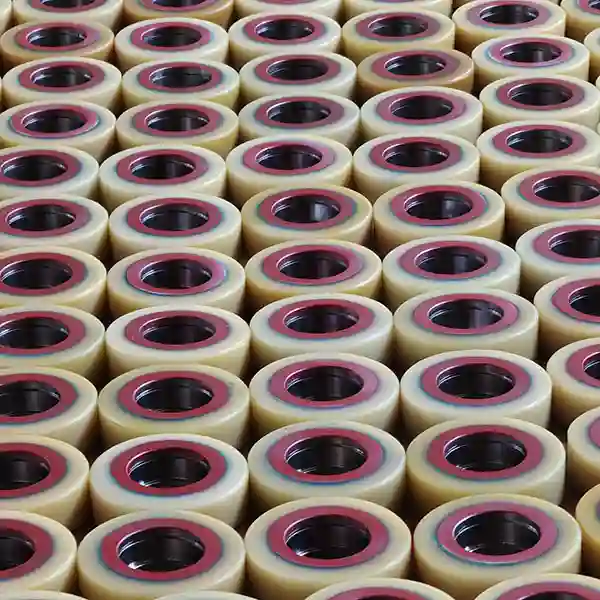
In custom polyurethane wheel production, the visible PU surface is only one part of the job. For industrial equipment users, a PU roller wheel must also match the drawing tolerance, maintain stable traction, and keep a reliable bond between the polyurethane tread and the metal core during repeated operation.
This case came from a customer in Vietnam who needed a customized Polyurethan-Rollenrad for industrial equipment. The customer had already worked with another supplier, but several technical problems remained unresolved. The aluminum wheel core could not consistently meet the drawing tolerance after PU coating, and the roller surface was not rough enough to provide the required grip during use.
After reviewing the drawings, application concerns and sample requirements, PEPSEN adjusted the production process instead of treating the wheel as a standard coated roller. The final solution combined process control, customized surface machining and an improved core structure designed for stronger polyurethane-to-metal bonding.
Project Background
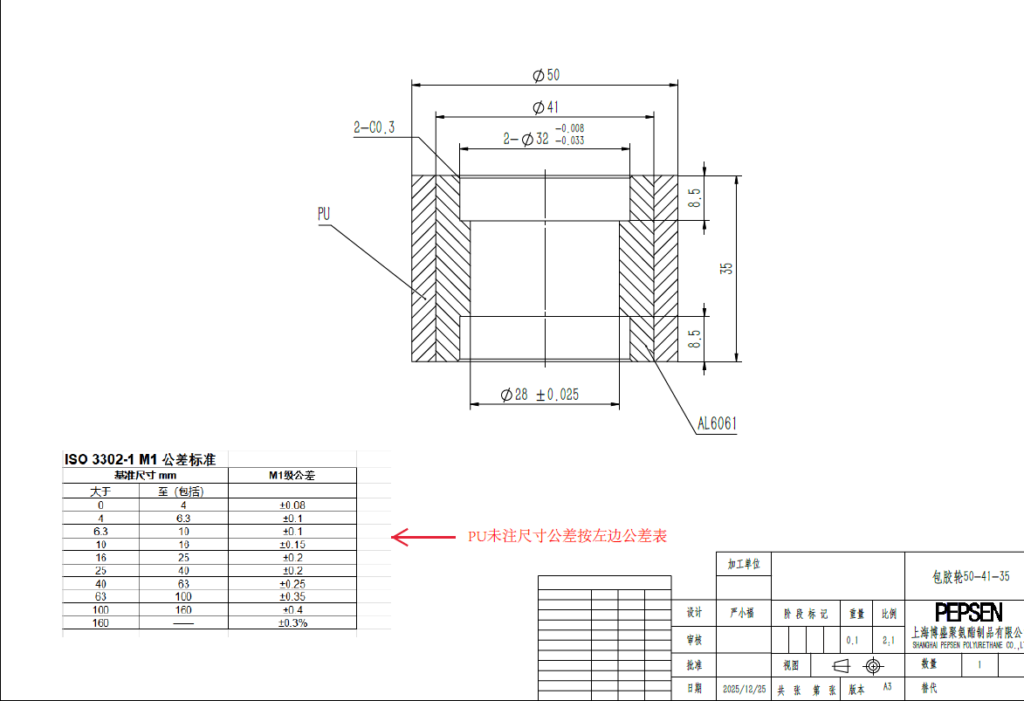
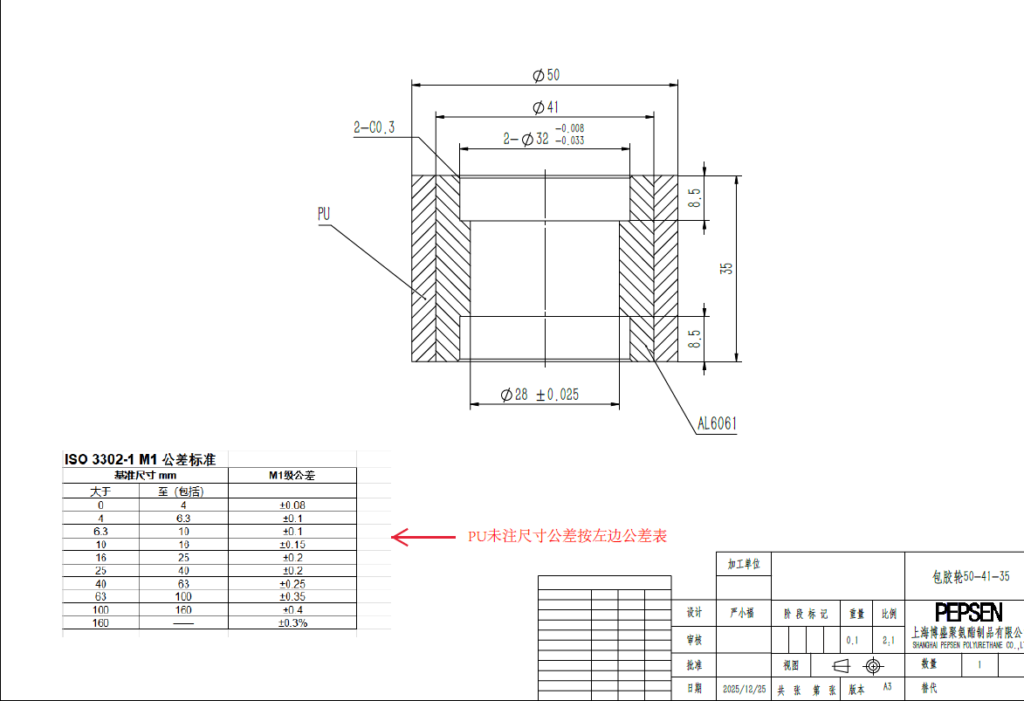
The customer required a PU roller wheel with an aluminum alloy core. Compared with steel, aluminum is lighter and easier to machine, but it is also more sensitive to deformation during certain production steps. In this project, the key issue was not only casting polyurethane onto the hub. The wheel core still had to remain within the required drawing tolerance after the coating and finishing process.
The customer’s previous supplier had two main difficulties:
- The aluminum alloy wheel core could not consistently meet the required tolerance after PU coating.
- The PU roller surface was too smooth, which reduced the grip needed in the customer’s equipment.
- The original hub structure left room for improvement in bonding strength between the polyurethane layer and the metal core.
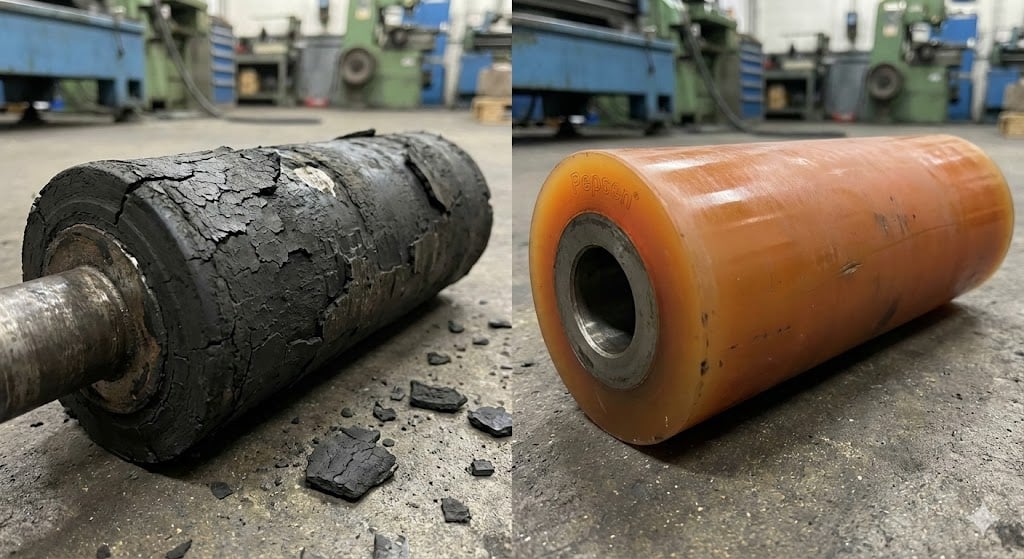
For a roller wheel used in industrial movement or transmission, these problems can affect more than appearance. Poor dimensional control may lead to unstable installation, vibration or uneven running. Insufficient surface roughness may reduce traction. Weak bonding design may increase the risk of peeling or delamination after long-term use.
Why the Aluminum Core Required a Different Process
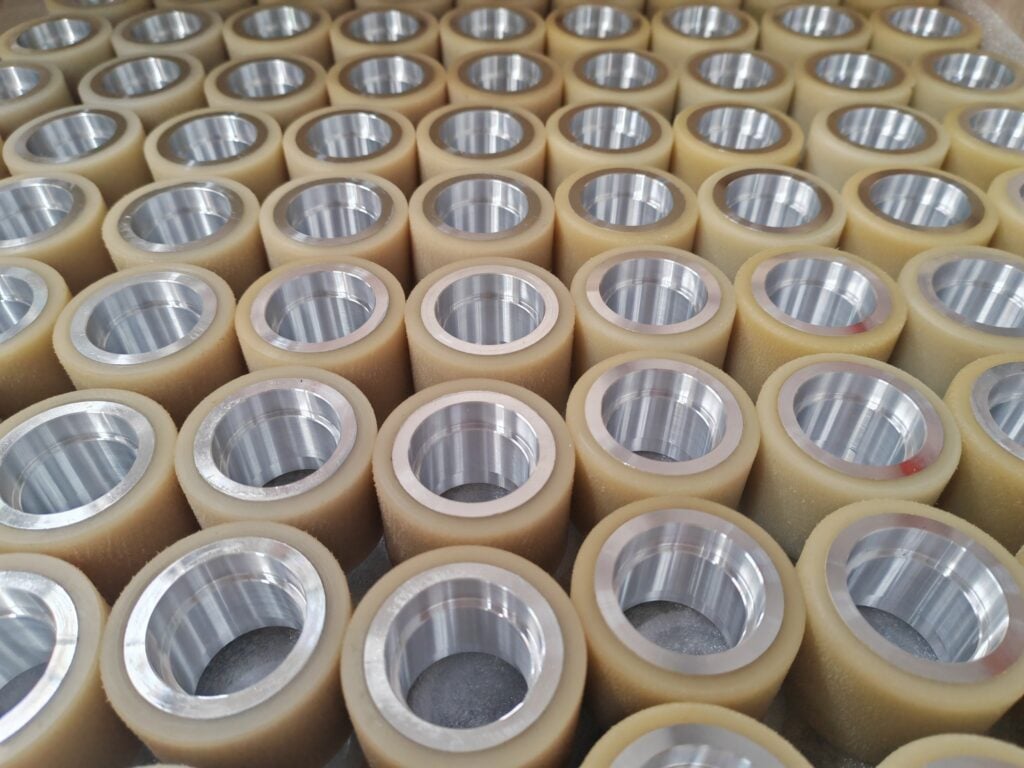
During our technical review, we found that the aluminum alloy core was more likely to deform during the rubber-like polyurethane coating process. If the process sequence was not arranged properly, the finished wheel could deviate from the drawing tolerance even when the original machined core was accurate.
For this reason, PEPSEN did not simply follow a standard casting route. We adjusted the process arrangement around the material behavior of the aluminum hub. The production steps were controlled to reduce deformation risk, and the wheel dimensions were checked after key stages rather than only at the final inspection.
This is an important point for customized polyurethane drive rollers and roller wheels. When metal cores, bonding layers and PU surfaces work together, the final precision depends on the entire process, not only on mold accuracy or CNC machining capability.
Customized Surface Machining for Better Grip
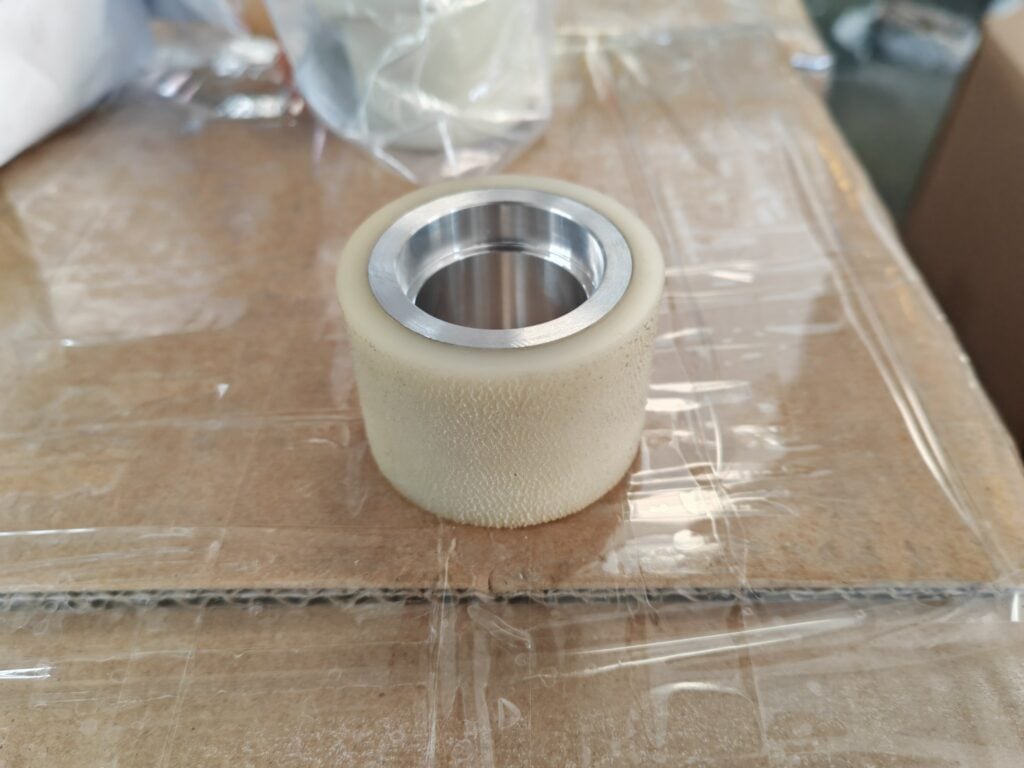
The customer also required a rougher PU surface to improve traction. A normal finished polyurethane surface was not enough for this application. If the surface is too smooth, the wheel may slip or fail to deliver stable friction under operating load.
To solve this, PEPSEN developed a customized machining approach for the polyurethane surface. We prepared special cutting tools suitable for PU processing, allowing the roller surface to reach the required rough texture without damaging the wheel geometry.
This step was especially important because polyurethane is elastic. It does not behave like metal during cutting. Tool angle, cutting force, feed rate and surface control all affect the final result. A rougher surface should improve grip, but it must not create uneven wear, tearing marks or dimensional instability.
Improved Wheel Core Design for Stronger Bonding
Besides solving tolerance and surface roughness issues, we also proposed an improved wheel core design. The purpose was to increase peeling resistance and reduce the risk of polyurethane delamination during long-term use.
For polyurethane-to-metal bonded wheels, bonding strength is not only determined by adhesive or surface treatment. The mechanical structure of the core also matters. A better core design can provide more secure anchoring for the PU layer and help the wheel resist repeated stress during operation.
In this case, the improved structure gave the customer a more reliable solution than simply copying the previous hub design. For custom wheel projects, this type of design review is often necessary when the application involves traction, repeated loading, impact or long operating cycles.
Inspection Before Delivery
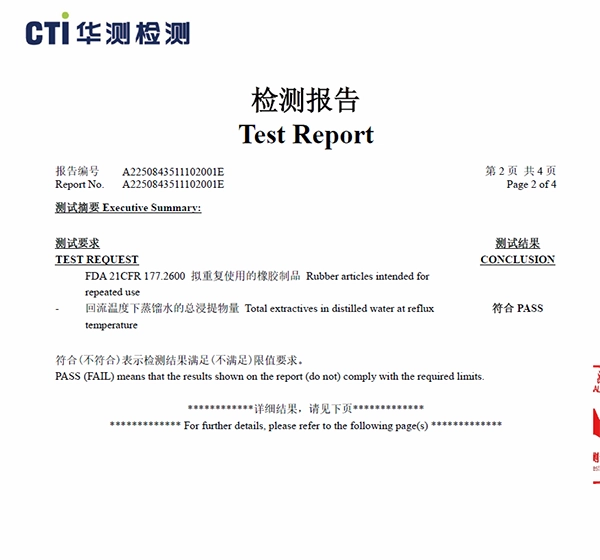
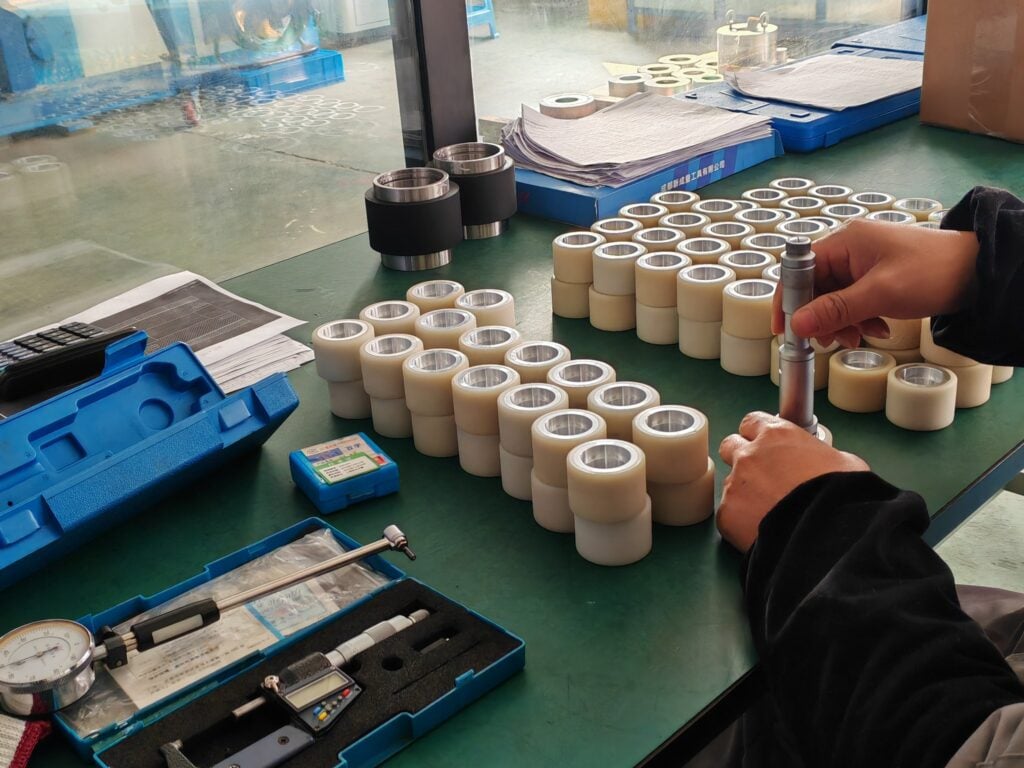
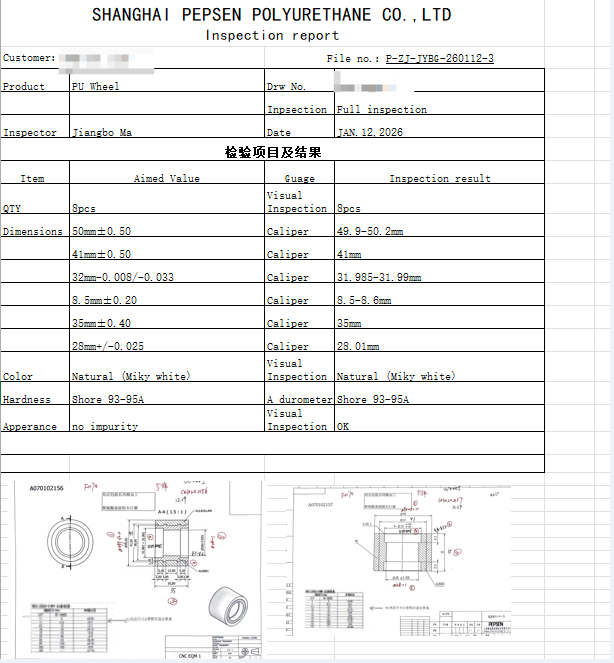
After production, the PU roller wheels were inspected before packing. The inspection focused on the dimensions required by the drawing, the finished surface condition and the general quality of the bonded polyurethane layer.
For customized PU parts, final inspection should confirm more than the outer diameter. Depending on the drawing, the inspection may include bore size, hub dimensions, concentricity, surface finish, hardness, bonding condition and visual defects. In this project, the inspection report was prepared to support the customer’s internal quality confirmation before installation.
Result of the Project
Through the adjusted production process, customized PU surface machining and improved aluminum core design, the project addressed the customer’s original problems more effectively:
- The aluminum alloy core was processed with better dimensional control after PU coating.
- The roller surface was made rougher to support the customer’s traction requirement.
- The improved core design helped increase bonding reliability and reduce delamination risk.
- The finished PU roller wheels were inspected and packed for shipment to the Vietnam customer.
This case shows why custom polyurethane wheels should not be selected only by size, hardness or price. When a wheel has a metal core, a bonding layer and a functional PU surface, the supplier must understand the drawing, the material behavior and the working condition together.
What Buyers Can Learn from This Case
If your project requires custom polyurethane roller wheels, it is helpful to provide more than a basic size list. A complete request allows the manufacturer to check whether the wheel design, PU hardness, hub material, bonding method and finishing process are suitable for the real application.
For a faster technical review, buyers can usually prepare the following information:
- 2D drawing, 3D file or original sample
- Wheel diameter, width, bore size and key tolerance requirements
- Hub material, such as aluminum, steel or cast iron
- Required PU hardness and surface condition
- Load, speed, working temperature and operating environment
- Whether the wheel requires high grip, low noise, abrasion resistance or chemical resistance
- Quantity, testing requirements and packing requirements
PEPSEN manufactures custom polyurethane wheels, rollers and urethane-to-metal bonded components according to drawings, samples and application requirements. If your current roller wheels have problems such as slipping, peeling, fast wear or poor dimensional stability, our team can review your drawings and recommend a suitable production solution.
Send your drawings, samples or application details through our custom polyurethane parts quote request, and PEPSEN will help evaluate the material, structure and process needed for your equipment.