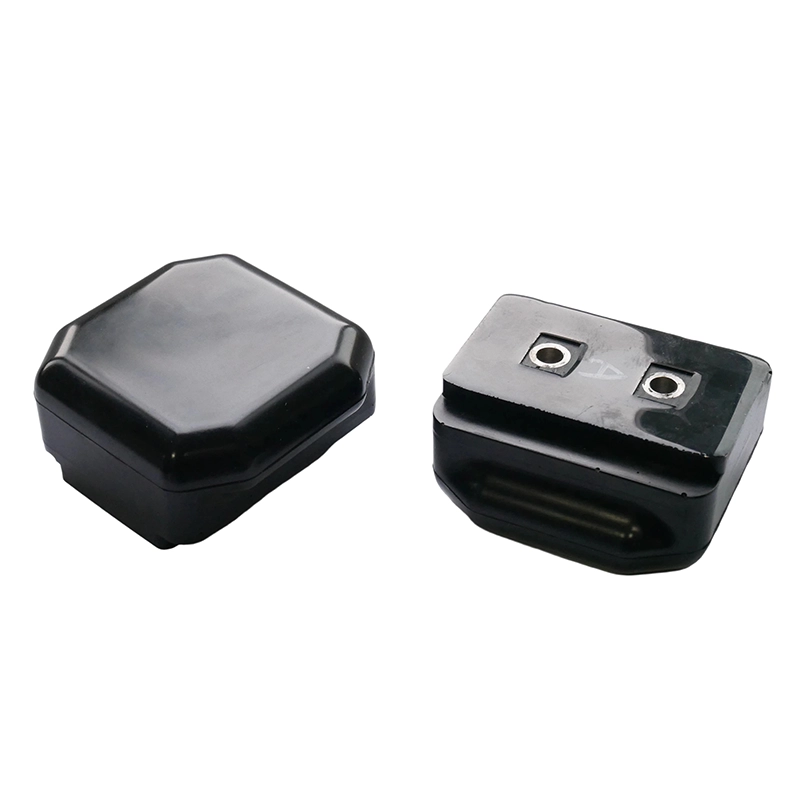
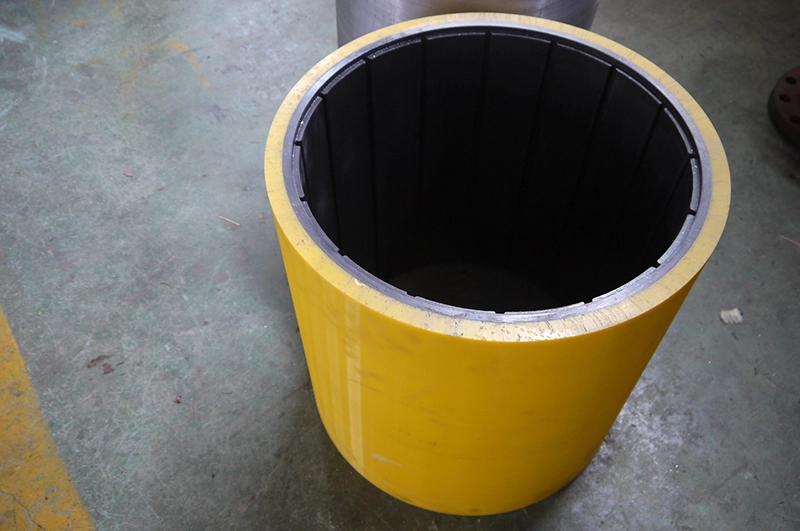
In heavy industrial operations, choosing between structural rigidity and elite elastomeric sealing has historically forced a costly compromise. Standard single-durometer polyurethane scraper blades, liners, and rollers either crack under high structural fastening torques or fail to comply with uneven surface interfaces, triggering premature mechanical breakdown, unscheduled maintenance, and astronomical hourly downtime costs. Relying on cheap rubber or multi-piece glued assemblies only compounds these risks, as weak adhesive interfaces quickly fail under structural shear stresses.
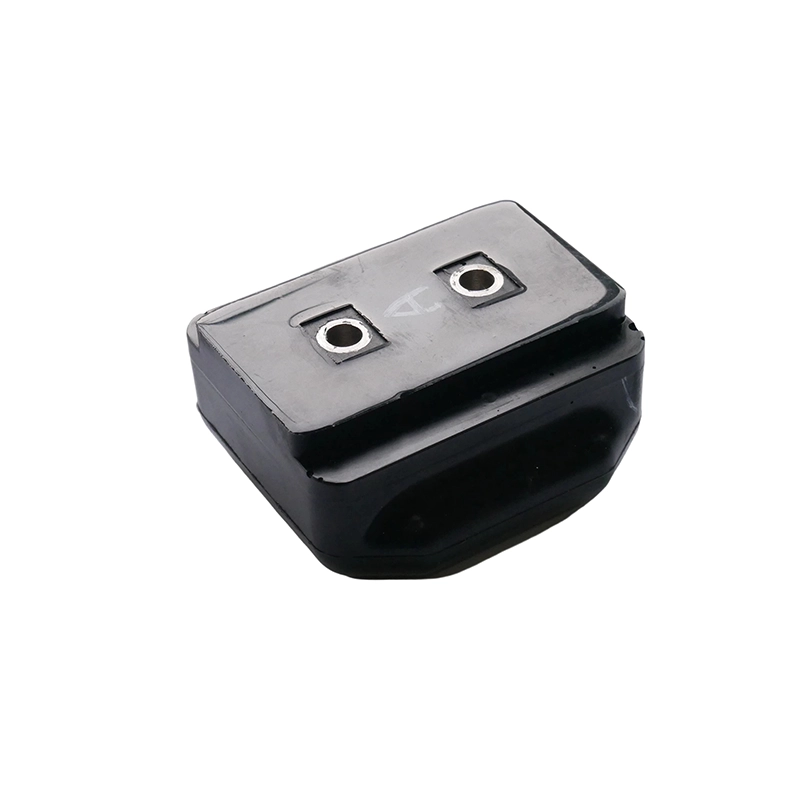
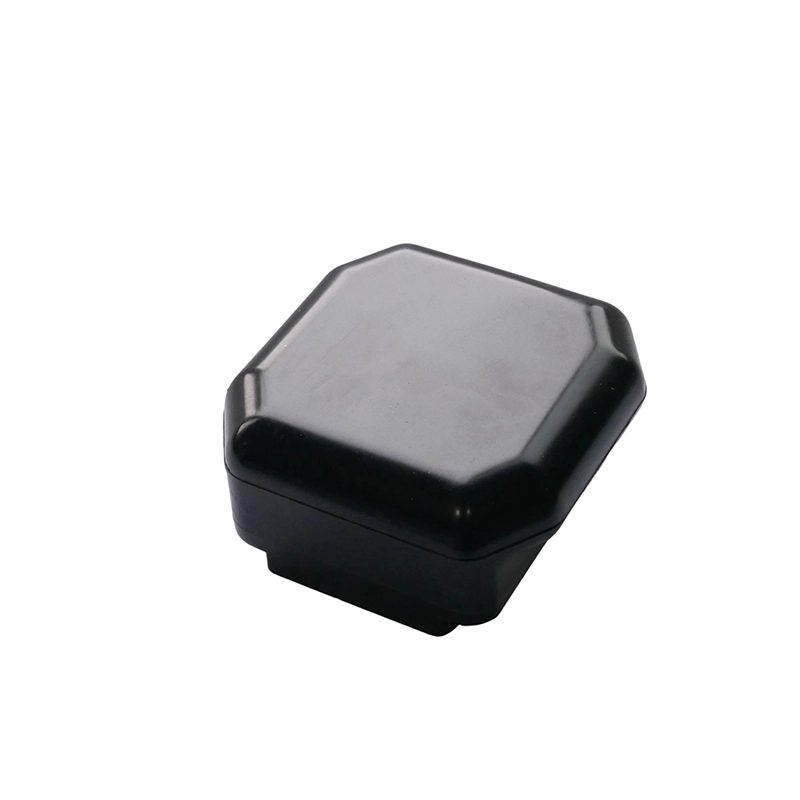
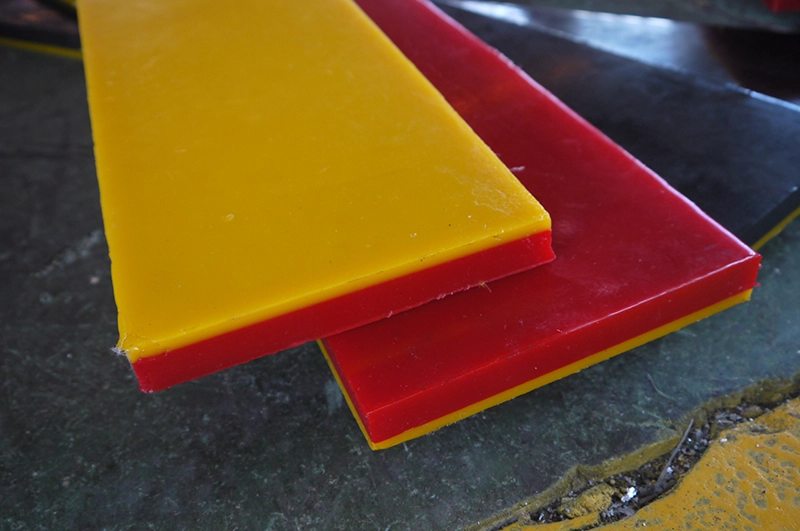
Our custom dual-hardness polyurethane parts solve this critical trade-off by combining two distinct durometers into a single, cohesive industrial component. Utilizing advanced dual-shot casting methodologies, we achieve a permanent molecular bond at the material interface that entirely eliminates the risk of delamination. Engineered specifically for mining systems, automated conveyor lines, and heavy manufacturing machinery, our dual-durometer urethane parts provide a rigid structural backbone alongside an abrasion-resistant elastomeric contact surface, slashing your total cost of ownership.
Industrial buyers can source custom dual-hardness polyurethane parts manufactured to precise application profiles, choosing from vast durometer pairings, structural cores, and high-wear geometry configurations engineered to eliminate multi-piece assembly failures.
사용자 지정 매개변수
Available Range / Technical Capabilities
Target Equipment & Applications
Durometer Combinations
Shore 50A to Shore 75D (Seamless molecular transition)
Conveyor belt scrapers, primary cleaners, high-impact chute liners
Base/Core Integration
Rigid PU (70D-75D), Carbon Steel, 316 Stainless Steel, Aluminum
Custom dual-hardness polyurethane parts are strategically deployed across severe-service industrial environments where components must simultaneously provide high-torque structural mounting and ultra-compliant surface wear protection.
- Conveyor Belt Cleaning Systems – High-speed primary and secondary belt scrapers utilize a rigid 75D base for chatter-free mounting and a resilient 65A edge to clean belts without causing cover wear.
- Industrial Processing Rollers – Heavy-duty drive and idler rollers utilize a hard inner core to resist deflection under load and a soft outer polyurethane sleeve to maximize traction.
- Chute and Hopper Liners – Modular impact liners combine a rock-solid energy-absorbing polyurethane backing with a lower-durometer face to redirect aggregate material impact vectors.
- Pipeline Inspection Pigs – Multi-hardness sealing discs ensure a rigid center body to maintain driving pressure alongside highly flexible sealing lips that conform to internal pipe wall geometric variations.
Advanced Technical Advantages of Multi-Hardness Urethane
Integrating two distinct physical material properties into a singular cast component eliminates the mechanical failure modes inherent to multi-piece bonded assemblies or low-grade commodity plastics.
- Zero Interfacial Delamination – Our specialized chemical pouring sequence creates an inseparable molecular bond at the durometer boundary, outperforming glued or vulcanized joints.
- Corrosion-Free Metal Replacement – Replacing steel-backed rubber components with all-polyurethane dual-hardness parts eliminates internal rust vectors and significantly reduces total rotating component weight.
- Excellent Vibration Damping – The lower-durometer elastomeric layer absorbs high-frequency impact energy, protecting surrounding structural metal frames from fatigue.
- Superior Abrasion Resistance – Our formulation provides sliding abrasion resistance that outlasts traditional carbon steels and commercial-grade rubbers by a factor of up to 4:1.
Why Choose Us as Your Custom Polyurethane Manufacturer?
We deliver factory-direct industrial manufacturing capabilities backed by strict international quality certifications, flexible ordering logistics, and robust engineering support to secure your global supply chain.
- Direct Factory Supply & OEM Design – Eliminate middleman markups with direct-to-manufacturer engineering access, comprehensive DFM blueprint evaluations, and fully customized material compounding.
- Certified Quality Management Systems – Production lines operate under strict conformance to ISO 9001:2015, ISO 14001:2015, and ISO 45001:2018 international manufacturing and safety standards.
- Low MOQ & Scalable Tiered Pricing – Optimize your procurement budget via our flexible minimum order quantities alongside competitive tiered wholesale pricing structures for mass production.
- 신속한 프로토타이핑 샘플 정책: 매우 낮은 MOQ로 현장에서 맞춤형 경도계를 테스트할 수 있는 패스트트랙 “평가판 배치” 프로그램을 제공합니다.
- Comprehensive Field Technical Support – Every order includes lifetime technical assistance, detailed material test certifications, batch-traceable SPC tracking records, and comprehensive failure analysis reporting.
Global Mining Equipment Manufacturer: Eliminating Primary Belt Scraper Delamination
Tier-1 Bulk Material Handling Systems Integrator (OEM)
Customer Bottleneck: A prominent mining OEM was experiencing catastrophic field failures with primary belt scrapers. The traditional design—a soft polyurethane blade bonded via commercial adhesive to an aluminum extrusion—consistently failed due to delamination at the bond line when subjected to high friction temperatures and heavy aggregate impact. This caused complete belt scraping failure, severe material carryback, and forced emergency maintenance shutdowns every 14 days.
Our Engineering Intervention: We redesigned the component into an integrated, metal-free dual-hardness polyurethane part. Our laboratory formulated a 75D rigid base to handle structural tensioning loads, transitioning via a controlled dual-shot casting method into an 83A abrasion-resistant cleaning tip. This casting method allowed the polymer chains to cross-link across the interface, creating a molecular bond tested to a shear strength exceeding 35N/mm^2.
Quantifiable Operational Results: Field data collected over a 12-month period confirmed zero delamination incidents across 1,200 deployed blades. The dual-hardness scrapers maintained continuous operation for 120 days before requiring scheduled tip adjustment, reducing unscheduled system downtime by 88% and providing the procurement team with a 40% reduction in total annual component spend.
Engineering Selection Protocol for Custom Dual-Hardness Parts
Maximizing the service life of multi-hardness polyurethane requires systematic engineering analysis of durometer ratios, dynamic load environments, chemical exposures, and fastening mechanics to match exact operational profiles.
Step 1: Define the Application Stress Profile and Structural Load Vectors
Determine whether the primary force vector is sliding abrasion, high-velocity impact, or steady-state compression. For structural mounting areas subject to high bolt torque, specify a hard base layer of at least Shore 70D to 75D to prevent compressive creep and bolt pull-through failures.
Step 2: Establish the Optimal Soft-to-Hard Durometer Differential
Select the active contact layer durometer based on required surface compliance. For tight fluid sealing or delicate product handling, specify a soft face of Shore 60A to 65A; for severe aggregate abrasion or scraping, optimize the working tip between Shore 83A and 90A to balance cut resistance with flexibility.
Step 3: Calculate the Required Layer Thickness Ratios and Fastening Clearances
Analyze your equipment space constraints to determine the spatial distribution of the two material layers. Maintain a minimum thickness of $10\text{ mm}$ for the rigid base layer to ensure structural stability, and ensure the soft elastomeric wear layer provides sufficient volume to accommodate expected material erosion over the target maintenance cycle.
Step 4: Validate Chemical, Thermal, and Environmental Compatibility
Match the underlying polyurethane prepolymer backbone to the operating environment. Specify high-performance PTMEG polyether based polyurethane for applications exposed to constant moisture, microbial risks, or temperatures down to -40 degree c; select premium ester-based formulations for maximum resistance to petroleum-based hydrocarbons, solvents, and intense sliding abrasion.
Why choose a single-cast dual-durometer polyurethane part over a rubber-to-metal bonded component?
Rubber-to-metal components fail prematurely due to interfacial galvanic corrosion and adhesive degradation under shear loads. A single-cast dual-hardness polyurethane part features an inseparable molecular cross-linking bond, completely eliminating debonding risks while offering up to 4x the abrasion resistance of standard industrial rubbers.
What are the mechanical limitations regarding the shore hardness gap in a multi-hardness urethane part?
Our specialized dual-shot casting process allows a seamless transition spanning from a compliant Shore 50A elastomeric surface up to a rigid Shore 75D structural backbone. The mechanical limit is not the hardness gap itself, but matching the thermal shrinkage rates of both formulations during post-cure to prevent internal stresses.
In which specific severe environments is a dual-hardness scraper blade mandatory instead of a single-durometer blade?
Dual-hardness blades are mandatory in high-speed bulk material handling conveyors (e.g., iron ore, coal) where single-durometer blades either chatter and crack under mounting tension (if too hard) or flex and bypass sticky fines (if too soft). The rigid base eliminates deflection while the soft edge protects the belt cover.
How do I justify the higher initial cost of dual-durometer parts to my financial department?
Conduct a Total Cost of Ownership (TCO) analysis. While dual-durometer components carry a higher initial tooling and casting cost, they extend equipment wear-life by 200% to 300% and drastically slash unscheduled maintenance downtime. The typical ROI is realized within the first two maintenance cycles.
How does your factory ensure batch-to-batch durometer consistency for long-term OEM contracts?
We utilize fully computerized multi-component casting machinery with closed-loop mass flow meters that maintain stoichiometric mixing tolerances within $\pm0.5\%$. Every batch is subjected to Statistical Process Control (SPC) and traceable hardness mapping across the boundary layer.
What causes a dual-hardness polyurethane part to delaminate at the interface, and how do you prevent it?
Delamination occurs if the secondary layer is cast after the primary layer’s polymer chains have fully cross-linked, leaving only weak physical adhesion. We prevent this via synchronized dual-pour timing, introducing the secondary formulation during the primary layer's active gelation phase to force molecular bonding.
How Long Do Dual Hardness Polyurethane Parts Last?
Service life depends on: Load (kg) Speed (m/s) Operating temperature (°C) Surface conditions Chemical exposure In many industrial applications, dual hardness polyurethane components achieve significantly longer operating life than standard rubber components due to improved wear resistance and stress distribution.