




How TDI, MDI and NDI Polyurethane Formulations Affect FDA Compliant Cast Parts Performance?
When engineers select polyurethane components for food processing equipment, FDA compliance is only one part of the material decision.
A successful FDA compliant polyurethane component must also maintain stable mechanical performance during real operating conditions, including:
- continuous friction
- repeated cleaning cycles
- compression loading
- impact conditions
- high-frequency operation
Many buyers focus only on whether a polyurethane material is “food grade” or “FDA compliant”.
However, the actual service performance depends heavily on the polyurethane formulation system.
At Shanghai Pepsen(FDA compliant cast polyurethane parts manufacturer), we develop custom cast polyurethane elastomers using different polyurethane chemistry systems, including:
- TDI-based polyurethane
- MDI-based polyurethane
- NDI-based polyurethane
The selected formulation directly affects:
- abrasion resistance
- tensile strength
- tear resistance
- compression recovery
- dynamic fatigue performance
- dimensional stability
For FDA related polyurethane components, material compliance and mechanical reliability must be considered together.material options for industrial equipment manufacturers and application engineers.
Why Polyurethane Chemistry Matters in FDA Compliant Cast Parts?
Cast polyurethane is not a single fixed material.
Its performance depends on the interaction between:
- isocyanate type
- polyol structure
- curing system
- crosslink density
- processing conditions
Different polyurethane systems create different molecular structures.
These differences influence how a component behaves under:
- mechanical stress
- repeated deformation
- temperature changes
- chemical exposure
For example:
A polyurethane roller used in a food conveyor system may require:
- FDA compliant formulation
- high abrasion resistance
- low surface damage
- stable dimensions after cleaning
A polyurethane wheel used in automated food handling equipment may require:
- dynamic fatigue resistance
- impact absorption
- low heat build-up
Therefore, selecting the correct polyurethane chemistry is an engineering decision, not only a regulatory decision.
Understanding TDI, MDI and NDI Polyurethane Systems
Industrial cast polyurethane elastomers mainly use several isocyanate systems.
The most common systems include:
| Polyurethane System | Chemical Base | Main Performance Characteristics |
|---|---|---|
| TDI Polyurethane | Toluene Diisocyanate | Balanced mechanical properties and wear resistance |
| MDI Polyurethane | Diphenylmethane Diisocyanate | Improved dynamic performance and flexibility |
| NDI Polyurethane | Naphthalene Diisocyanate | Excellent fatigue resistance and dimensional stability |
Each system can be engineered for FDA compliant polyurethane applications when the complete formulation, raw materials and manufacturing controls meet the required requirements.
TDI Based Polyurethane Formulations for FDA Cast Components
Balanced Performance for Wear Resistant Food Processing Parts
TDI polyurethane is widely used in cast polyurethane manufacturing because it provides a balanced combination of mechanical properties.
For FDA related industrial components, TDI formulations are often selected when the application requires:
- reliable wear resistance
- controlled hardness
- good elasticity
- stable production performance
Typical applications include:
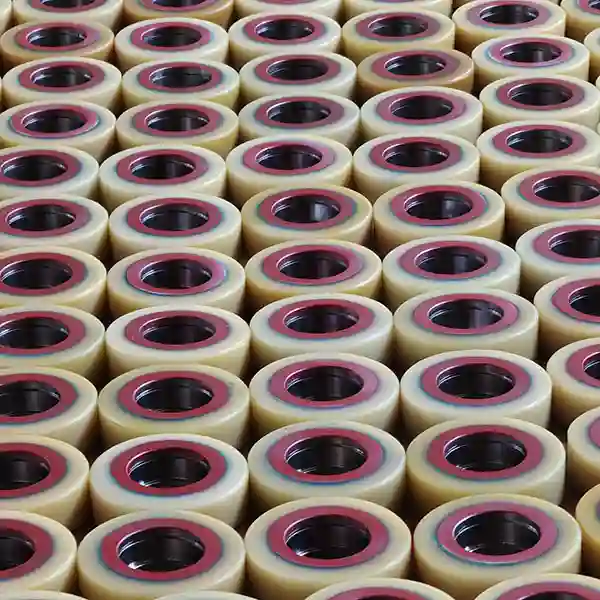
- food conveyor rollers
- guide rollers
- scraper components
- wear pads
Advantages of TDI Polyurethane
Excellent Abrasion Resistance
Food processing equipment often operates continuously with repeated contact between materials and machine components.
TDI polyurethane can be formulated to provide excellent resistance against:
- surface wear
- friction damage
- repeated contact
This makes it suitable for components exposed to continuous movement.
Wide Hardness Adjustment Range
One advantage of cast polyurethane is the ability to customize hardness according to operating requirements.
Typical hardness range:
Shore A 40-95
Soft formulations provide:
- improved impact absorption
- better flexibility
Harder formulations provide:
- higher load capacity
- improved wear resistance
Typical TDI FDA Polyurethane Applications
| Component | Main Requirement |
|---|---|
| Conveyor rollers | Wear resistance |
| Guide wheels | Surface protection |
| Scraper blades | Elastic recovery |
| Wear pads | Impact absorption |
MDI Based Polyurethane Formulations for Dynamic FDA Applications
Improved Performance for High Cycle Equipment
MDI polyurethane is commonly selected for applications where polyurethane components experience repeated movement and dynamic loading.
In food processing and packaging equipment, components may operate:
- continuously
- at high speed
- through thousands of cycles per day
MDI formulations can provide improved performance in these conditions.
Typical applications include:
- automated handling polyurethane wheels
- high-speed rollers
- drive components
- vibration control parts
Advantages of MDI Polyurethane
Improved Dynamic Fatigue Resistance
Dynamic applications create repeated deformation inside polyurethane.
Over time, this can cause:
- heat generation
- material fatigue
- loss of elasticity
MDI polyurethane formulations can be optimized for improved fatigue resistance during continuous operation.
Lower Heat Build-Up
For rotating components, internal heat generation can significantly affect service life.
MDI systems are often selected when engineers need better control of:
- hysteresis
- heat accumulation
- long-term performance stability
Better Flexibility Under Temperature Variation
MDI polyurethane can maintain mechanical properties across changing environments, making it suitable for demanding industrial conditions.
Typical hardness range:
Shore A 50-90
NDI Based Polyurethane Formulations for High Performance FDA Components
Maximum Durability for Severe Operating Conditions
NDI polyurethane is generally selected for applications where long-term mechanical stability is critical.
Compared with general-purpose polyurethane systems, NDI formulations are designed for demanding environments requiring:
- high fatigue resistance
- low hysteresis
- excellent dimensional stability
Typical applications include:
- high-performance rollers
- precision wear mining components
- heavy-duty polyurethane wheels
Advantages of NDI Polyurethane
Excellent Fatigue Resistance
Repeated loading can gradually reduce polyurethane performance.
NDI formulations provide excellent resistance against fatigue caused by:
- compression cycles
- repeated impact
- continuous deformation
Low Heat Generation
For high-cycle applications, reducing internal heat generation helps improve service life.
Long-Term Dimensional Stability
Precision equipment requires components to maintain consistent dimensions during operation.
NDI polyurethane provides stable mechanical performance over extended service periods.
Typical hardness range:
Shore A 70-95
Comparing TDI, MDI and NDI Polyurethane Formulations
Selecting the correct polyurethane system depends on application requirements.
| Property | TDI | MDI | NDI |
|---|---|---|---|
| Abrasion Resistance | Excellent | Excellent | Very Excellent |
| Dynamic Fatigue Resistance | Good | Excellent | Excellent |
| Heat Build-Up Control | Good | Better | Excellent |
| Elastic Recovery | Excellent | Excellent | Excellent |
| Dimensional Stability | Good | Very Good | Excellent |
| Typical Application | General FDA components | Dynamic FDA components | High-performance components |
How We Select the Right FDA Polyurethane Formulation
At Shanghai Pepsen, polyurethane material selection starts with the working conditions of the component.
Our engineers evaluate:
Operating Load
Including:
- static pressure
- impact force
- compression level
Higher loads may require improved mechanical strength and tear resistance.
Operating Speed
For rollers and wheels, speed affects:
- friction
- heat generation
- fatigue life
High-speed applications usually require better dynamic performance.
Cleaning and Chemical Environment
FDA related equipment often experiences:
- repeated washing
- cleaning chemicals
- moisture exposure
The polyurethane formulation must maintain:
- mechanical properties
- surface integrity
- dimensional stability
Expected Service Life
Material selection should consider:
- replacement frequency
- maintenance requirements
- operating cycles
The correct formulation can significantly improve component durability.
How Cast Polyurethane Manufacturing Supports FDA Applications
Cast polyurethane provides advantages for customized FDA components because engineers can control:
- hardness
- elasticity
- wear resistance
- geometry
- bonding structure
Compared with standard rubber materials, cast polyurethane allows more precise adjustment of mechanical properties.
Compared with injection molded TPU products, cast polyurethane is better suited for many large, heavy-duty industrial components requiring customized elastomer performance.
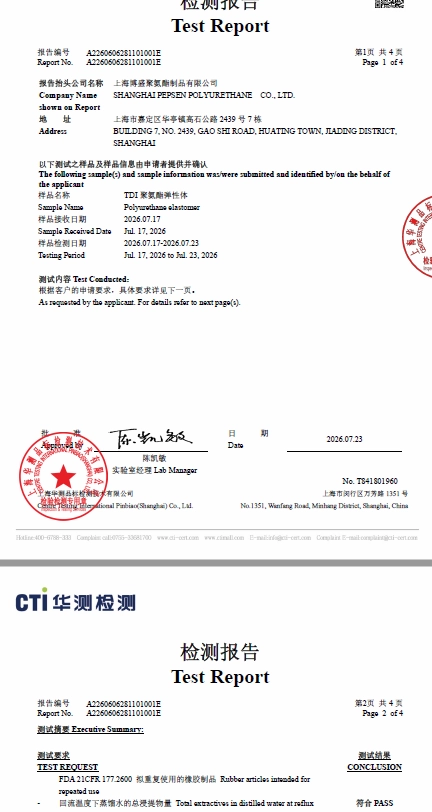
FDA Testing and Quality Control of Polyurethane Formulations
A polyurethane formulation is not validated only by chemical selection.
Consistent performance requires controlled manufacturing processes.
At Shanghai Pepsen, quality control includes:
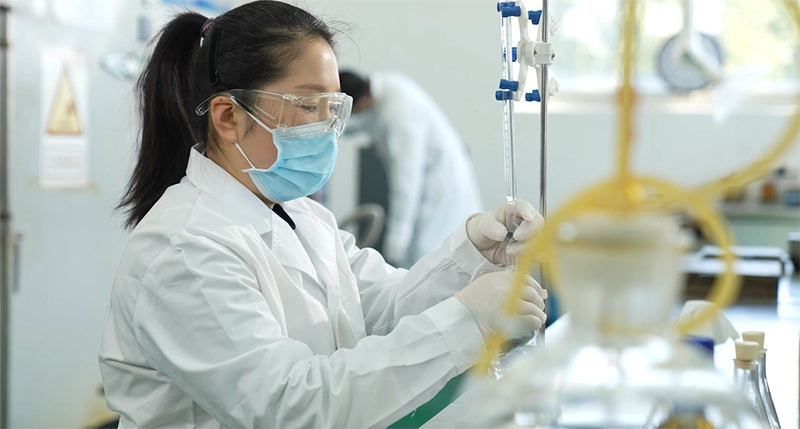
Raw Material Inspection
Checking:
- incoming materials
- batch consistency
- supplier documentation
Process Control
Monitoring:
- formulation ratios
- curing conditions
- casting parameters
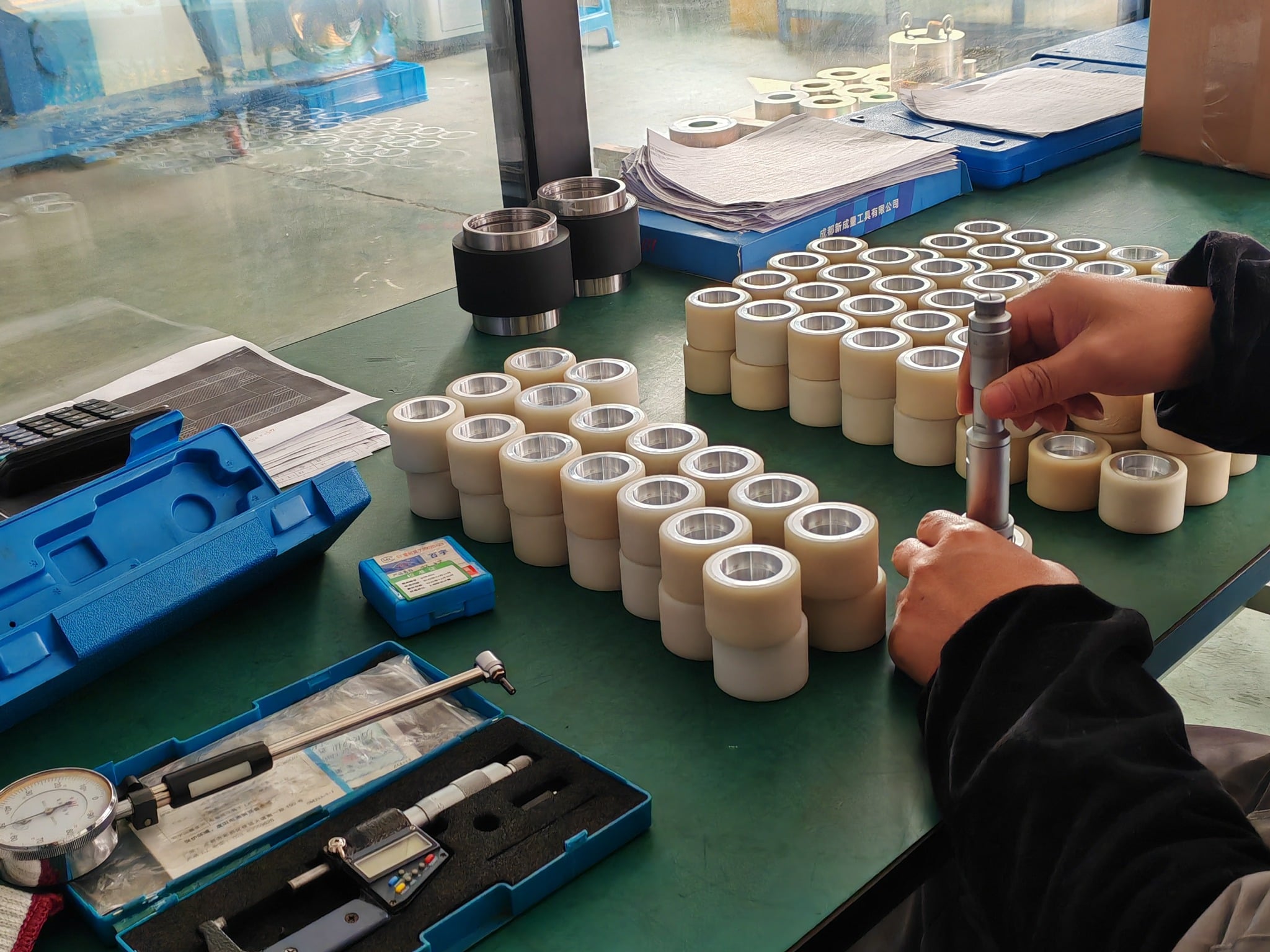
Finished Component Inspection
Including:
- hardness testing
- dimensional inspection
- mechanical performance verification
These controls help ensure stable performance of FDA compliant cast polyurethane components.
Frequently Asked Questions About FDA Polyurethane Formulations
Are TDI, MDI and NDI polyurethane materials FDA compliant?
FDA compliance depends on the complete polyurethane formulation, raw materials, manufacturing process and required testing results.
The isocyanate system alone does not determine compliance.
Which polyurethane system is best for FDA rollers?
The best system depends on:
- operating speed
- load
- wear conditions
- cleaning environment
TDI, MDI and NDI formulations may all be suitable depending on application requirements.
Material selection also depends on hardness, load and operating conditions.
Why are different polyurethane formulations needed?
Different applications require different combinations of:
- abrasion resistance
- elasticity
- fatigue resistance
- dimensional stability
A customized formulation provides better performance than a standard material selection.
Can Shanghai Pepsen customize FDA polyurethane formulations?
Yes.
We develop custom cast polyurethane solutions based on:
- application conditions
- mechanical requirements
- component design
- performance targets
Custom FDA Compliant Cast Polyurethane Solutions
Shanghai Pepsen develops custom cast polyurethane elastomer solutions for OEM manufacturers requiring both regulatory compliance and reliable mechanical performance.
Our engineering capability includes:
- TDI polyurethane formulations
- MDI polyurethane formulations
- NDI polyurethane formulations
- custom cast polyurethane manufacturing
- performance optimization
For FDA compliant polyurethane rollers, wheels, seals and custom components, our engineering team can help select the appropriate polyurethane system for your application.