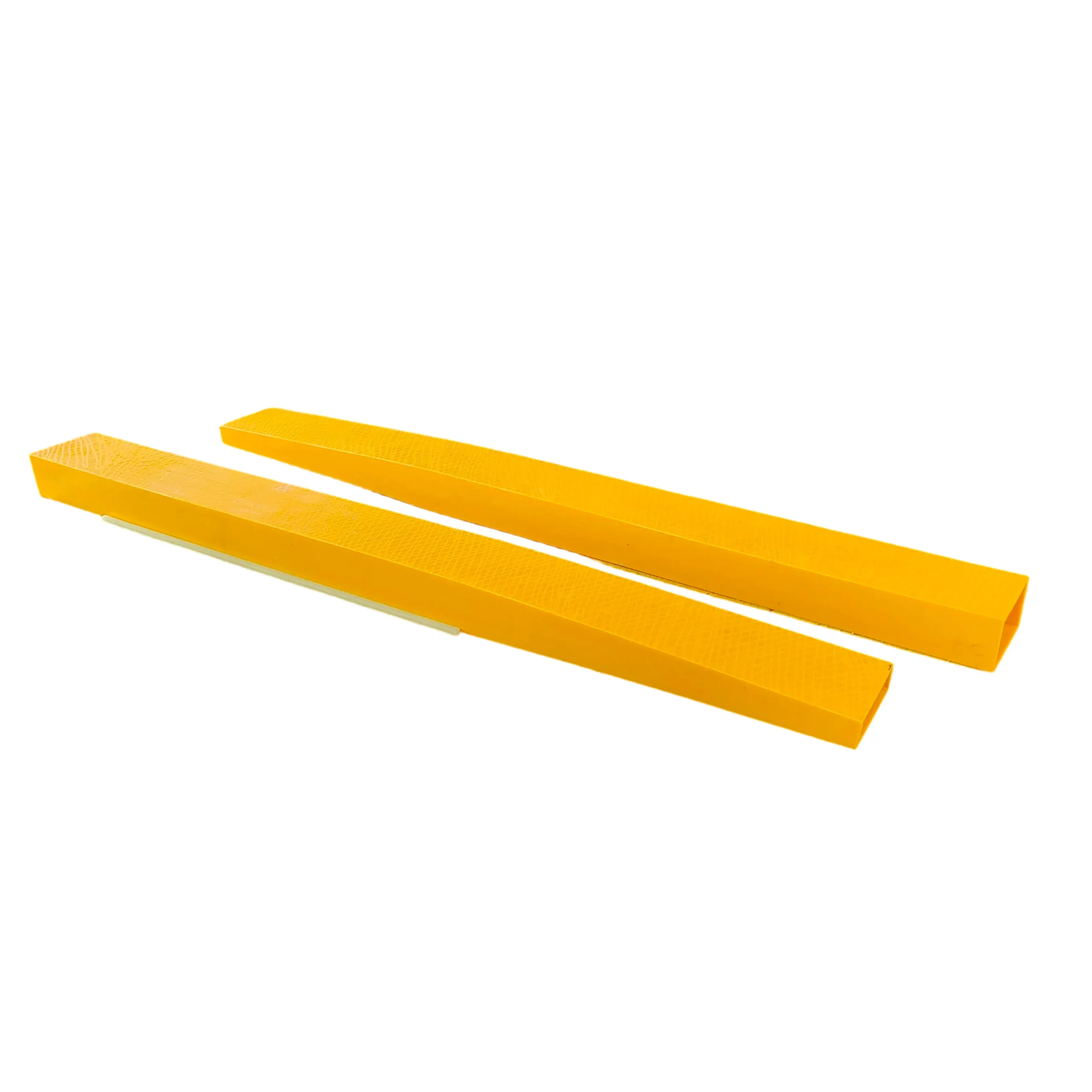
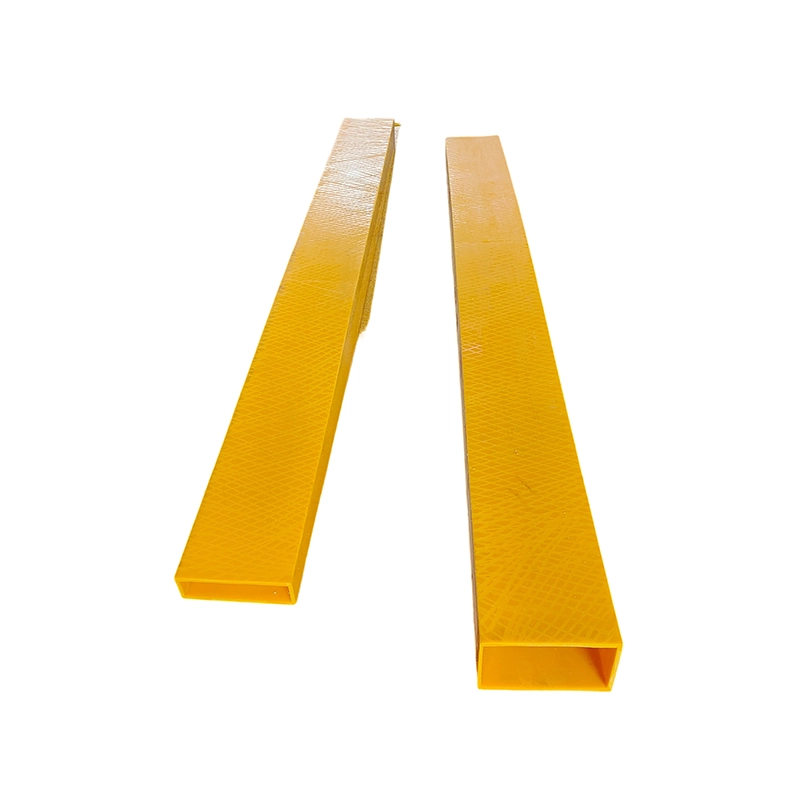
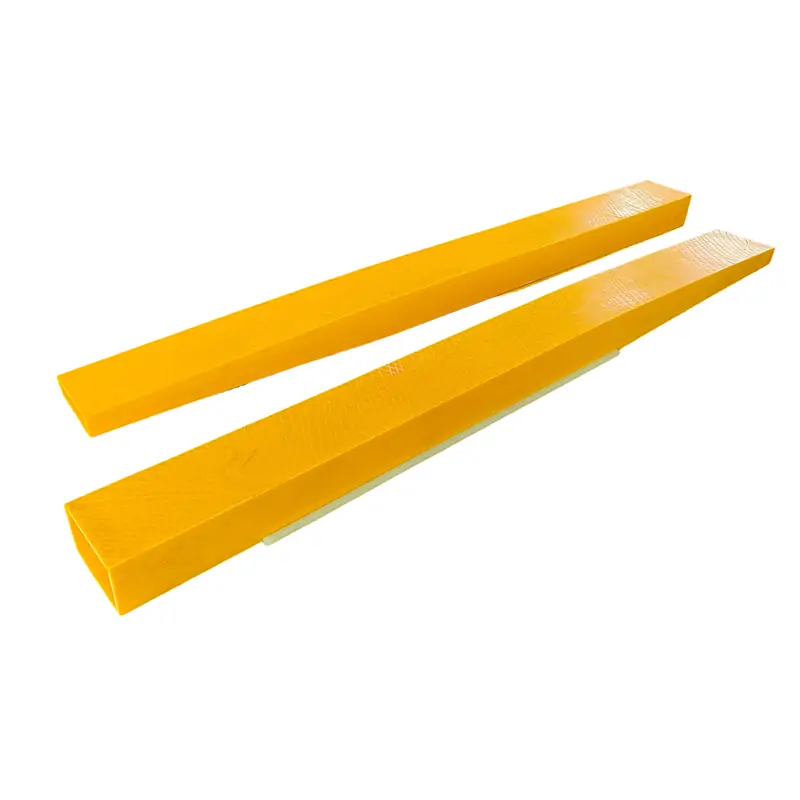
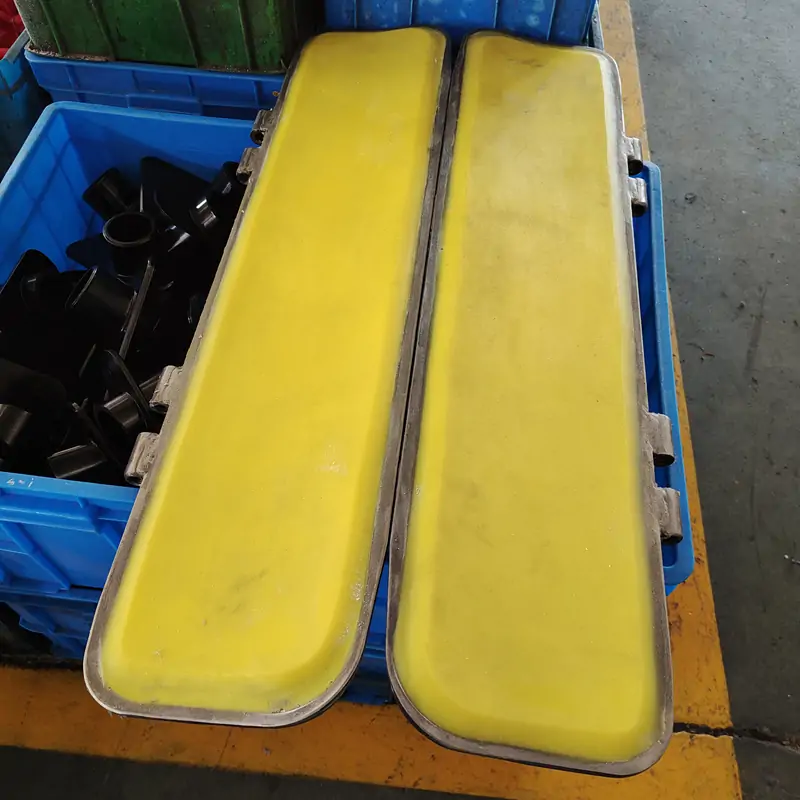
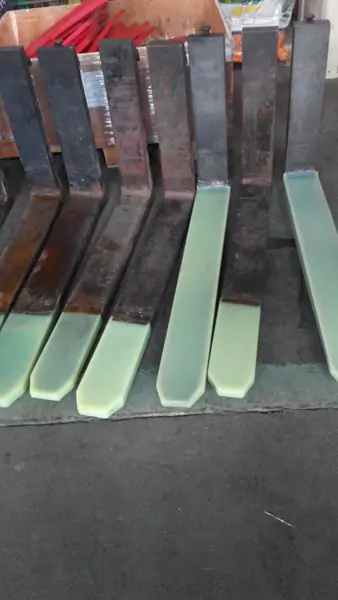
Fork contact can scratch finished products, tear packaging, deform pallets, or create maintenance work. Protection-sleeve performance depends on material grade, fit, wall thickness, load, movement, contaminants, temperature, and inspection intervals.
We manufacture Custom Cast Polyurethane Load and Fork Blade Protection Sleeves for industrial material handling equipment. Formulation, hardness, wall thickness, surface, dimensions, and retention can be matched to warehouse logistics, food processing, steel service centers, automotive assembly, and other applications.
OEM forklift manufacturers and industrial users require more than standard fork covers. Properly engineered cast polyurethane sleeves should match fork dimensions, operating loads, temperature conditions, and wear environments to maximize service life while minimizing replacement frequency and handling damage.
Modern warehouses rarely use identical forks.
Different industries require different material formulations, hardness, dimensions, and wear characteristics.
For custom projects, sleeve dimensions and material requirements are reviewed against the application.
Customization Matrix
Custom Parameter
Available Options
Typical Industries
Hardness
Selected from application data and trials
Warehousing, Automotive, Food
Material Grade
Polyester PU / Polyether PU
Logistics, Cold Storage, Mining
Sleeve Length
Custom to the measured fork and protected length
OEM Forklift Manufacturers
Fork Width
Customized
Material Handling Equipment
Fork Thickness
Customized
Distribution Centers
Wall Thickness
Selected from load, clearance, fit, and wear allowance
Heavy-Duty Warehouses
Color
Yellow, Black, Red, Blue, Green
Safety Identification
Surface Finish
Smooth / Textured
Paper Mills, Packaging
Working Temperature
Specified for the selected grade and actual duty
Cold Storage & Outdoor Logistics
Branding
Laser Logo / Molded Logo
OEM Equipment
Packaging
Individual / Bulk Export
International Distributors
Polyurethane Fork Protection Sleeves for Warehouse, Logistics and Industrial Material Handling
Choosing the correct fork protection sleeve depends on operating conditions rather than price alone. Abrasion, impact frequency, load weight, floor conditions, and transported materials determine the ideal polyurethane formulation and hardness for long-term performance.
Cast polyurethane can be formulated and molded for different industry requirements, subject to application testing.
Warehouse Logistics
Protect finished cartons during pallet transport.
Reduce pallet damage.
Lower maintenance frequency.
Ideal for distribution centers operating multiple shifts.
Helps prevent brittle cracking found in conventional rubber material
How We Manufacture Custom Cast Polyurethane Fork Protection Sleeves with Consistent Quality
The durability of a polyurethane sleeve depends as much on manufacturing discipline as on raw material selection. Controlled casting, curing, dimensional inspection, and traceable quality records reduce batch variation and improve long-term performance in demanding industrial applications.
Material selection and manufacturing controls both influence sleeve quality.
Production stages can influence hardness, dimensions, surface condition, bonding, and material consistency.
Step 1 — Raw Material Inspection
Before production begins, incoming raw materials are verified for:
Application Examples for Custom Polyurethane Fork Sleeve Selection and Validation
Successful fork protection projects match polyurethane formulation, hardness, geometry, and retention to actual operating conditions. The following application examples show what to review and how to validate a candidate design without assuming a universal result.
Application Example 1 – Warehouse Automation
Application
Electric forklifts handling packaged goods in a warehouse automation system.
Observed Condition
Existing rubber fork covers were used on electric forklifts handling packaged goods.
Conditions to document include:
Fork covers slipping during operation
Carton surface damage
Frequent sleeve replacement
Increased maintenance labor
Operating data to record:
Shift pattern
Daily operating hours
Engineering Review
Review the fork profile, load, product surface, schedule, and retention needs before selecting:
Hardness selected from load, fit, and product-surface requirements
Increased wall thickness
Internal anti-slip profile
Custom interference fit
Validation Checks
During a representative trial, record whether:
Track sleeve wear and replacement frequency.
Track product-surface damage observations.
Set fork inspection intervals from risk and observed condition.
Record maintenance time and replacement triggers.
Standardize the sleeve design only after fit, wear, load handling, and product-surface checks are accepted.
Application Example 2 – Steel Service Center
Application
Forklifts handling painted and galvanized steel products.
Observed Condition
Steel sheets with painted and galvanized surfaces were being scratched during transport.
The fork condition and product-surface damage should be documented separately.
Engineering Review
Evaluate material grade, hardness, wall thickness, edge support, and replacement access, including:
High abrasion-resistant cast polyurethane
Hardness selected from load, abrasion, and impact requirements
Increased edge reinforcement
Replaceable sleeve design
Validation Checks
During a representative trial, check whether:
Inspect product surfaces for marks or scratches.
Measure wear pattern and remaining wall thickness.
Continue fork inspections according to the equipment maintenance plan.
Review whether one validated sleeve design can cover the intended fork variants.
Application Example 3 – Cold-Storage Handling
Application
Forklifts and handling systems used in refrigerated or washdown areas.
Observed Condition
Existing sleeves showed reduced flexibility or cracking in refrigerated service.
Operating conditions:
Record the minimum operating and storage temperature
Frequent washdown procedures
Daily exposure to moisture
Engineering Review
Review the minimum temperature, moisture, cleaners, load, and required flexibility before selecting:
Polyether-based cast polyurethane
Lower glass-transition formulation
Hardness selected from temperature, flexibility, and load requirements
Moisture-resistant material system
Validation Checks
During a representative trial, check whether:
Measure flexibility and fit at the required low temperature.
Inspect for cracking after repeated cold-service cycles.
Set maintenance intervals from the trial and risk assessment.
Approve the revised formulation only after application-specific acceptance criteria are met.
How to Select the Right Polyurethane Fork Protection Sleeves for Your Forklift
Selecting the correct fork sleeve requires evaluating operating conditions rather than choosing the hardest available material. Load weight, floor conditions, temperature, transported products, and maintenance expectations should all influence material selection and sleeve design.
Step 1 – Identify Your Operating Environment
Ask the following questions:
Indoor or outdoor operation?
Dry or wet conditions?
Exposure to oils or chemicals?
Cold storage application?
High-impact handling?
These factors determine whether polyester or polyether polyurethane is more suitable.
Step 2 – Determine Load Characteristics
Important information includes:
Maximum load (kg)
Load frequency
Pallet type
Product surface sensitivity
Heavy steel products require different material characteristics than finished furniture or food packaging.
Step 3 – Select the Appropriate Hardness
Typical engineering recommendations:
Working Condition
Suggested Hardness
Fragile products
Prioritize cushioning and surface compatibility
General warehouse handling
Balance grip, wear, fit, and load
Heavy-duty logistics
Evaluate load, impact, clearance, and wear
Abrasive industrial applications
Evaluate abrasion, bending, impact, and product contact
Selecting the highest hardness is not always the best solution. Excessive hardness may reduce impact absorption and increase stress on delicate products.
Step 4 – Confirm Fork Dimensions
Provide:
Fork width (mm)
Fork thickness (mm)
Fork length (mm)
Custom dimensions improve fit and reduce sleeve movement during operation.
Step 5 – Discuss Expected Service Life
Engineering targets vary by application.
We typically discuss:
Planned maintenance intervals
Annual operating hours
Replacement strategy
Spare parts planning
This information helps determine the most cost-effective formulation rather than simply maximizing wear resistance.
How should polyurethane, rubber, and nylon be compared for fork protection sleeves?
Compare specific grades for abrasion, tear behavior, cushioning, friction, temperature, chemical exposure, marking risk, fit, and cost. No material is universally superior; test representative sleeves with the actual fork, load, product surface, and operating conditions.
How is polyurethane-to-metal bond integrity controlled?
Bond integrity depends on core design, cleaning, surface preparation, bonding system, casting, cure, edge geometry, load, and environment. Define the expected failure mode and inspection or test requirement; no bond should be guaranteed without application data and validation.
How is non-marking performance checked for polished or painted products?
Request a non-marking formulation and test it on the actual aluminum, glass, paint, or other finish under representative load, sliding, temperature, cleaners, oils, and dwell time. Inspect for residue, color transfer, indentation, and scratches before production approval.
How are thickness and hardness selected for heavy-duty fork sleeves?
Use load, fork profile, contact area, available clearance, product sensitivity, impact, sliding, temperature, and wear allowance to select wall thickness and hardness together. Confirm fit, deformation, grip, and product protection with a representative trial.
What compliance or electrical requirements can be specified for polyurethane sleeves?
Food-contact, restricted-substance, antistatic, or electrical requirements depend on the exact formulation, test method, supplier records, destination market, and application. State the required standard and acceptance limits before quotation, then review the applicable declarations or test reports for the selected material.
How are protection sleeves retained on forklift tines?
Retention may use a controlled interference fit, mechanical stop, fastener, or another design approved for the fork and duty. Provide blade width, thickness along the taper, length, tip profile, clearances, load direction, and operating movement, then verify installation and removal on the actual fork.
Can fork sleeves affect forklift capacity, clearance, or load center?
A sleeve adds thickness and may change clearance, load position, visibility, grip, and handling. Confirm the proposed sleeve with the forklift, fork, and attachment manufacturers and the site safety authority; never operate outside the equipment rating or approved handling procedure.