

Custom polyurethane products are made to meet specific requirements. A polyurethane roller may need to maintain its diameter and running surface. A wheel may need to fit an existing hub and perform under a particular load. A molded polyurethane part may need to fit precisely with other components in an assembly.
When a quality issue occurs, the problem is not always limited to the polyurethane itself. Contamination, dimensional deviations, damaged threads, handling and assembly conditions may also need to be investigated.
For OEMs and industrial equipment manufacturers, a defective component can mean additional inspection, delayed assembly or unexpected maintenance work. Resolving the issue requires more than replacing a part. The manufacturer needs to understand what happened, identify potentially affected products and determine what corrective action is appropriate.
At Pepsen, our customer-service procedure defines how quality complaints are registered, investigated and followed up. This article explains the process, describes a real quality case involving custom polyurethane buffer assembly kits, and outlines the inspection considerations that may apply to polyurethane parts, rollers and wheels.
Why After-Sales Service Matters for Custom Polyurethane Products
Unlike standard catalogue components, custom polyurethane products are manufactured around specific drawings, samples, dimensions and operating requirements.
A component may have the correct shape and hardness but still fail to meet the customer’s requirements if a mounting feature is damaged or the finished part does not fit the assembly.
The relevant checks also differ by product type.
For custom polyurethane parts, the investigation may focus on dimensions, mounting features, metal inserts or assembly fit.
For polyurethane rollers, the review may involve outside diameter, runout, coating thickness, surface condition or the bond between the polyurethane and its core.
For polyurethane wheels, the investigation may include wheel dimensions, hub fit, tread condition and the requirements of the intended operating environment.
The appropriate inspection depends on the product design and the customer’s specifications. There is no single checklist that applies to every polyurethane component.
Pepsen manufactures custom polyurethane products for industrial equipment and machinery, including molded parts, rollers, wheels and polyurethane-to-metal bonded components.
How Pepsen Handles a Quality Complaint
A quality complaint needs a clear response process. The immediate concern is to understand the customer’s problem and control any potential risk. The next step is to investigate the cause and determine whether corrective action is necessary.
Pepsen’s customer-service procedure defines the following response milestones.
| Process step | Defined timeframe |
|---|---|
| Complaint registration | Within 30 minutes of receipt |
| Initial customer response | Within 2 hours |
| Relevant batch containment, identification or traceability | Within 24 hours, as applicable |
| Initial analysis for cases requiring an 8D report | Generally within 3 working days |
| 8D report to the customer | Generally within 7 working days |
| Complex 8D cases | Up to 14 working days, with advance communication |
These are the milestones specified in the internal procedure. The time required to complete an investigation depends on the nature of the defect, the evidence available and whether additional testing is necessary.
1. Register the Complaint and Understand the Problem
The process starts with the customer’s description of the issue.
To investigate efficiently, the manufacturer needs to know which product is affected, what the customer observed and how the problem affects the intended application.
Useful information includes:
- Part number and drawing revision.
- Order or batch reference, if available.
- Quantity affected.
- Photographs showing the defect.
- Inspection results or measurements.
- A description of the assembly or operating problem.
- Whether the same issue has appeared in other deliveries.
For example, a customer reporting a polyurethane roller problem should explain whether the concern involves surface damage, dimensions, running behavior or bonding. A wheel complaint may involve hub fit, tread damage or performance under the actual operating load.
This information helps the technical team determine which parts of the product and manufacturing process need to be examined.
2. Identify and Control Potentially Affected Products
Once the complaint has been registered, the next step is to assess the possible scope of the problem.
Depending on the circumstances, this may involve checking available inventory, reviewing batch information, identifying related products and examining production or inspection records.
Where applicable, relevant products are identified and controlled while the investigation proceeds. This helps reduce the risk of potentially affected products being shipped or used before the issue is understood.
Containment is not the same as root-cause analysis. Containment addresses the immediate risk; the investigation determines what happened and whether changes to the manufacturing or inspection process are needed.
3. Investigate the Cause
The investigation should be based on evidence rather than assumptions.
Depending on the reported problem, the review may include the drawing, agreed specifications, physical samples, production records, inspection results and relevant manufacturing operations.
For polyurethane-to-metal bonded products, the condition of the metal core or insert may also need to be considered. For rollers and wheels, the investigation may examine the polyurethane surface, dimensions, core condition and bonding interface, depending on the reported defect.
The objective is to establish a technically supported explanation for the problem. If the available evidence is insufficient to confirm the cause, further inspection or testing may be required.
4. Apply Corrective Action and Verify the Result
After the cause has been investigated, the manufacturer determines which corrective actions are appropriate.
Depending on the findings, these may involve changes to handling, cleaning, component protection, production controls, inspection methods or operator training.
The action must address the identified problem. A measure that helps prevent contamination in a threaded hole may not be suitable for a roller with excessive runout or a wheel with a bonding defect.
Pepsen’s procedure includes verification of corrective-action effectiveness. It also requires customer confirmation before the complaint is closed, in accordance with the defined process.
This distinction matters. Identifying a possible cause, implementing a corrective action and confirming its effectiveness are separate steps.
A Quality Case: Foreign Material in Threaded Holes
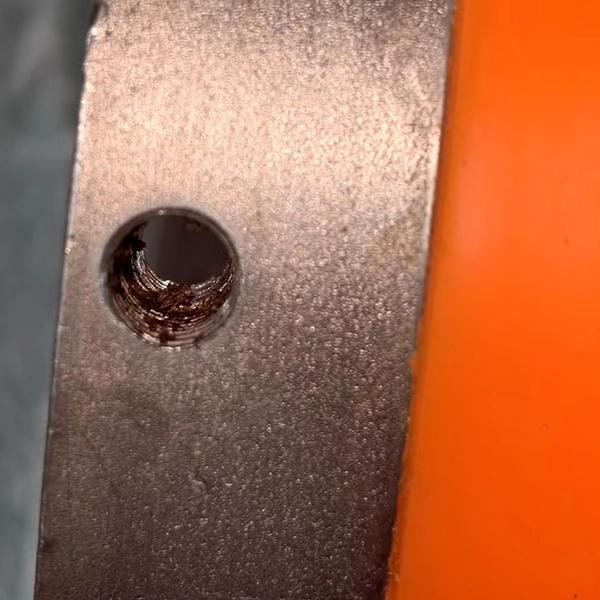
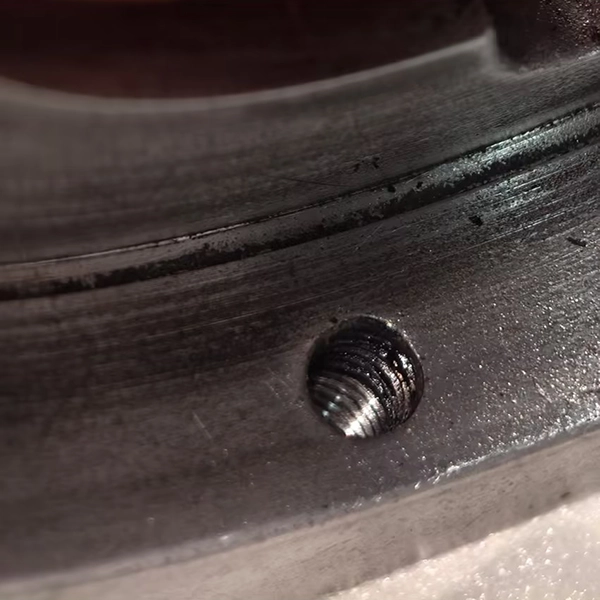
A customer reported a quality issue with a batch of custom polyurethane buffer assembly kits. During incoming inspection, foreign material was found inside the threaded holes, preventing the standard screws from being installed properly.
A similar issue was subsequently reported in another batch.
Because the problem appeared in more than one delivery, the review needed to consider the manufacturing and inspection process rather than focus only on the individual defective parts.
Understanding the Functional Problem
The threaded holes were required to accept the specified screws during assembly. Foreign material inside the holes interfered with this function.
The problem illustrates why a component cannot always be judged by its external appearance alone. A polyurethane assembly may look acceptable while a small amount of contamination in a threaded feature makes installation difficult or impossible.
For the customer, the immediate concern was not simply the appearance of the part. It was whether the component could be installed as intended.
Reviewing the Manufacturing Process
Following the repeated feedback, the issue was reviewed across the relevant production and quality functions.
The review focused on potential sources of contamination and damage, including the protection of metal components, the condition of threaded features during production and handling, and the inspection carried out before shipment.
The improvement measures discussed included:
- Reviewing the protection of metal components from machining through casting and subsequent processing.
- Identifying operations where threaded holes or metal surfaces could become contaminated or damaged.
- Strengthening protection against knocks and scratches during handling.
- Reinforcing inspection of threaded holes and the cleanliness of metal inserts before shipment.
- Reviewing operator training and the identification of nonconforming products.
These measures cover several stages of production. They recognize that final inspection is important, but that prevention and protection during earlier operations also deserve attention.
The available case records document the customer feedback and the improvement measures discussed during the review. They do not establish that every measure was completed or that long-term effectiveness was confirmed. Those conclusions should only be made after the relevant verification has been documented.
Lessons for Custom Polyurethane Manufacturing
This case highlights three practical points.
First, functional requirements should be considered alongside dimensions and appearance. Threaded holes, mounting features and metal inserts may determine whether a finished component can be assembled correctly.
Second, protection needs to continue throughout production. Metal components may be exposed to contamination or mechanical damage during machining, casting, handling and subsequent processing.
Third, repeated complaints require a broader investigation. When a similar problem appears in more than one batch, the manufacturer should review the relevant process and inspection controls rather than assume that each occurrence is unrelated.
These principles are relevant to many custom polyurethane products, although the actual investigation and corrective actions must match the specific defect.
Quality Inspection for Polyurethane Parts, Rollers and Wheels
The same complaint-response process can support different product categories, but the technical checks should reflect the design and application.
Custom Polyurethane Parts
Custom molded components can include buffers, bushings, liners, pads and parts with metal inserts.
Depending on the design, inspection may cover:
- Critical dimensions and tolerances.
- Mounting holes and threaded features.
- Surface condition and visible defects.
- Metal insert position and condition.
- Fit with mating components.
- Other functional requirements specified in the drawing.
The relevant checks should be agreed during product development or ordering, particularly where a small deviation could prevent assembly.
View Pepsen’s custom polyurethane products to explore the range of molded and cast polyurethane components.
Polyurethane Rollers
Polyurethane rollers are used in material handling, conveying, printing, packaging and other industrial equipment.
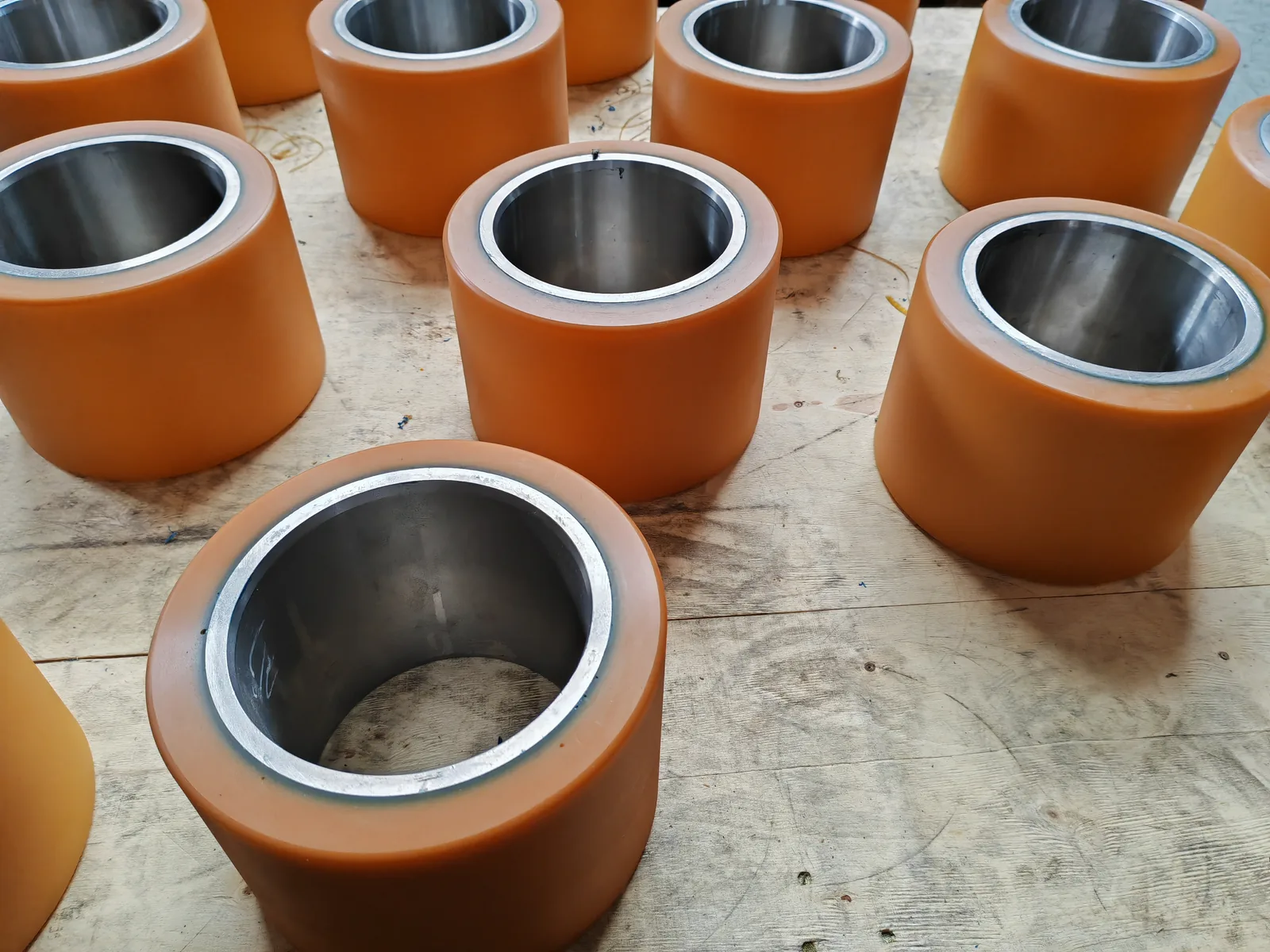
A complaint involving a roller may require checks of the outside diameter, face length, runout, surface condition, coating thickness or hardness. If the roller is polyurethane-coated over a metal core, the bonding interface and core condition may also need to be examined.
The inspection should reflect how the roller operates. For example, a dimensional deviation may affect tracking or contact with adjacent equipment, while surface damage may affect the process material or the roller’s intended function.
These are possible inspection considerations, not evidence that a particular defect has occurred. The investigation should follow the actual complaint and the agreed specifications.
Learn more about Pepsen’s polyurethane rollers.
Polyurethane Wheels
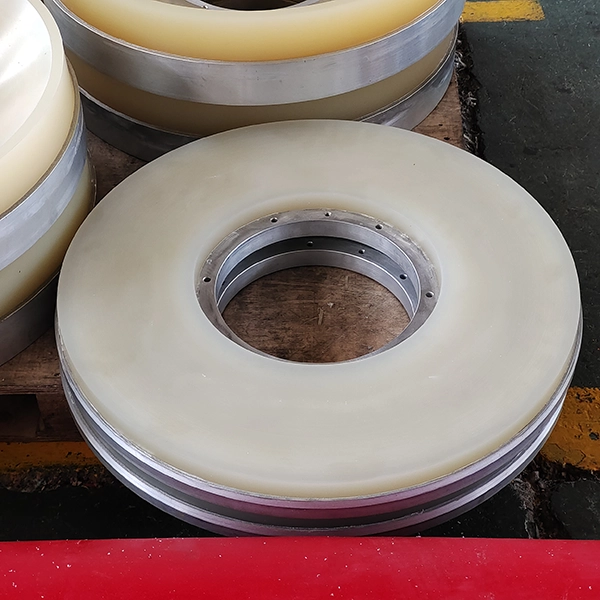
Polyurethane wheels may be used in industrial handling systems, machinery and equipment that requires rolling contact.
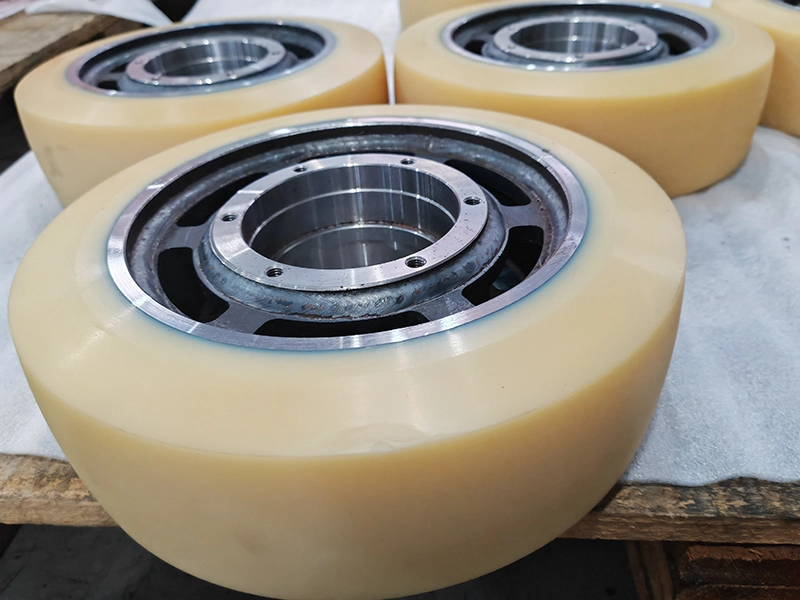
Depending on the design, inspection may cover wheel diameter, width, tread condition, hub fit and the condition of the polyurethane-to-core bond. Where a complaint involves load or rolling performance, the operating conditions are also important.
The assessment may require information about the load per wheel, operating speed, duty cycle, floor or track condition, and exposure to oil, water, heat or other environmental factors.
Without this information, it may be difficult to distinguish a manufacturing issue from a mismatch between the component and its working conditions.
For more details, visit Pepsen’s custom polyurethane wheels.
What Customers Can Do to Reduce Quality Issues
Manufacturers and customers both benefit when product requirements are clear before production begins.
A few practical steps can make later inspection and complaint investigation more efficient.
Provide Accurate Drawings or Samples
Drawings should identify the dimensions, interfaces and functional features that matter to the application. If a physical sample is used as the reference, any known modifications or differences should be communicated.
Explain the Working Conditions
For rollers and wheels, load, speed, contact surfaces and environmental exposure can influence material selection and performance requirements.
For other molded parts, the type of contact, mounting arrangement, impact conditions and exposure to chemicals or temperature may be relevant.
Agree on Acceptance Criteria
If cleanliness, thread fit, surface finish, runout or another feature is important, it should be included in the agreed requirements where applicable.
This gives both parties a clearer basis for inspection and helps avoid disagreements about what constitutes an acceptable part.
Keep Part and Batch Information
Part numbers, drawing revisions and order references help identify the products involved when a problem occurs.
When a complaint relates to more than one delivery, traceable information also helps determine which products need further review.
For applications in conveying and material handling equipment, Pepsen’s material handling polyurethane solutions provide more information about the types of components used in these systems.
Frequently Asked Questions
How quickly does Pepsen respond to a quality complaint?
Pepsen’s customer-service procedure defines complaint registration within 30 minutes of receipt and an initial response within two hours. The time required to complete the technical investigation depends on the problem and the evidence needed.
How long does an 8D report take?
For cases requiring an 8D report, the initial cause-analysis draft is generally prepared within three working days. The report is generally provided within seven working days. Complex cases may require up to 14 working days, with advance communication.
Does the same inspection process apply to parts, rollers and wheels?
The complaint-response process can be shared, but the technical checks depend on the product. Threaded features and mounting dimensions may be important for molded parts, while runout and bonding may be relevant to rollers, and hub fit or tread condition may matter for wheels.
What information should I provide when reporting a defective product?
Provide the part number, drawing revision, order or batch reference if available, quantity affected, photographs and a description of the problem. For rollers and wheels, information about the operating load, speed and environment may also help the investigation.
Does every quality complaint result in a free replacement?
Not automatically. The appropriate response depends on the investigation, the condition of the product and the applicable commercial terms. Repair, replacement, return handling or other actions should be determined according to the circumstances.
Can Pepsen investigate a problem involving polyurethane-to-metal bonding?
The condition of the bonding interface may be part of the investigation when relevant to the reported issue. The assessment depends on the product design, the evidence available and the operating conditions. Photographs, samples and relevant technical details can help establish the scope of the review.
Discuss Your Custom Polyurethane Project with Pepsen
Whether you need a custom polyurethane part, a polyurethane roller or a polyurethane wheel, the first step is to define the product’s function and requirements clearly.
If you are developing a new component or investigating a problem with an existing product, provide the available drawing, sample, photographs and application details. For rollers and wheels, include the relevant load and operating conditions where possible.
Pepsen works with industrial customers on custom polyurethane products manufactured to drawings, samples and application requirements.