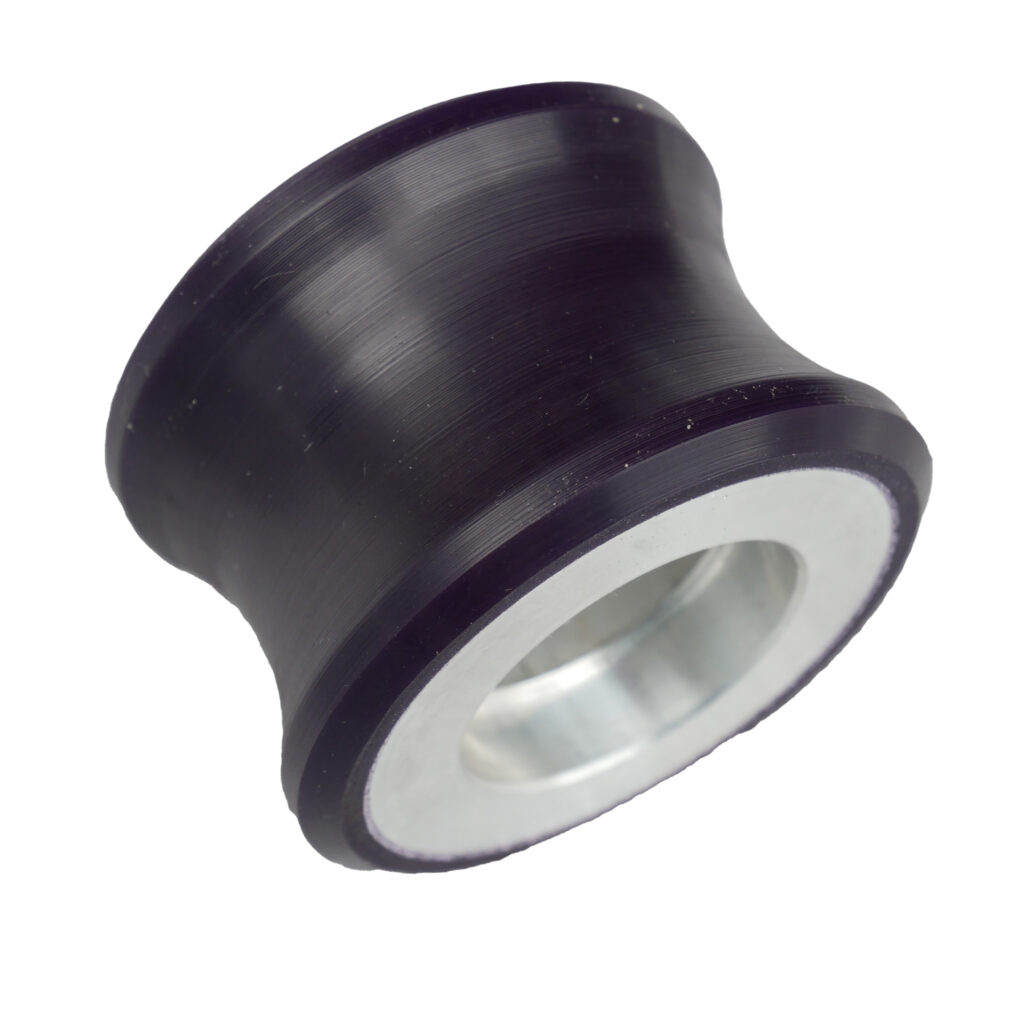
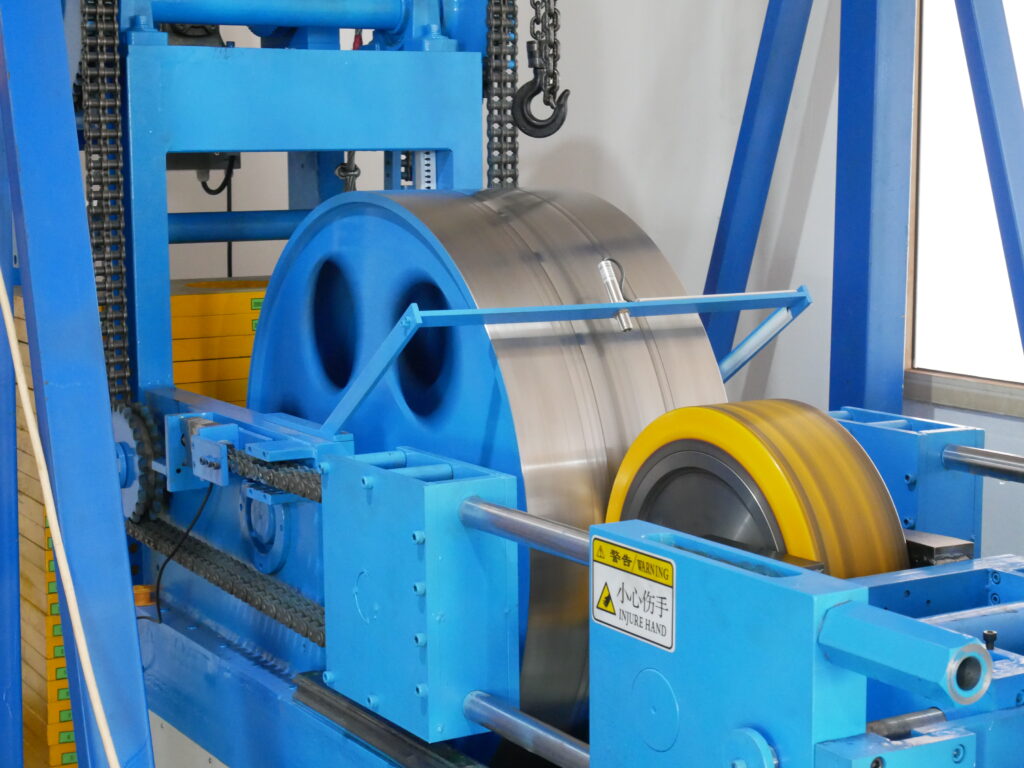
Unplanned downtime from wheel debonding, rapid abrasion, and deformation plagues material handling, AGV, and heavy machinery lines. Cheap TPU, rubber, and low-grade PU wheels fail under continuous load, raising maintenance labor and replacement costs. Engineers and buyers face constant headaches from inconsistent tolerances and short service life in high-cycle operations.
We deliver custom cast polyurethane wheels built on 20+ years of formulation expertise. Our chemically bonded treads, lab-verified wear resistance, and strict dimensional control eliminate common failure modes. As an ISO-certified OEM manufacturer, we stabilize production flow, cut total ownership cost, and support heavy-duty, high-temperature, and precision industrial applications.
What Custom Parameters Are Available for Polyurethane Wheels?
Our fully customizable matrix aligns hardness, core material, and dimensions to your exact load, speed, and environment, eliminating premature failure and downtime.
Custom Parameter
Option Range
Target Equipment & Industry
Hardness
70–95 Shore A
AGVs, forklifts, conveyor systems
Core Material
45# Steel, 6061 Aluminum, Stainless Steel
Automated lines, cleanroom equipment
Wheel Diameter
80mm–800mm
Heavy trolleys, industrial robots
Tread Width
20mm–300mm
Logistics carts, assembly machinery
Load Rating
300kg–5000kg
Heavy machinery, port equipment
Temperature Range
-40℃–120℃
Cold storage, bakery processing
Special Features
Grooves, keyways, flanges
Conveyors, robotic arms, AGVs
What Industries Use Custom Polyurethane Wheels?
Custom PU wheels perform best in high-cycle, heavy-load environments where floor protection, dimensional precision and long service life directly reduce downtime and maintenance cost.
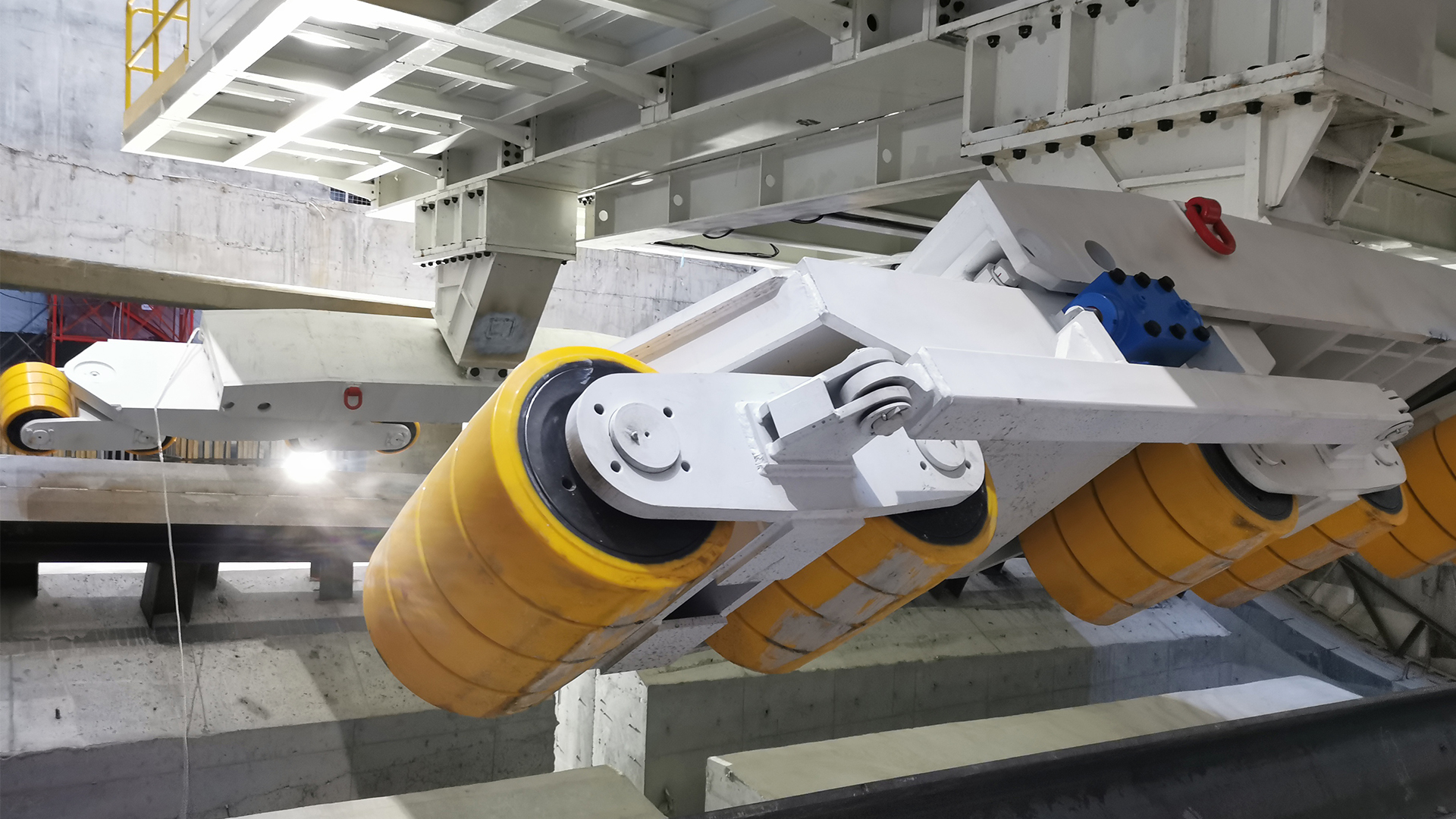
– Heavy duty polyurethane wheels for shield tunneling Machine
Cast Polyurethane vs. Injection Molded TPU: Which Suits Your Duty Cycle?
Injection-molded TPU is a commodity; Cast Polyurethane is an engineered solution. Our casting process allows for higher molecular weight cross-linking, resulting in a tensile strength exceeding 50 MPa and a DIN abrasion loss of <30mm³, providing 3x the service life by eliminating the internal molecular shear failure common in thermoplastics.
Cross-Linking Density: Cast systems achieve superior long-term modulus stability vs. TPU.
Heat Resistance: Cast elastomers do not have the sharp melting point of TPU, maintaining shape at 100°C+.
Peel Strength: Our chemical bonding achieves 15 kN/m at the interface, whereas TPU relies on weak mechanical fits.
Why Choose Us as Your Custom PU Wheel Manufacturer?
Direct factory engineering eliminates the “quality drift” found in trading company sourcing. By managing the entire supply chain—from ISO 9001 raw material batch testing to final CNC machining—we ensure that the SPC data of your 1000th wheel is identical to your prototype, satisfying the most rigorous Quality Director audit requirements.
– Strict Quality Checks: Raw material inspection + casting process control; First article + final inspection; Wheel life-span testing
– ISO 9001/14001/45001 certified production system
– In-House Lab Testing: Every batch is verified for hardness, tensile strength, and rebound resilience.
– Technical Design Support :Application specific polyurethane formulations; Refurbishment service available
– Quality bonding agent from North America and silicon-free release agent.
– Technical After-Sales: Direct access to the PU material engineer who designed your formulation.
What Technical Advantages Do Custom PU Wheels Offer Over Rubber?
Our cast PU formulation outperforms rubber and TPU in abrasion, load stability and bonding strength under real industrial dynamic working conditions.
Abrasion rate 3× lower than rubber
No floor marking in sensitive production areas
Low rolling resistance reduces equipment energy use
Resists oil, grease, and mild chemical exposure
Custom bonding eliminates tread debonding under load
Case Study: Solving Delamination in High-Speed Logistics
Core Conclusion: Material failure is usually a symptom of poor chemical bonding or improper elastomer selection. Our case studies prove that data-driven interventions in the manufacturing process yield exponential increases in service life and significant reductions in unplanned downtime.
Client Type: Tier-1 Global E-commerce Logistics Provider.
The Challenge: Frequent de-bonding of PU tires from steel hubs on sorting conveyors running at 4m/s. Replacement was occurring every 3 months.
Our Intervention: Identified hydrolysis in the existing ester-based PU. Switched to a PTMEG-ether system with a proprietary silicon-free bonding agent.
Quantitative Result: Service life extended from 90 days to 700+ days. Maintenance labor costs dropped by 80%.
How to Select the Right Custom Polyurethane Wheels?
Follow this step-by-step method to match load, speed and environment, avoiding material mismatch, deformation and early wheel failure.
1. Define Load & Speed
Set static load 1.5× working load; use ≥90 Shore A for speeds over 3m/s.
Specify tolerance for AGV and automated equipment fit.
4. Confirm Bonding Type
Require chemical bonding for high-cycle continuous operation.
Why Do Low-Grade PU Wheels Fail Early in Heavy Loads?
Most failures come from weak adhesion, poor crosslinking and unstable hardness; our formulation and process control eliminate these root causes in production.
Debonding: Low-grade PU uses weak adhesion; our dual bonding holds under 1500kg shear force.
Abrasion: Rubber and TPU wear 3–5× faster per ASTM D4060 testing.
Deformation: Cheap materials creep under load; our formulation has <2% compression set.
Temperature: TPU hardens/cracks at low temps; our formula remains stable across ranges.
Tolerance: Uncontrolled casting causes fit issues; our SPC ensures consistency.
Last updated: April 2026 | Contact our 20+ Years PU Materials Engineer for technical support.
Should I select Shore 95A or 70D hardness for my application?
This depends on your priority: traction or compressive modulus. 95 Shore A is the
Can your polyurethane wheels withstand high temperatures or humidity?
Standard polyesters fail in these conditions due to hydrolysis. For high-temp or humid environments, we utilize Polyether-based or NDI (Vulkollan-grade) prepolymers. These systems maintain their physical properties at continuous operating temperatures of 120°C and resist the
What is the typical lead time for custom PU wheel prototypes?
We leverage in-house CNC machining for core production, allowing us to deliver custom molds and first-article samples within 10-14 days. For mass production, our typical lead time is 3-4 weeks, depending on the complexity of the core inserts and current casting schedules.
Do you provide ISO certification and batch-traceable reports?
Yes. As an ISO 9001:2015 certified manufacturer, every shipment includes a Material Test Report (MTR). This covers hardness, tensile strength, and rebound resilience data. We maintain full batch traceability from raw prepolymer drums to the final finished wheel to ensure compliance with Tier-1 quality audits.
How does the TCO of PU wheels compare to rubber alternatives?
While the initial PO for polyurethane is higher, the Total Cost of Ownership (TCO) is significantly lower. PU offers 3-5x the wear life and 2x the load capacity of rubber. By reducing wheel replacement frequency and unplanned downtime, our clients typically see a 40% reduction in annual maintenance spend.
Can you provide high-performance alternatives to Vulkollan®?
Absolutely. By utilizing NDI (Naphthalene Diisocyanate) chemistry and precise stoichiometric control (NCO Index 1.05), we produce wheels that match or exceed the dynamic performance of Vulkollan. This provides an engineered solution for high-speed AGVs and sorters with shorter lead times and improved cost-efficiency.
Polyurethane vs Rubber wheels: which is better for heavy loads?
Polyurethane is better. It handles 30-50% more load than rubber, has <25% compression set, and resists flat-spotting under heavy static/dynamic loads.
Why are my polyurethane wheels de-bonding from the core?
Common causes: insufficient core sandblasting (Ra <6.3), improper primer application, or casting at <100°C, which weakens PU-to-metal bonding.
How to calculate load capacity for industrial PU wheels?
Use the formula: Load Capacity = Projected Area (width×diameter) × Allowable Stress (depends on 80A-95A Shore hardness and duty cycle).
Is cast polyurethane better than injection molded TPU?
Yes. Cast PU has higher molecular weight, better core bonding, and 4x longer fatigue life—critical for heavy industrial wheels vs. injection TPU.