



NDI Polyurethane Wheel Replacement for Heavy-Duty Port Equipment: A Field Validation Case
Heavy-duty port equipment places unusually high demands on load wheels. Quay cranes, rail-mounted gantry cranes and container AGVs operate under repeated high loads, frequent starts and stops, continuous rolling contact and demanding coastal conditions. In this project, the customer’s original equipment used imported Vulkollan®-based NDI polyurethane wheels, but long international lead times and spare-parts availability created a growing maintenance risk.
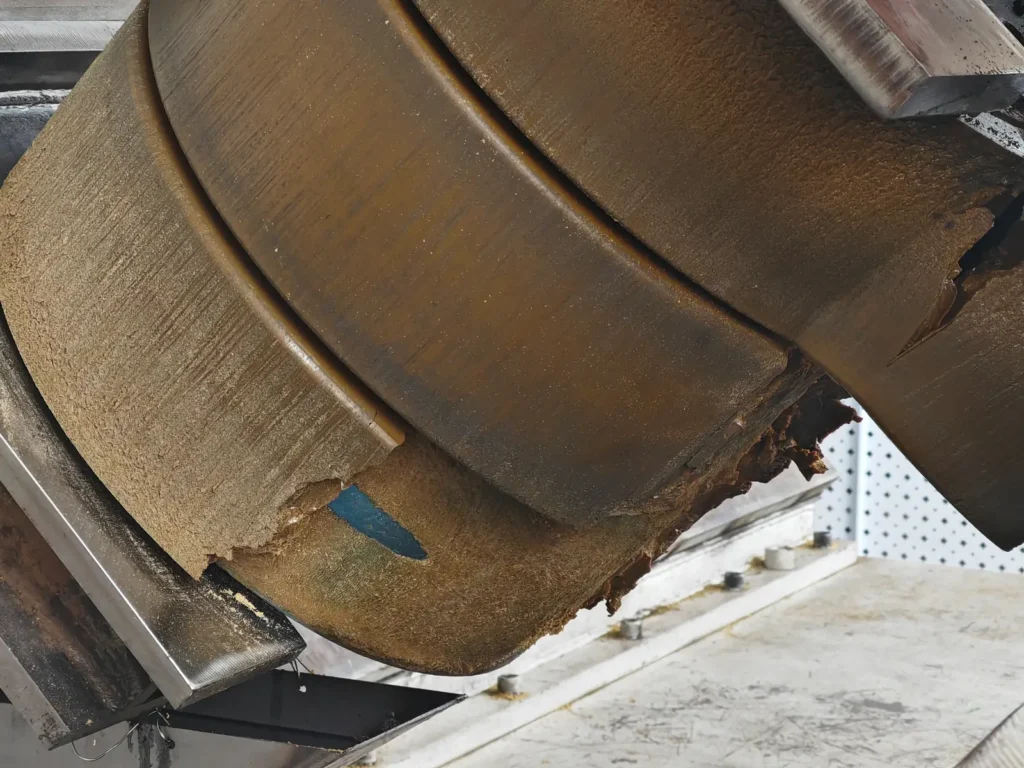
The customer had already tested conventional MDI polyurethane replacements, but the trial wheels developed heat, softened during operation, wore rapidly and showed local tearing and polyurethane-to-metal delamination. PEPSEN was therefore asked to develop an NDI polyurethane wheel alternative that could be validated against the original wheels under actual operating conditions rather than accepted on material data alone.
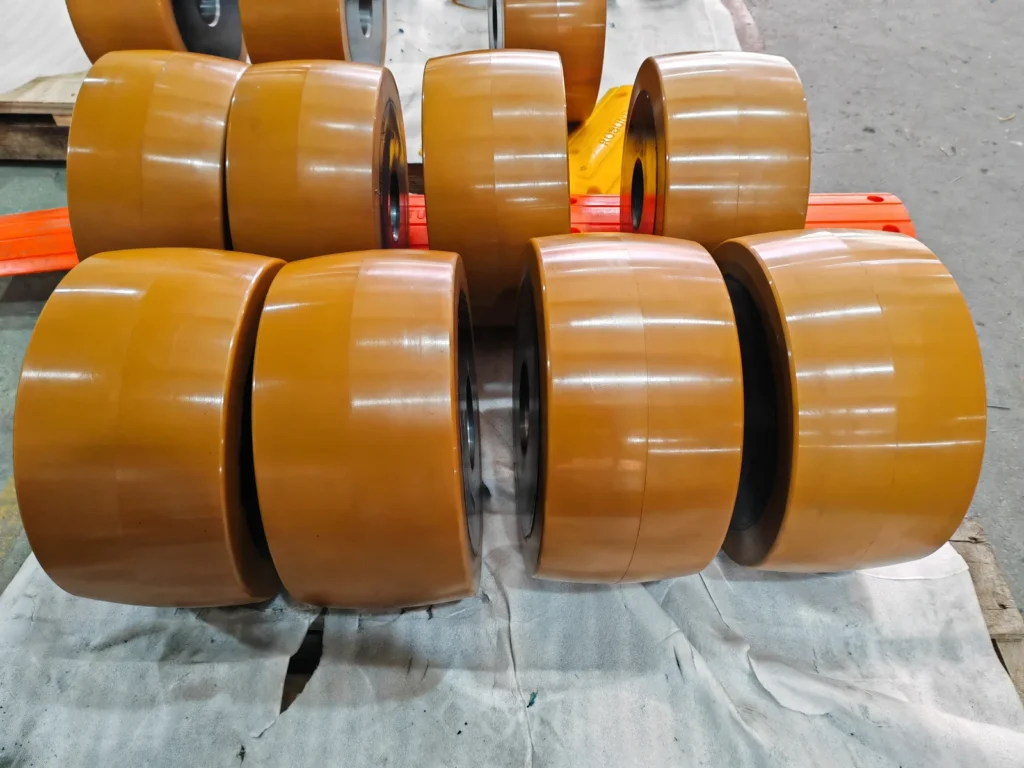
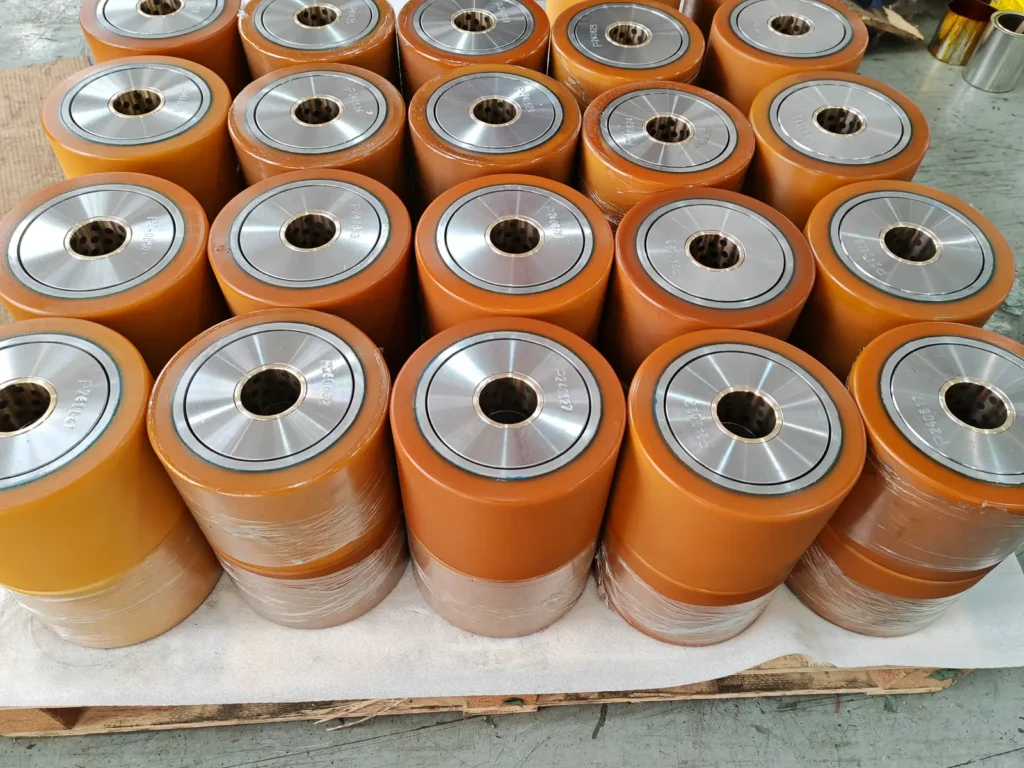
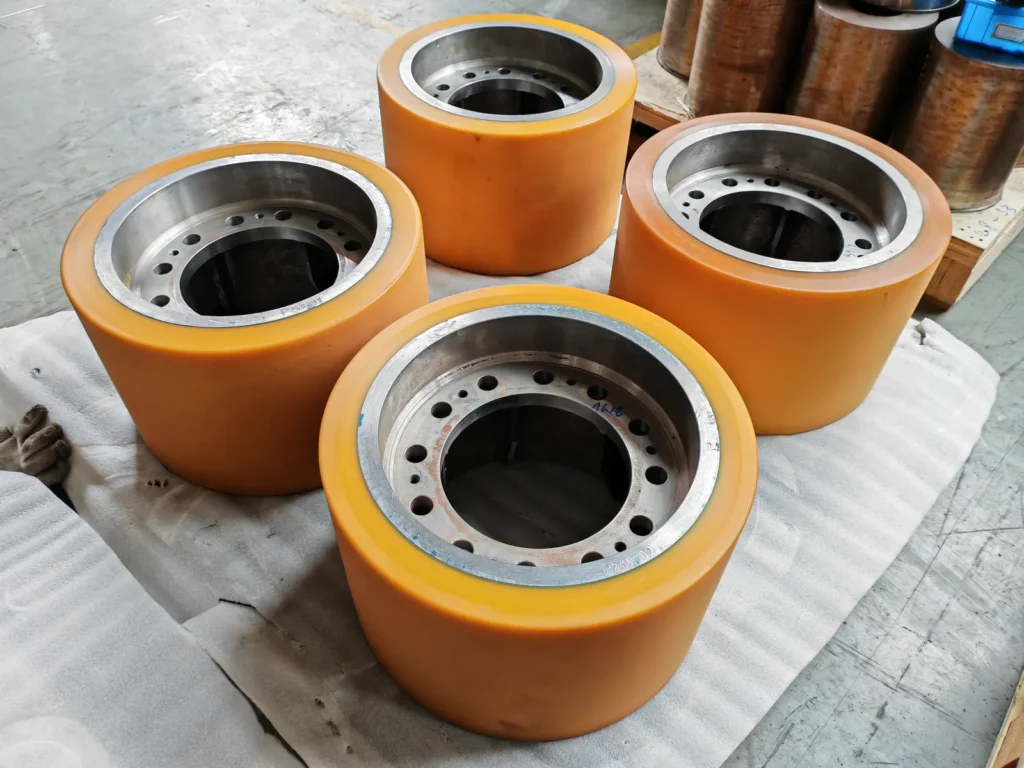
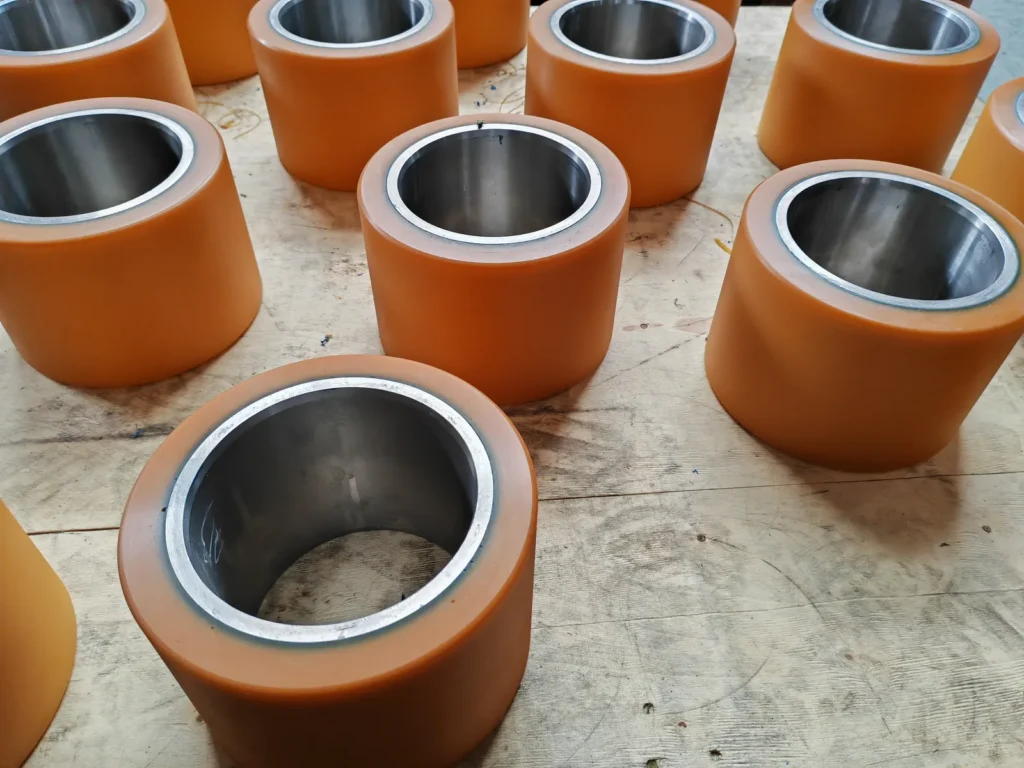
Project at a Glance
| Anwendung | Heavy-duty wheels for quay cranes, rail-mounted gantry cranes and container AGVs |
|---|---|
| Original component | Imported Vulkollan®-based NDI polyurethane wheels |
| Previous replacement issues | Heat buildup, softening, rapid wear, tearing/chunking and polyurethane-to-metal delamination |
| Engineering priorities | Low dynamic heat buildup, fatigue and tear resistance, wear resistance, reliable bonding and stable performance in coastal service |
| Validation route | Failure analysis → laboratory testing → pilot production → field comparison → long-term operating observation |
| Project result | The optimized NDI wheels completed the monitored field evaluation without abnormal overheating, cracking or delamination, while wear behavior approached that of the original imported wheels |
Why the Previous Polyurethane Wheel Replacement Failed
The customer was not simply looking for a wheel with the same dimensions and hardness. The earlier replacement experience showed that matching static specifications alone was not enough for this application.
Port machinery runs through repeated load cycles. Each rotation deforms the polyurethane tread and releases part of that deformation energy as heat. If the elastomer has excessive hysteresis, internal temperature can continue to rise during prolonged operation. The resulting softening can accelerate wear, increase deformation and make edge damage more likely.
Bonding was another critical failure mode. Under high wheel loads and repeated torque, the polyurethane layer and metal core experience continuous shear stress. Inadequate surface preparation, primer selection or process control can allow local separation to begin at the interface and eventually develop into visible delamination.
The failed wheels collected from the site showed exactly why this project had to be treated as an engineering replacement rather than a simple material substitution.
Starting with the Real Operating Conditions
Because the customer had already experienced several unsuccessful replacement attempts, our first step was not to recommend a standard polyurethane grade. The PEPSEN team reviewed the actual operating environment and the failure condition of the used wheels.
- Continuous and intermittent load conditions during port operation
- Repeated acceleration, braking and directional changes
- Operating temperature and heat accumulation during extended runs
- Edge loading and localized stress concentration
- Wear pattern on the original and previously replaced wheels
- Condition of the polyurethane-to-metal bond after service
- Exposure to humidity and coastal environmental conditions
From this review, we defined the replacement target around four practical requirements: control dynamic heat buildup, maintain tear and fatigue resistance under repeated loading, improve resistance to service-related moisture and wear, and create a stable bond between the cast polyurethane and the steel wheel core.
This same application-led approach is used for other Spezialräder aus Polyurethan where load, speed, temperature, tread geometry and metal-core design must be considered together.
Engineering the NDI Polyurethane Wheel
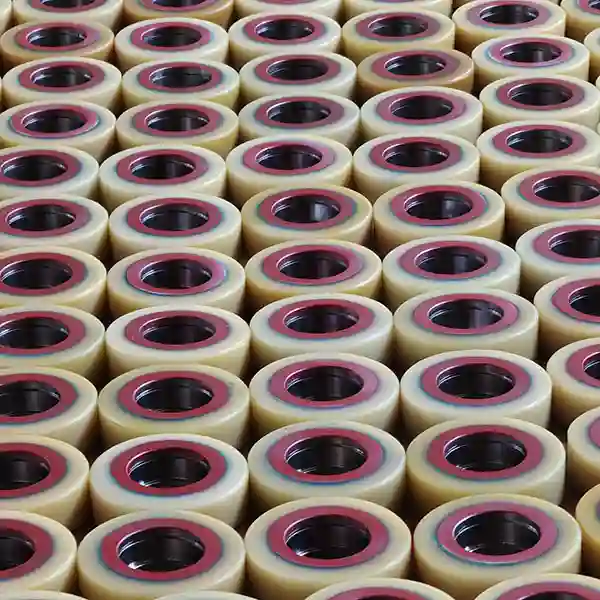
For the replacement wheel, PEPSEN used an NDI-based cast polyurethane system and adjusted the formulation and processing route for the customer’s duty cycle. The objective was to reduce dynamic energy loss while maintaining the toughness and wear performance required for heavy rolling contact.
Material selection was only one part of the solution. We also optimized the metal-core preparation and bonding process. The steel surface was prepared to create a consistent bonding substrate, followed by controlled primer and casting procedures designed to reduce the risk of interface failure under repeated load.
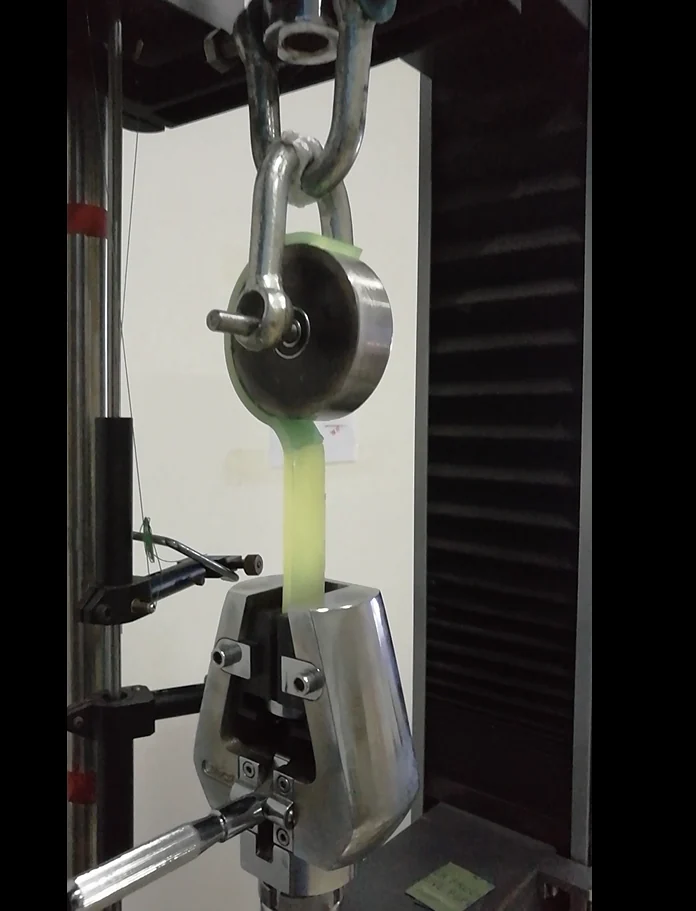
Wheel geometry and casting quality were reviewed at the same time. During the early trial stage, minor cracking appeared around a locally stressed edge. Instead of treating the first prototype as the finished solution, the team adjusted the casting process and product structure before continuing the field validation.
Laboratory Validation Before Field Replacement
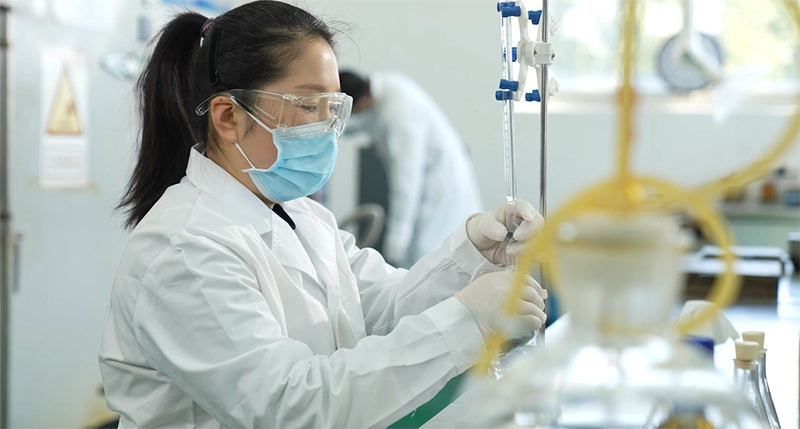
The validation plan was deliberately staged. Before a larger quantity was installed, the trial wheels were evaluated for the failure modes that mattered most in this application.
1. Bond Strength Evaluation
Bond testing was used to check whether the polyurethane-to-metal interface could withstand the mechanical stresses expected during service. This was particularly important because delamination had been one of the customer’s previous failure modes.
2. Heat Buildup Monitoring
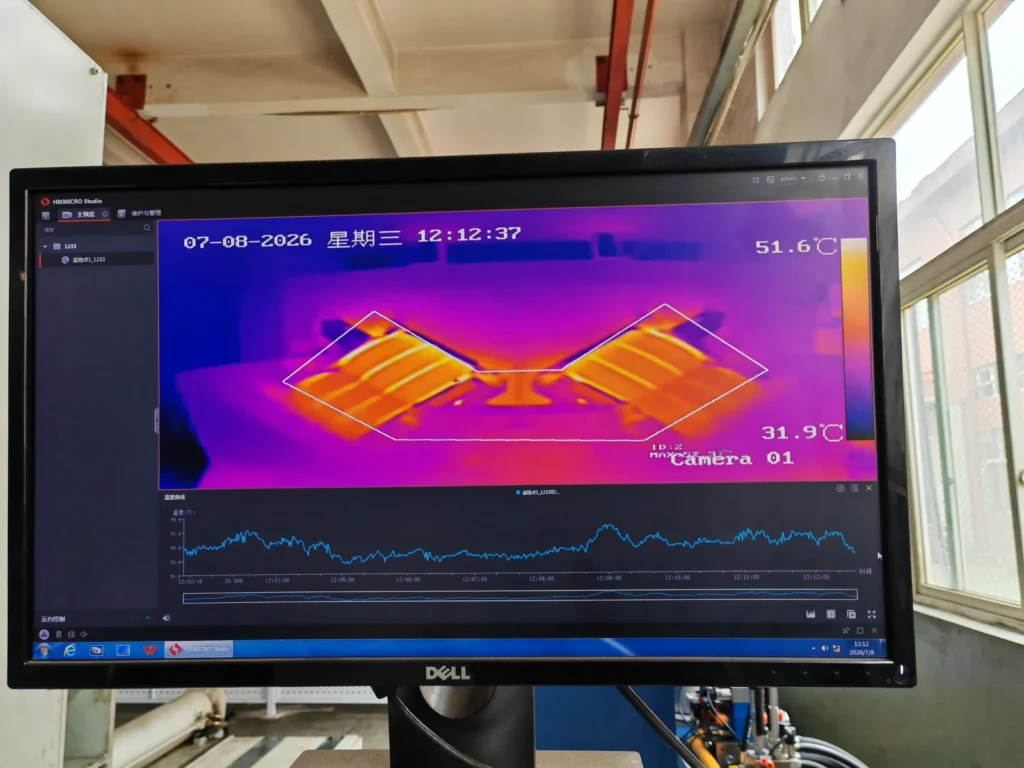
Thermal monitoring was carried out during dynamic operation to observe how the wheel temperature developed under repeated deformation. The goal was not simply to record an initial surface temperature, but to identify whether heat continued to accumulate as the test progressed.
3. Dynamic Lifespan Testing
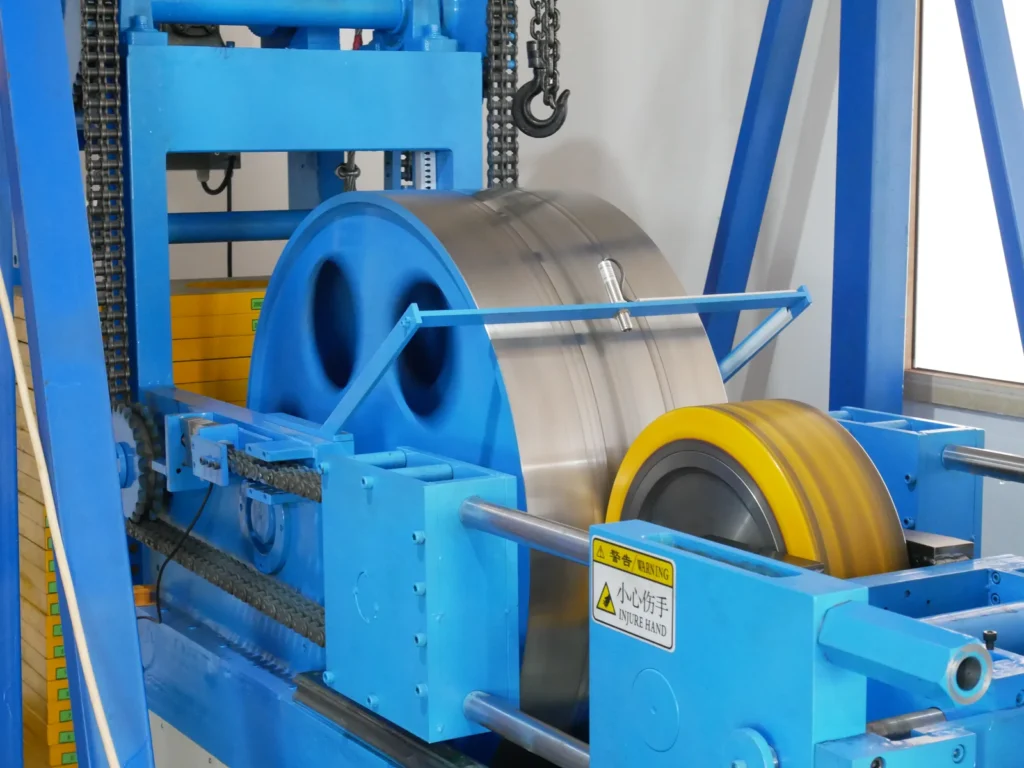
The wheels were also run on a dynamic test setup to observe rolling behavior, surface condition and progressive wear under repeated cycles. Laboratory testing could not fully reproduce every condition at the port, but it helped screen the design before field installation.
Field Testing Under Actual Port Operating Conditions
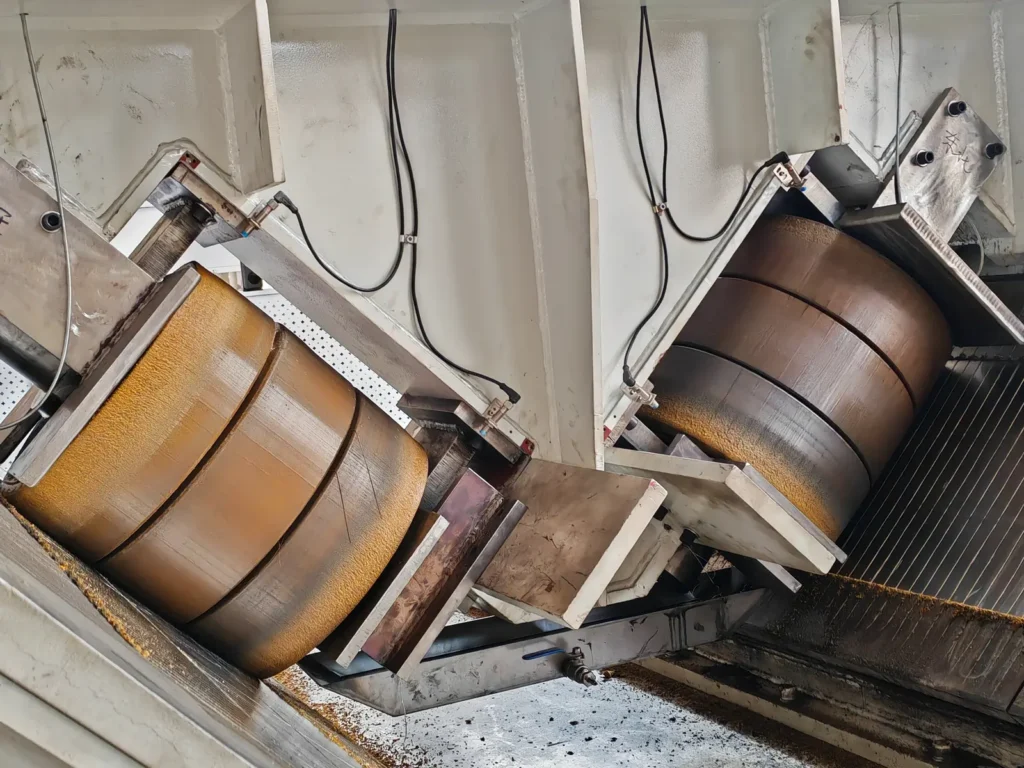
After the laboratory stage, a pilot batch was installed for field testing. The customer and PEPSEN followed the wheel condition during operation rather than relying on a single acceptance inspection.
The main observations included temperature behavior, tread wear, edge condition, cracking and the integrity of the polyurethane-to-metal bond. Where possible, the trial wheels were compared with the original imported wheels working in the same or comparable equipment positions.
Following the earlier design adjustment, the optimized NDI polyurethane wheels completed the monitored operating period without abnormal overheating, visible cracking or delamination. Their wear behavior was also close to the original imported wheel benchmark recorded during the project.
This result gave the customer enough confidence to move from a limited trial to broader replacement rather than changing all critical wheels at once.
From Technical Validation to a More Reliable Spare-Parts Supply
The engineering result was only part of the customer’s objective. The original imported wheels performed well, but their long procurement cycle made spare-parts planning difficult. When a critical wheel failed unexpectedly, waiting months for replacement stock could create an unacceptable maintenance risk.
After the field trial, PEPSEN moved the validated design into repeat production. Localized manufacturing shortened the replenishment cycle and reduced dependence on overseas spare-part availability. It also gave the customer a direct technical route for future adjustments to wheel dimensions, core design, hardness or operating conditions.
For similar projects, PEPSEN can manufacture custom polyurethane components from customer drawings, worn samples or application requirements, with material selection based on the actual load, speed, environment and failure mode.
What This Case Shows
A successful heavy-duty wheel replacement is rarely achieved by copying hardness and dimensions alone. In this project, the critical work was connecting material behavior with the real failure mechanism: dynamic heat buildup, tear and fatigue loading, tread geometry, metal-core bonding and long-term field wear.
The customer did not approve the new wheel because of a laboratory data sheet. Approval followed a staged process of failure analysis, material and process development, laboratory screening, pilot installation, field monitoring and design iteration. That validation route is what turned an NDI polyurethane wheel from a proposed substitute into a practical spare-part solution for heavy-duty port equipment.
FAQ
Why are NDI polyurethane wheels used in heavy-duty port equipment?
NDI-based polyurethane can be selected for applications that require a combination of high load capacity, low dynamic heat buildup, wear resistance, tear strength and fatigue resistance. The final performance still depends on formulation, hardness, wheel geometry, metal-core design and manufacturing control.
Why can a standard MDI polyurethane wheel fail in the same application?
A standard MDI polyurethane is not automatically unsuitable, but a formulation designed for general industrial use may generate too much heat or lack the fatigue, tear or bonding performance required by a continuously loaded port wheel. The material system must be matched to the actual duty cycle.
Can an NDI polyurethane wheel replace a Vulkollan® wheel?
It can be developed as an alternative, but replacement should be validated for the specific application. Important factors include wheel load, speed, operating temperature, duty cycle, dimensions, hardness, metal-core design and acceptable wear rate. PEPSEN recommends prototype testing and field comparison before broad replacement on critical equipment.
What should be tested before approving a heavy-duty polyurethane wheel?
Testing should focus on the actual failure risks. Depending on the application, this may include polyurethane-to-metal bond strength, dynamic heat buildup, dimensional stability, wear, tear or fatigue behavior, and a controlled field trial under representative operating conditions.
What information does PEPSEN need to evaluate a custom wheel replacement?
Useful information includes a drawing or sample, wheel diameter and width, metal-core dimensions, current hardness and material, wheel load, running speed, duty cycle, operating temperature, environmental exposure and a description or photos of the current failure mode.
Trademark note: Vulkollan® is a registered trademark of Covestro. References in this case identify the customer’s original wheel material and the performance benchmark used for the replacement project. PEPSEN’s independently manufactured NDI polyurethane wheels should not be interpreted as genuine Vulkollan® products unless specifically stated.