

Controlling Runout in a Thin-Walled Polyurethane Pressure Roller
A European customer approached Pepsen with a custom polyurethane pressure roller that required particularly tight control of radial runout.
The challenge was the roller’s slender design and thin-walled structure. During polyurethane covering and subsequent machining, the roller body was prone to deformation. This made it difficult to maintain the dimensional accuracy required for the finished component.
The challenge did not end with machining the polyurethane surface. The shaft, bearings and spacers also had to be installed, and the customer required the runout of the completed assembly to be controlled.
Rather than relying on a conventional machining sequence, we developed a customized manufacturing process and a dedicated runout correction procedure for this roller.
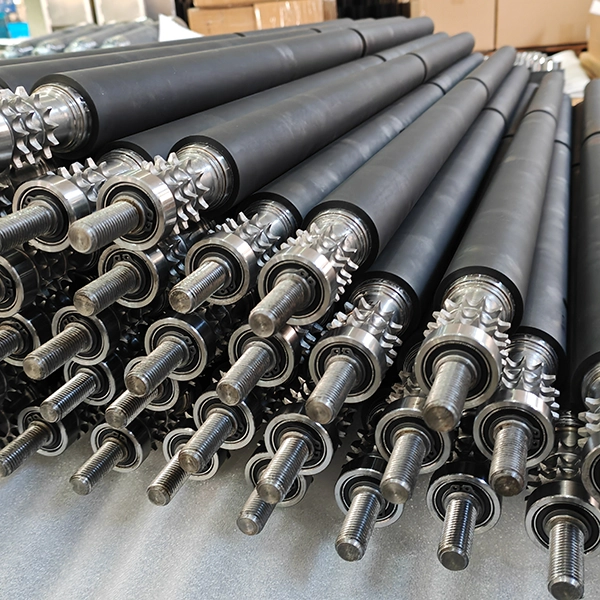
1. The Manufacturing Challenge: Deformation in a Slender, Thin-Walled Roller
A thin-walled roller requires different manufacturing considerations from a conventional roller with a relatively thick and rigid core.
Its slender geometry provides less resistance to bending under localized support, clamping and machining forces. As a result, even small changes in the roller’s geometry during production can affect its final rotational accuracy.
For this project, three manufacturing stages required particular attention.
During polyurethane covering
The slender roller structure needs appropriate support during the covering process. Uneven support, handling or process-related stresses may affect the straightness and geometry of the roller body.
During surface machining
The polyurethane working surface needs to be machined to the specified dimensions and finish. However, clamping force, support position and machining loads must be considered carefully. Excessive or uneven loading may cause deflection, while the release of clamping forces can lead to elastic springback.
During shaft and bearing assembly
The shaft, bearings and spacers are installed after polyurethane surface machining in our customized process. Their installation and fit must be considered because the final assembled condition may differ from the condition of the roller body before assembly.
For a slender, thin-walled component, controlling each individual machining dimension is not enough. The manufacturing process must also account for how the component behaves after all assembly operations are completed.
2. Why Surface Machining Accuracy Alone Cannot Guarantee Low Runout
For precision pressure rollers, outside diameter and radial runout are two different quality characteristics.
Outside diameter describes the size of the roller at a specified measuring position. Radial runout describes the variation observed when the component rotates about a defined reference axis.
A roller may have an acceptable outside diameter but still show excessive radial runout due to geometric variation, the relationship between the polyurethane surface and the rotation axis, or the final shaft and bearing assembly condition.
This distinction was important in the European customer’s project.
If we assessed the roller only after polyurethane surface machining, we would not have evaluated the complete component in the condition required by the customer.
We therefore separated surface machining from final assembly correction and introduced a dedicated runout control stage after the shaft, bearings and spacers had been installed.
3. Pepsen’s Solution: A Customized Manufacturing Sequence
Instead of following a conventional production sequence, we redesigned the order of machining and assembly operations to suit the roller’s slender, thin-walled construction.
Step 1: Machine the Polyurethane Surface Before Installing the Shaft and Bearings
We first machine the polyurethane working surface.
Only after this operation is completed do we install the shaft, bearings and spacers.
This sequence separates polyurethane surface finishing from the subsequent shaft and bearing assembly. It also allows the surface machining operation and the final assembly correction to be controlled as two distinct stages.
For this type of roller, the support and machining arrangement must be considered in relation to the component’s length and wall thickness. A clamping or support method suitable for a conventional roller may not be appropriate for a more slender design.
The purpose of the revised sequence is to establish a controlled machining stage before the assembly components are installed, while leaving final rotational accuracy to be addressed in the completed assembly.
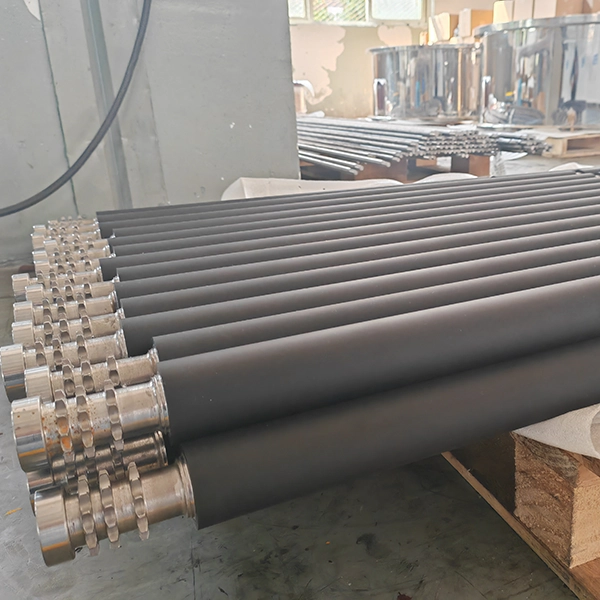
Step 2: Install the Shaft, Bearings and Spacers
After polyurethane surface machining, we install the shaft, bearings and spacers according to the component design.
At this stage, the roller becomes a complete assembly rather than an unfinished roller body.
This matters because the final runout requirement applies to the assembled component. The relationship between the finished polyurethane surface and the shaft-and-bearing assembly must therefore be evaluated in its final configuration.
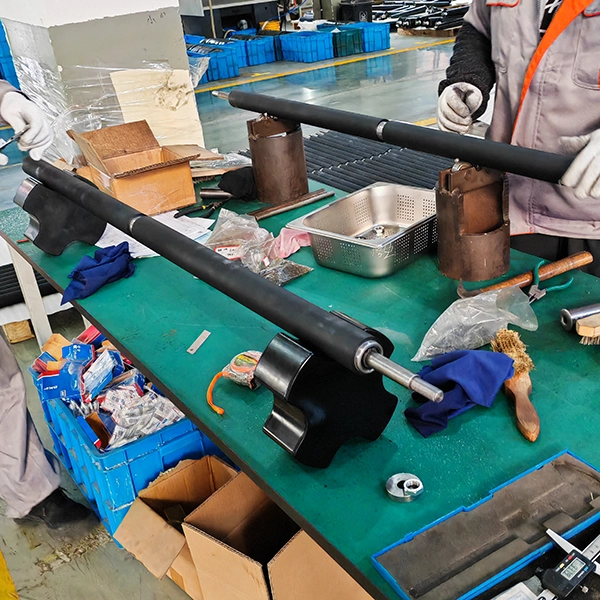
Step 3: Develop a Dedicated Runout Correction Process and Machine
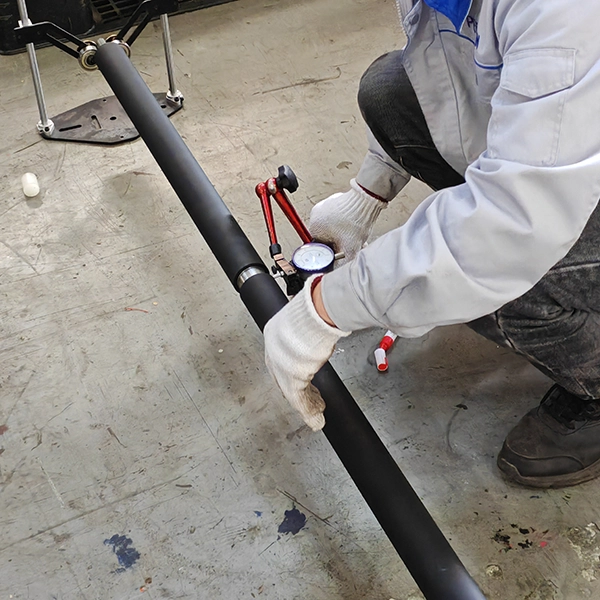
The most important part of this solution was the development of a customized correction procedure and dedicated correction machine.
We did not rely solely on the accuracy achieved during the initial surface machining operation.
Instead, the assembled roller underwent a dedicated runout correction process that combines three activities:
- Rotational measurement: The assembled roller is rotated to identify and assess its radial runout.
- Mechanical correction: Mechanical adjustments are applied according to the identified deformation or runout condition.
- Assembly position adjustment: The shaft and bearing assembly positions are adjusted where necessary to address alignment-related deviations.
These methods are used together rather than applying the same correction to every roller.
The measurement results guide the correction process. After adjustment, the runout is checked again to assess the effect of the correction.
Developing a dedicated machine for this component allowed us to organize the correction process around the actual geometry and assembly requirements of the roller, rather than relying on a general-purpose method.
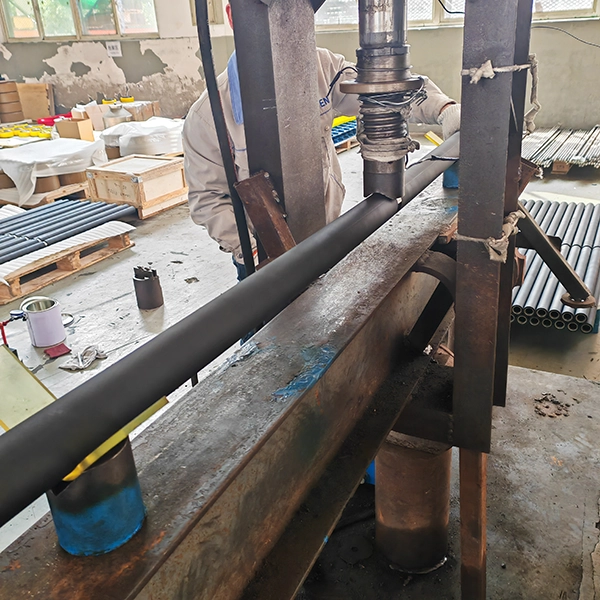
4. Why Final Assembly Runout Control Matters
For equipment manufacturers, the functional requirement is the accuracy of the completed roller, not just the dimensions of an unfinished component.
This is particularly important when a roller has a thin-walled structure and requires shaft and bearing assembly after polyurethane machining.
A suitable final inspection plan should define the following:
| Inspection item | What needs to be controlled |
|---|---|
| Reference axis | The datum or functional rotation axis used for measurement |
| Assembly condition | Whether the shaft, bearings and spacers are fully installed |
| Measurement positions | The specified positions along the polyurethane working surface |
| Runout requirement | The radial runout or TIR tolerance stated on the customer drawing |
| Acceptance method | The measurement setup and acceptance criteria agreed with the customer |
For cylindrical surfaces, Total Indicator Reading (TIR) is generally obtained from the difference between the maximum and minimum indicator readings during one complete revolution.
The measurement result depends on the reference axis, support arrangement and measuring position. For this reason, a runout value should never be considered independently of its measurement method.
It is also important to distinguish runout from dynamic balance. Runout concerns geometric variation relative to the rotation reference, while dynamic balance concerns mass distribution during rotation. One inspection does not replace the other.
For precision roller projects, Pepsen considers the drawing requirements and the final assembly condition when determining the appropriate inspection approach.
5. What Equipment Manufacturers Should Specify When Ordering Precision PU Rollers
When requesting a quotation for a slender or thin-walled polyurethane pressure roller, providing only the outside diameter and overall length may not be sufficient.
For an accurate manufacturing assessment, we recommend providing the following information:
- Roller drawing: Overall length, outside diameter, core geometry and wall thickness.
- Polyurethane specifications: Required hardness, coating thickness and surface finish.
- Shaft arrangement: Shaft dimensions, installation method and relevant fitting requirements.
- Bearing details: Bearing type, mounting positions and assembly requirements.
- Spacer details: Spacer dimensions, positions and assembly arrangement.
- Precision requirements: Required radial runout or TIR tolerance, measurement datum and specified inspection positions.
- Betriebsbedingungen: Rotational speed, working load and other relevant service conditions.
For quality managers, it is particularly important to establish whether runout acceptance applies to the polyurethane roller body before assembly or to the complete assembly after all specified components have been installed.
This should be clearly defined before production begins.
6. Custom Polyurethane Roller Manufacturing Beyond Standard Machining
This European customer project illustrates an important point in custom polyurethane manufacturing: special roller geometries may require more than conventional casting and surface machining.
For slender, thin-walled rollers, the manufacturing sequence, workpiece support, component assembly and final runout correction all need to be considered together.
At Pepsen, we manufacture custom cast polyurethane rollers according to customer drawings and application requirements. Our engineering approach considers not only polyurethane material and hardness selection, but also the roller structure, core design, machining requirements and specified inspection criteria.
Unser custom polyurethane roller manufacturing capabilities include new-core rollers and suitable recoating projects, with inspection of dimensions, runout, balance and bonding requirements where specified.
For more roller configurations and applications, visit our polyurethane roller product range.
Need a precision polyurethane pressure roller with a slender or thin-walled structure?
Send Pepsen your drawing, including the required runout tolerance and shaft-and-bearing assembly details. Our team can review the component structure and discuss a suitable manufacturing and correction process.