

ホーム製品鋳造ウレタン部品Heavy-Duty Polyurethane Coil Storage Pads & Saddles
非着色・95Aデュロメーター・ポリウレタン製フロアパッド――アルミコイルへの跡付きを防止
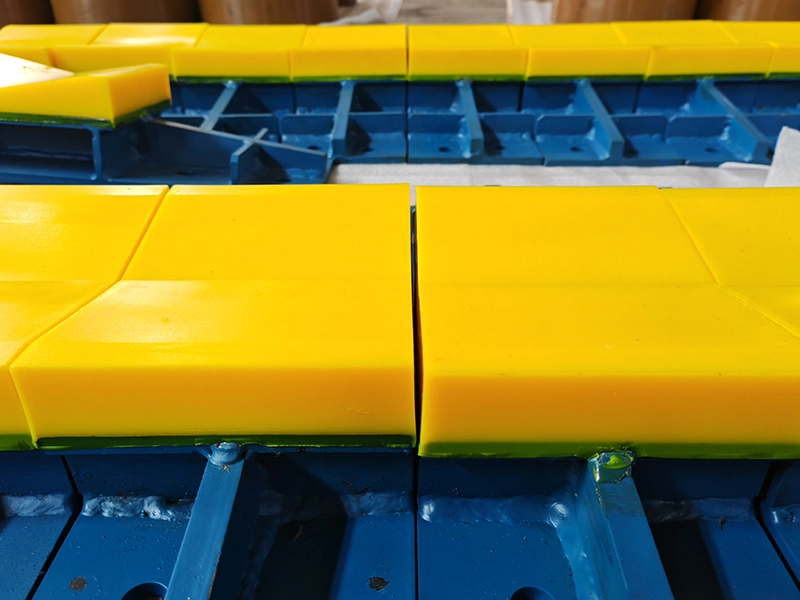
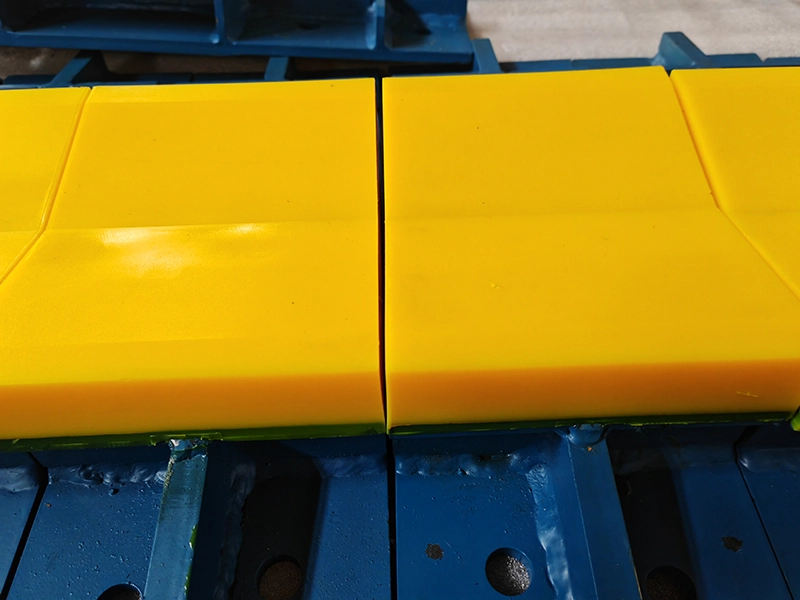
モジュール式セグメント構造の鋳造ポリウレタン製コイル保護ブロック(一体型スチールチャンネル付き)
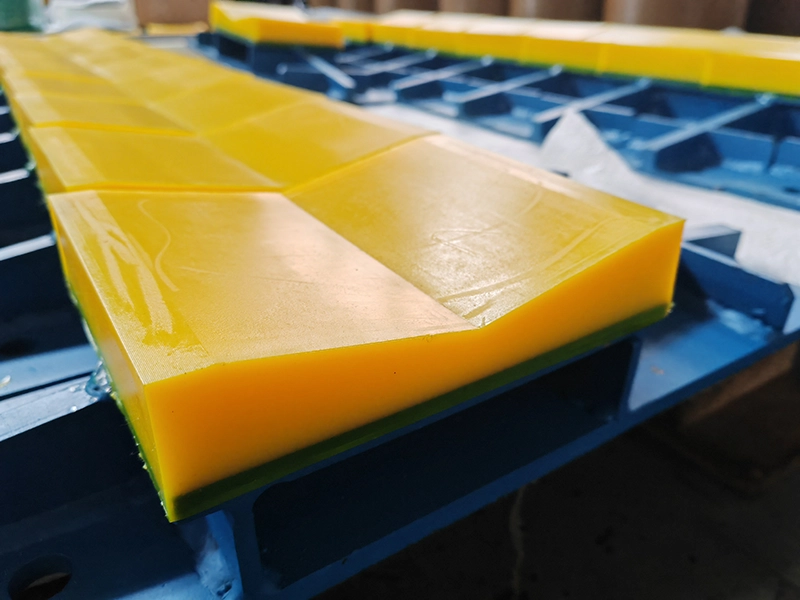
金属加工・スリッティングライン用耐油性インターロッキングウレタンコイルサドル
非着色・95Aデュロメーター・ポリウレタン製フロアパッド――アルミコイルへの跡付きを防止
モジュール式セグメント構造の鋳造ポリウレタン製コイル保護ブロック(一体型スチールチャンネル付き)
金属加工・スリッティングライン用耐油性インターロッキングウレタンコイルサドル

Heavy-Duty Polyurethane Coil Storage Pads & Saddles

Custom Cast Polyurethane Coil Storage Pads and Saddles for Steel Mills and Service Centers


- Cast polyurethane pads can be specified for compression, coil support, and surface-protection requirements.


- Hardness and geometry are selected from coil load, contact area, rack design, surface finish, and allowable deformation.


- Designed for steel mills and service centers using application data and representative validation.


- Material compatibility should be checked against rust preventatives, oils, cleaners, water, and storage temperature.


対象産業:  製鉄所、, 


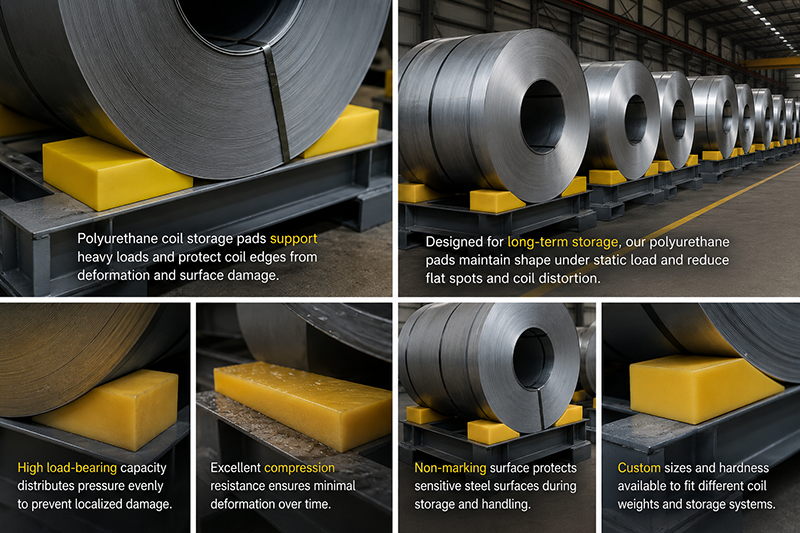
Steel coils may remain stationary under high contact loads for extended periods. Storage-pad selection should address compression, coil stability, surface marking, rack geometry, contaminants, environment, and inspection requirements before a support system is approved.

当社は製造しています 鋳造ポリウレタン coil storage pads for steel handling applications. Hardness is only one design input; compression set, contact area, coil diameter, support geometry, temperature, fluids, surface finish, and allowable deformation should be reviewed together.

製鉄所構内向けOEM受注用の特注ポリウレタンコイルパッドおよびサドル成形パラメータ

Hardness, core substrate, geometry, dimensions, color, and surface can be reviewed for hot- or cold-rolled coil racks. Tooling, sample timing, and production schedule are quoted from the drawing, quantity, material, and inspection requirements.

カスタム項目対応可能なエンジニアリング範囲対象業界/機器 ロングテール検索キーワード
PU配合Selected for the defined indoor or outdoor environment屋外用スチールコイル置き場用ポリウレタン製サドル、屋内用熱間圧延コイル用保管パッド
ショア硬度スケールSelected from application data and trials重量のある熱間鋼コイル用の高硬度コイル支持サドル、傷がつきにくい軟質PU製コイルパッド
静的耐荷重能力Calculated from coil, support, contact, and rack data20トン用スチールコイルラック向け高荷重ポリウレタン製コイル収納パッド
コア補強基材固体PU、亜鉛メッキ鋼製インサート、ガラス繊維マットコア倉庫用ラック向けの、金属裏打ち付き強化滑り止めコイルサドル
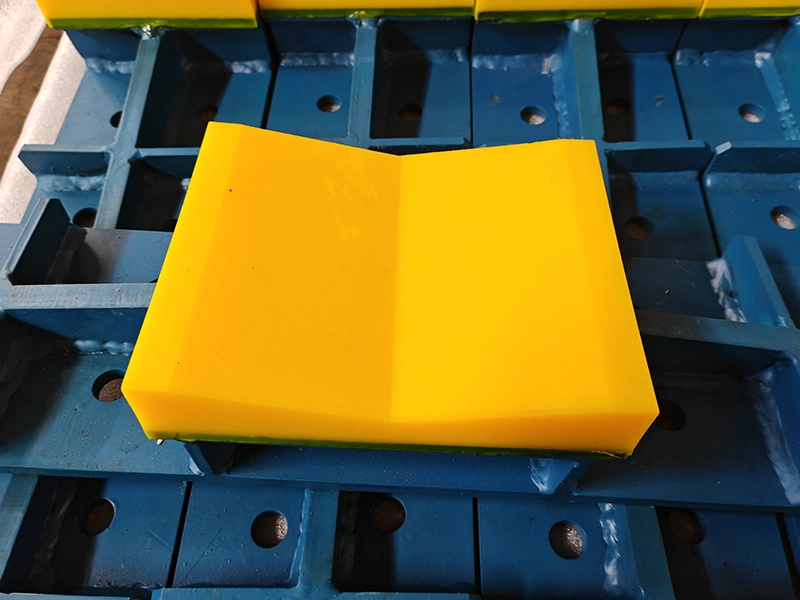
コイルの接点形状平らな長方形のパッド、V字型のサドル、半円形のコイルクレードル冷間圧延コイルをラックに中央に配置して保管するためのV字型PUコイルサドル
寸法公差管理Specified on the approved drawing自動コイルラックライン向けの、公差の厳しい特注成形コイル収納用サポート

高耐久性ポリウレタン製コイル用支持パッドおよびサドルの産業用途

Molded PU coil supports can be considered for static rack systems in steel production, metal distribution, and aluminum processing after indoor or outdoor service conditions are defined.

大容量ウレタン製コイルウェッジを用いた工業用倉庫床面保管追跡システム

– 統合製鉄所における熱間圧延炭素鋼コイル用保管ラックのベイ

– 自動車用グレードの最高品質金属材向け、冷間圧延ステンレス鋼コイルの保管ヤード

– 金属流通サービスセンターにおけるアルミニウム押出コイル用保管ラック

– 屋外のコイル置き場(継続的な日照や雨にさらされている)

– サドルの位置が固定された、コイル搬送を自動化した倉庫用ラックシステム

– 亜鉛メッキ鋼コイルの保管:白錆の転移、接触、摩耗を防ぐため

Technical Selection Factors for Polyurethane, Rubber, and Other Coil Supports

Compare candidate support materials with the same test methods and acceptance criteria. Relevant checks may include abrasion, tear behavior, compression set, UV exposure, chemical compatibility, marking, and retained geometry.

– Compare abrasion data for the selected polyurethane and alternative materials under the same method, load, wheel, and endpoint.

– For outdoor storage, specify UV and weathering acceptance criteria for color, cracking, hardness, and surface condition.

– Review tear behavior and edge geometry using data from the selected grades and representative contact conditions.

– Test non-marking and indentation risk on the actual polished, painted, galvanized, or stainless surface.

– Calculate load distribution through the pad and rack structure with the responsible rack or structural engineer.

– Evaluate one-piece or modular construction for retention, installation, replacement, and movement during handling.

40トンの鋼コイルを支える、頑丈なV字型ポリウレタン製コイル用保管パッド

Procurement and Quality Questions for Custom Polyurethane Coil Pads

Procurement should compare supplier capability, material records, tooling, sample approval, inspection, packing, delivery, and support against the project requirements.

– Request the specific management-system certificates, material records, and test reports required for the order.

– Confirm tooling ownership, drawing control, sample timing, and production lead time in the quotation.

– Confirm sample and production quantities from part size, tooling, material, and order requirements.

– Compare total landed cost, inspection, installation, service evidence, and replacement risk.

– Provide coil, rack, load, environment, and drawing data for design-for-manufacture review.

– Record warranty scope, exclusions, acceptance criteria, and claim process in the order.

– Agree the batch inspection and test report requirements before production.

- カスタム成形ポリウレタン製品の製造において、どのように品質管理を行っているのか?

Coil Storage Pad Application Examples and Validation Plans

The following application examples show what to document when existing coil supports crack, deform, move, or mark stored material. They are validation templates, not verified customer performance claims.

Application Example 1: Cold-Rolled Stainless Coil Storage

– Observed condition: Existing saddles show wear, movement, or marking on surface-critical coils.

– Engineering review: Record coil mass and diameter, contact area, rack geometry, saddle fit, surface finish, hardness, and material compatibility.

– Validation plan: Inspect coil surfaces, pad wear, deformation, movement, rack contact, and replacement triggers during a representative storage trial.

Application Example 2: Outdoor Hot-Rolled Coil Yard

– Validation plan: Define outdoor exposure, inspect color and cracking, measure pad deformation, and keep rack inspection intervals under the site engineering plan.

– Observed condition: Existing pads show weathering, cracking, movement, or loss of support geometry outdoors.

– Engineering review: Compare UV-stabilized formulations, support geometry, reinforcement, drainage, retention, and rack compatibility.

Polyurethane Coil Pad and Saddle Selection Guide for Steel Rack Engineers and Buyers

Use the following workflow to define a coil support for the actual load, rack, coil surface, environment, and validation requirements.

手順 1:サドル接触面積あたりのコイルの最大静荷重を確認する

Calculate coil load per support, contact area, pressure distribution, dynamic handling factors, rack reactions, and allowable pad deformation.

ステップ 2:保管環境における紫外線照射レベルを定義する

– Indoor covered yards: compare candidate formulations for load, compression, fluids, temperature, and marking.

– Open-air yards: define UV and weathering acceptance criteria for water, drainage, temperature, color, cracking, and retained support geometry.

ステップ3:化学物質への曝露および残留腐食防止潤滑剤の分析

Identify anti-rust coatings, slitting oils, cleaners, water, and other chemicals. Compare candidate ポリエステル系ポリウレタン および ポリエーテル系ポリウレタン grades using compatibility data and representative immersion or contact tests.

ステップ4:コイルの表面仕上げ要件に合わせてショア硬度を調整する

– Surface-critical coils: prioritize contact-area design, cushioning, clean formulation, and marking tests.

– Rough hot-rolled coils: evaluate load, indentation, abrasion, impact, support, and allowable deflection.

ステップ4:ラックフレームの設計に基づいて、コイルの接点形状を選択する

- ベース幅の広いコイルラック用の単体の平らな長方形パッド;コイルを中央に配置するためのV字型サドル

  • How should polyester- and polyether-based polyurethane be compared for coil saddles?

    Compare specific grades for compression set, tear behavior, abrasion, water exposure, temperature, oils, rust preventatives, cleaners, and marking risk. Neither chemistry is universally superior; review supplier data and test representative samples with the actual contact fluids and load.

  • How should polyurethane coil pads and hardwood blocks be compared for total cost?

    Compare initial price, rack compatibility, coil stability, surface marking, debris, inspection, replacement interval, handling, disposal, and documented service results. Use site-specific records and a representative trial instead of assuming a fixed lifespan for either material.

  • How is load capacity determined for a polyurethane coil pad?

    Calculate coil load per support, contact area, pressure distribution, rack reactions, coil diameter, dynamic handling factors, temperature, and allowable deformation. Select grade, hardness, geometry, and reinforcement together, then validate compression and stability with the responsible rack or structural engineer.

  • What compliance and quality documents are available for polyurethane coil pads?

    Available documents depend on the selected formulation, supplier records, production route, destination market, and order. State the required management-system certificate, restricted-substance declaration, material record, inspection report, or test method before quotation and review it for the exact material supplied.

  • How is non-marking performance checked for surface-critical coils?

    Request a clean, non-marking formulation and test it on the actual aluminum, stainless, painted, or coated surface under representative load, dwell time, movement, temperature, oils, and cleaners. Inspect for residue, color transfer, indentation, corrosion staining, and scratches before approval.

  • How is the V-groove angle selected for a coil storage saddle?

    Select the angle and contact profile from coil diameter, mass, width, center height, rack geometry, support spacing, handling method, and lateral-restraint requirements. The responsible rack or structural engineer should verify load reactions, stability, and safety for the complete storage system.

  • What dimensional tolerances are available for custom coil pads?

    Tolerance depends on part size, geometry, material, mold, inserts, machining, measurement method, and functional fit. Identify critical dimensions and datum references on the drawing so achievable tolerances and the inspection plan can be agreed before tooling.

見積もりを取る

関連商品

お問い合わせは無料