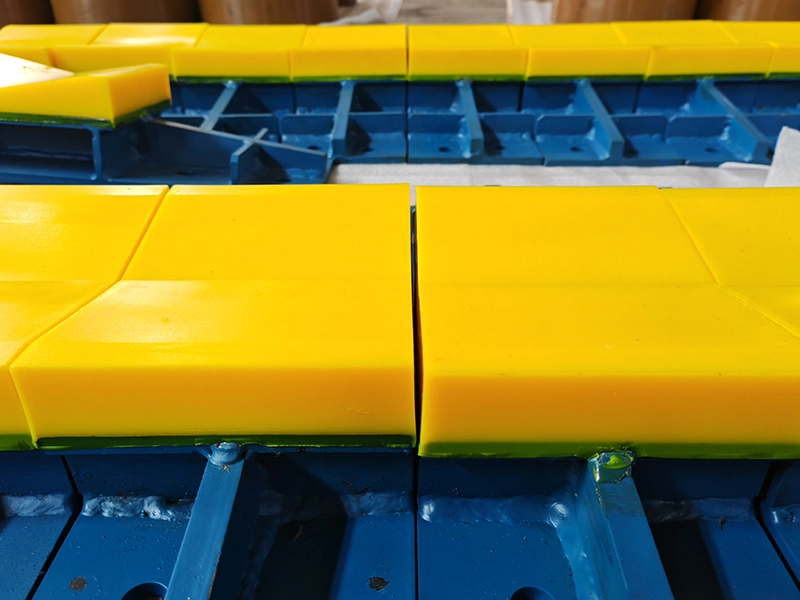
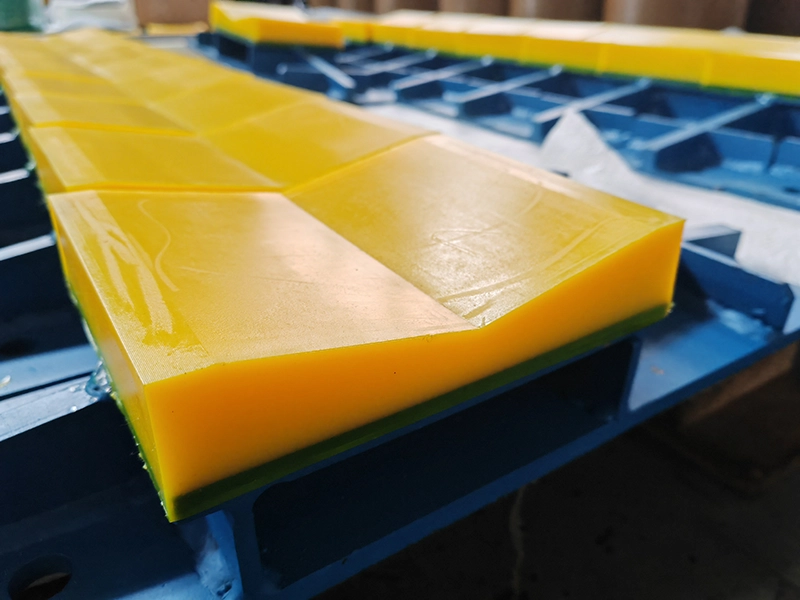
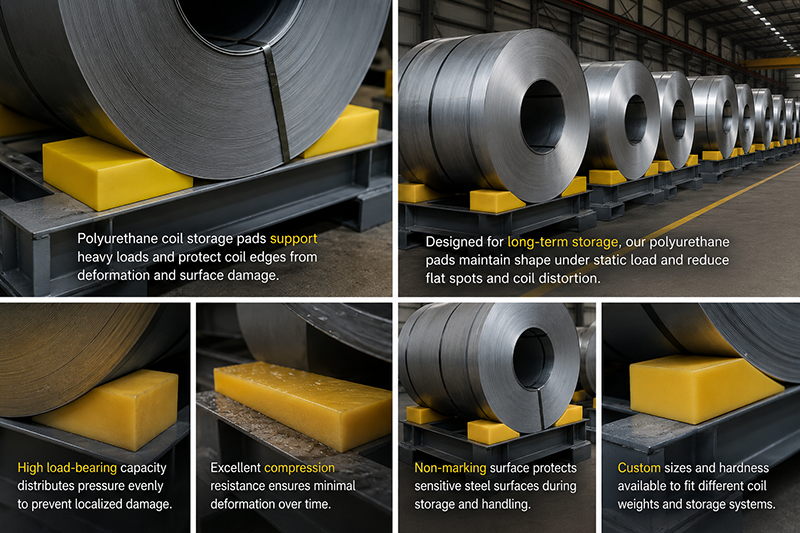
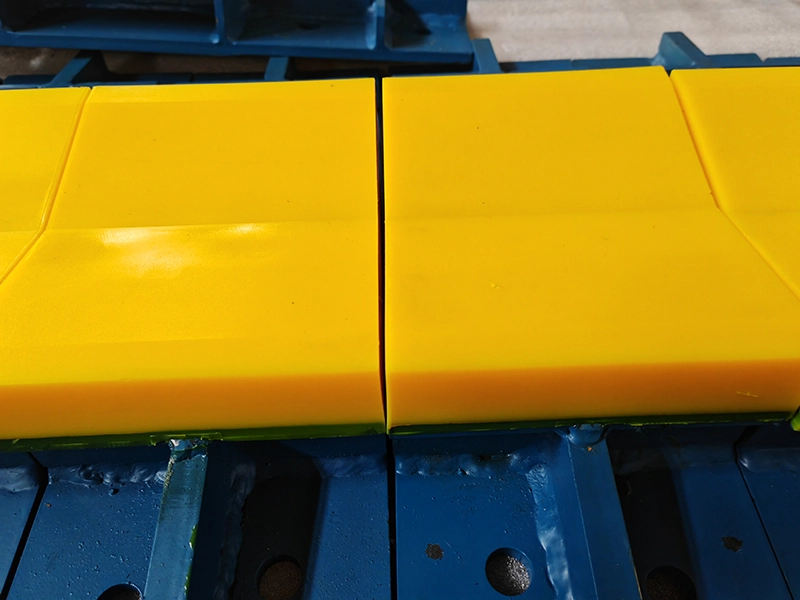
Almohadillas y soportes de poliuretano de alta resistencia para el almacenamiento de bobinas.
Almohadillas y soportes de almacenamiento de bobinas de poliuretano fundido a medida para acerías y centros de servicio.
- Se pueden especificar almohadillas de poliuretano fundido para cumplir con los requisitos de compresión, soporte de bobinas y protección de superficies.
- La dureza y la geometría se seleccionan en función de la carga de la bobina, el área de contacto, el diseño del bastidor, el acabado superficial y la deformación admisible.
- Diseñado para acerías y centros de servicio, utilizando datos de aplicación y validación representativa.
- Se debe comprobar la compatibilidad del material con los productos anticorrosivos, aceites, limpiadores, agua y la temperatura de almacenamiento.
Las bobinas de acero pueden permanecer inmóviles bajo cargas de contacto elevadas durante periodos prolongados. La selección de las plataformas de almacenamiento debe tener en cuenta la compresión, la estabilidad de la bobina, el marcado de la superficie, la geometría del bastidor, los contaminantes, el entorno y los requisitos de inspección antes de la aprobación del sistema de soporte.
Fabricamos poliuretano colado Almohadillas de almacenamiento de bobinas para aplicaciones de manipulación de acero. La dureza es solo uno de los parámetros de diseño; deben considerarse conjuntamente la deformación permanente por compresión, el área de contacto, el diámetro de la bobina, la geometría del soporte, la temperatura, los fluidos, el acabado superficial y la deformación admisible.
Parámetros personalizados de moldeo de almohadillas de bobina y soportes de poliuretano para pedidos OEM destinados a patios de acerías
Se pueden revisar la dureza, el sustrato del núcleo, la geometría, las dimensiones, el color y la superficie de los soportes para bobinas laminadas en caliente o en frío. El utillaje, los plazos de muestreo y el cronograma de producción se calculan a partir del plano, la cantidad, el material y los requisitos de inspección.
Parámetro personalizado
Gama de productos de ingeniería disponibles
Sector o equipo objetivo: término de búsqueda de cola larga
Formulación de PU
Seleccionado para el entorno interior o exterior definido.
soportes de poliuretano para bobinas de acero en exteriores, plataformas de almacenamiento para bobinas laminadas en caliente en interiores
Dureza según la escala de Shore
Seleccionado a partir de datos de solicitudes y ensayos.
soportes de alta dureza para bobinas de acero en caliente de gran peso, almohadillas de PU blandas que no dejan marcas
Capacidad de carga estática
Calculado a partir de datos de bobina, soporte, contacto y bastidor.
Almohadillas de poliuretano para el almacenamiento de bobinas de alta resistencia, destinadas a estanterías para bobinas de acero de 20 toneladas
Sustrato de refuerzo del núcleo
PU macizo, inserto de acero galvanizado, núcleo de malla de fibra de vidrio
soportes reforzados antideslizantes en forma de espiral con refuerzo metálico para estanterías de almacén
Geometría de los contactos de la bobina
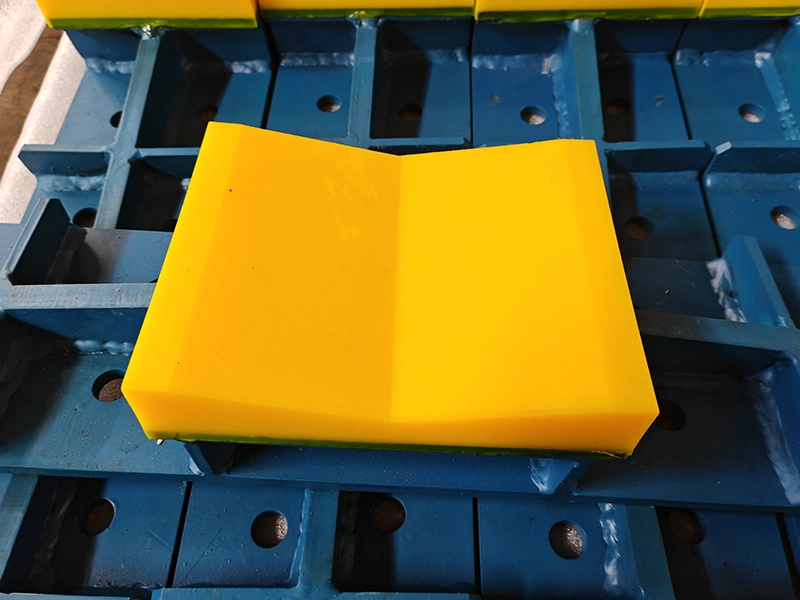
Almohadillas rectangulares planas, soportes con perfil en V, soportes semicirculares para bobinas
Soportes en forma de V de PU para el almacenamiento centrado de bobinas laminadas en frío en estanterías
Control de tolerancias dimensionales
Especificado en el plano aprobado
Soportes de almacenamiento de bobinas moldeados a medida con tolerancias estrictas para líneas automatizadas de estanterías de bobinas
Aplicaciones industriales de las almohadillas y soportes de poliuretano de alta resistencia para el almacenamiento de bobinas
Una vez definidas las condiciones de servicio, ya sean en interiores o en exteriores, se pueden considerar los soportes de bobinas de poliuretano moldeado para sistemas de estanterías estáticas.
– Secciones de estanterías para el almacenamiento de bobinas de acero al carbono laminadas en caliente en acerías integradas
– Almacenes de bobinas de acero inoxidable laminadas en frío para material metálico de primera calidad destinado al sector de la automoción
– Estanterías para el almacenamiento de bobinas de extrusión de aluminio en centros de distribución de metales
– Patios al aire libre con bobinas, expuestos a la luz solar y a ciclos continuos de lluvia
– Sistemas de estanterías de almacén para la manipulación automatizada de bobinas con posicionamiento fijo de los soportes
– Almacenamiento de bobinas de acero galvanizado para evitar la transferencia de óxido blanco y la abrasión por contacto
Factores de selección técnica para soportes de bobinas de poliuretano, caucho y otros materiales.
Compare los materiales de soporte candidatos con los mismos métodos de prueba y criterios de aceptación. Las comprobaciones pertinentes pueden incluir abrasión, comportamiento al desgarro, deformación permanente por compresión, exposición a rayos UV, compatibilidad química, marcado y geometría retenida.
– Comparar los datos de abrasión del poliuretano seleccionado y de materiales alternativos bajo el mismo método, carga, rueda y punto final.
– Para el almacenamiento en exteriores, especifique los criterios de aceptación de radiación UV y resistencia a la intemperie en cuanto a color, agrietamiento, dureza y estado de la superficie.
– Analizar el comportamiento ante desgarros y la geometría de los bordes utilizando datos de los grados seleccionados y condiciones de contacto representativas.
– Pruebe el riesgo de marcas y hendiduras sobre la superficie real pulida, pintada, galvanizada o de acero inoxidable.
– Calcular la distribución de la carga a través de la estructura de la base y el estante con el ingeniero estructural o de estantes responsable.
– Evaluar la construcción modular o de una sola pieza en cuanto a retención, instalación, reemplazo y movimiento durante la manipulación.
Preguntas sobre adquisición y calidad de almohadillas de poliuretano para bobinas hechas a medida
El departamento de compras debe comparar la capacidad del proveedor, los registros de materiales, las herramientas, la aprobación de muestras, la inspección, el embalaje, la entrega y el soporte con los requisitos del proyecto.
– Solicite los certificados del sistema de gestión, los registros de materiales y los informes de pruebas específicos que se requieran para el pedido.
– Confirme en el presupuesto la propiedad de las herramientas, el control de los planos, los plazos de muestreo y el tiempo de entrega de la producción.
– Confirmar las cantidades de muestra y producción en función del tamaño de la pieza, las herramientas, el material y los requisitos del pedido.
– Compare el costo total de adquisición, la inspección, la instalación, la evidencia de servicio y el riesgo de reemplazo.
– Proporcionar datos sobre bobinas, bastidores, carga, entorno y planos para la revisión del diseño para la fabricación.
– En el pedido, registre el alcance de la garantía, las exclusiones, los criterios de aceptación y el proceso de reclamación.
– Acordar los requisitos del informe de inspección y prueba del lote antes de la producción.
Ejemplos de aplicación y planes de validación de plataformas de almacenamiento de bobinas
Los siguientes ejemplos de aplicación muestran qué documentar cuando los soportes de bobina existentes se agrietan, deforman, mueven o marcan el material almacenado. Se trata de plantillas de validación, no de afirmaciones verificadas sobre el rendimiento del cliente.
Ejemplo de aplicación 1: Almacenamiento de bobinas de acero inoxidable laminadas en frío
– Estado observado: Las abrazaderas existentes muestran desgaste, movimiento o marcas en las bobinas que son críticas para la superficie.
– Revisión de ingeniería: Registrar la masa y el diámetro de la bobina, el área de contacto, la geometría del bastidor, el ajuste del soporte, el acabado superficial, la dureza y la compatibilidad del material.
– Plan de validación: Inspeccionar las superficies de las bobinas, el desgaste de las almohadillas, la deformación, el movimiento, el contacto con el bastidor y los factores desencadenantes de reemplazo durante una prueba de almacenamiento representativa.
Ejemplo de aplicación 2: Patio exterior de bobinas laminadas en caliente
– Plan de validación: Definir la exposición al aire libre, inspeccionar el color y el agrietamiento, medir la deformación de las almohadillas y mantener los intervalos de inspección de los estantes según el plan de ingeniería del sitio.
– Estado observado: Las almohadillas existentes muestran desgaste por la intemperie, agrietamiento, movimiento o pérdida de la geometría de soporte en exteriores.
– Revisión de ingeniería: Comparar formulaciones estabilizadas contra los rayos UV, geometría de soporte, refuerzo, drenaje, retención y compatibilidad con estanterías.
Guía de selección de almohadillas y soportes de poliuretano para bobinas, dirigida a ingenieros y compradores de estanterías de acero.
Utilice el siguiente flujo de trabajo para definir un soporte de bobina que tenga en cuenta la carga real, el bastidor, la superficie de la bobina, el entorno y los requisitos de validación.
Paso 1: Confirmar la carga estática máxima de la bobina por área de contacto de cada montura
Calcular la carga de la bobina por soporte, el área de contacto, la distribución de la presión, los factores de manipulación dinámica, las reacciones de la cremallera y la deformación admisible de la almohadilla.
Paso 2: Definir el nivel de exposición a los rayos UV del entorno de almacenamiento
– Patios cubiertos interiores: compare las formulaciones candidatas en cuanto a carga, compresión, fluidos, temperatura y marcado.
– Patios al aire libre: definición radiación UV y erosión Criterios de aceptación para agua, drenaje, temperatura, color, agrietamiento y geometría del soporte retenido.
Paso 3: Analizar la exposición a sustancias químicas y los lubricantes residuales para el control de la corrosión
Identificar recubrimientos anticorrosivos, aceites de corte, limpiadores, agua y otros productos químicos. Comparar candidatos poliuretano a base de poliéster y poliuretano a base de poliéter clasificaciones basadas en datos de compatibilidad y pruebas representativas de inmersión o contacto.
Paso 4: Adaptar la dureza Shore a los requisitos de acabado de la superficie de la bobina
– Bobinas de superficie crítica: priorizar el diseño del área de contacto, la amortiguación, la formulación limpia y las pruebas de marcado.
– Bobinas laminadas en caliente en bruto: evaluar la carga, la indentación, la abrasión, el impacto, el soporte y la deflexión admisible.
Paso 4: Seleccionar la geometría de los contactos de la bobina en función del diseño del bastidor del armario
-Almohadillas rectangulares planas individuales para bastidores de bobinas de base ancha; soportes con perfil en V para el posicionamiento centrado de bobinas estrechas
¿Cómo se deben comparar los poliuretanos a base de poliéster y poliéter para los soportes de bobina?
Compare los grados específicos en cuanto a deformación permanente por compresión, comportamiento al desgarro, abrasión, exposición al agua, temperatura, aceites, anticorrosivos, limpiadores y riesgo de marcas. Ninguna composición química es universalmente superior; revise los datos del proveedor y pruebe muestras representativas con los fluidos de contacto y la carga reales.
¿Cómo se deben comparar las almohadillas de poliuretano para bobinas y los bloques de madera dura en cuanto al costo total?
Compare el precio inicial, la compatibilidad con bastidores, la estabilidad de las bobinas, el marcado de la superficie, los residuos, la inspección, el intervalo de reemplazo, la manipulación, la eliminación y los resultados de servicio documentados. Utilice registros específicos del sitio y una prueba representativa en lugar de asumir una vida útil fija para cada material.
¿Cómo se determina la capacidad de carga de una almohadilla de poliuretano para bobinas?
Calcula la carga de la bobina por soporte, el área de contacto, la distribución de la presión, las reacciones del bastidor, el diámetro de la bobina, los factores de manipulación dinámica, la temperatura y la deformación admisible. Selecciona el grado, la dureza, la geometría y el refuerzo en conjunto, y luego valida la compresión y la estabilidad con el ingeniero estructural o del bastidor responsable.
¿Qué documentos de conformidad y calidad están disponibles para las almohadillas de poliuretano para bobinas?
La documentación disponible depende de la formulación seleccionada, los registros del proveedor, la ruta de producción, el mercado de destino y el pedido. Indique el certificado del sistema de gestión, la declaración de sustancias restringidas, el registro de materiales, el informe de inspección o el método de ensayo necesarios antes de solicitar un presupuesto y revíselos para verificar que el material suministrado sea el correcto.
¿Cómo se comprueba el rendimiento sin marcas en bobinas con superficies críticas?
Solicite una fórmula limpia que no deje marcas y pruébela sobre la superficie real de aluminio, acero inoxidable, pintada o recubierta, bajo carga, tiempo de contacto, movimiento, temperatura, aceites y limpiadores representativos. Inspeccione si hay residuos, transferencia de color, hendiduras, manchas de corrosión o rayones antes de su aprobación.
¿Cómo se selecciona el ángulo de la ranura en V para un soporte de almacenamiento de bobinas?
Seleccione el ángulo y el perfil de contacto en función del diámetro, la masa, el ancho, la altura central de la bobina, la geometría del bastidor, la separación entre soportes, el método de manipulación y los requisitos de sujeción lateral. El ingeniero estructural o de bastidores responsable deberá verificar las reacciones de carga, la estabilidad y la seguridad del sistema de almacenamiento completo.
¿Qué tolerancias dimensionales están disponibles para las almohadillas de bobina personalizadas?
La tolerancia depende del tamaño de la pieza, la geometría, el material, el molde, los insertos, el mecanizado, el método de medición y el ajuste funcional. Identifique las dimensiones críticas y las referencias de datos en el plano para poder acordar las tolerancias alcanzables y el plan de inspección antes de la fabricación de las herramientas.