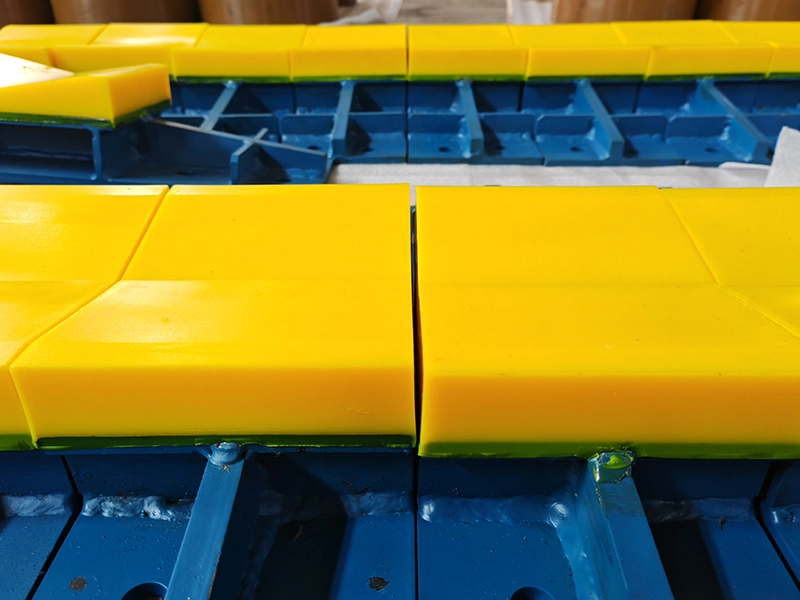
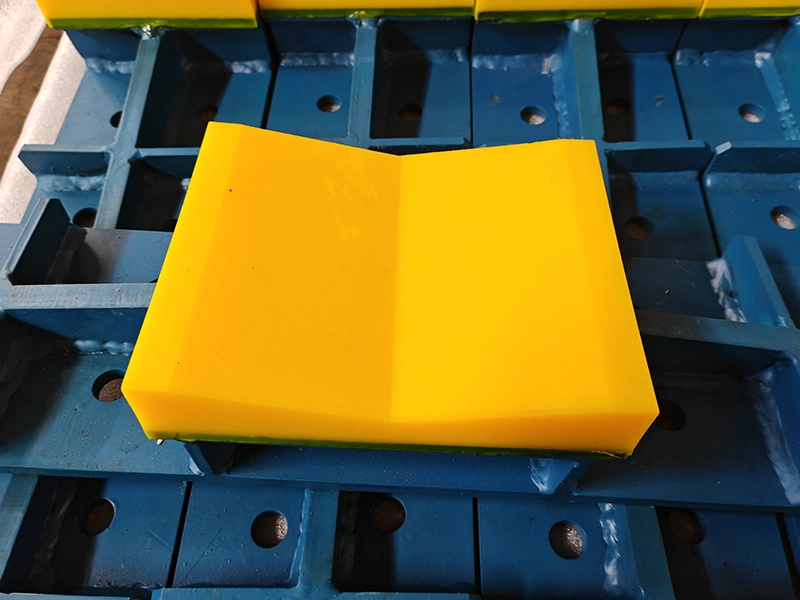
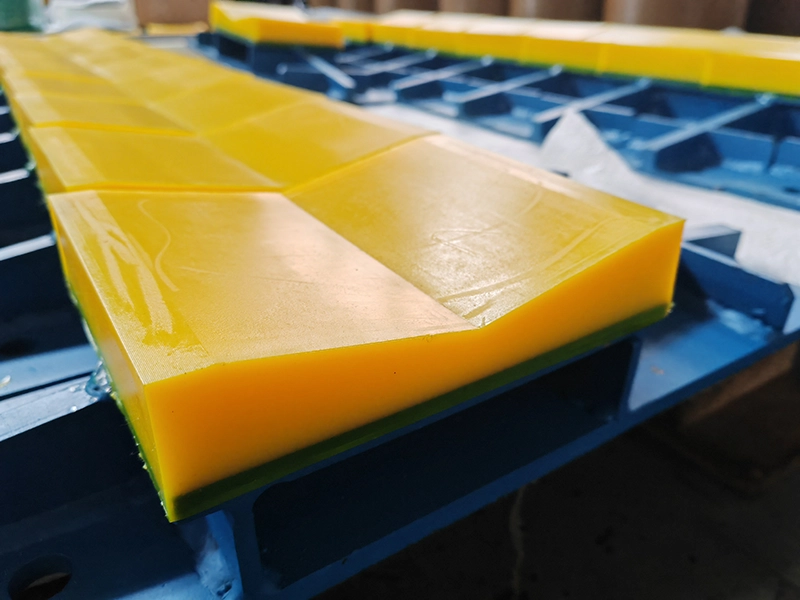
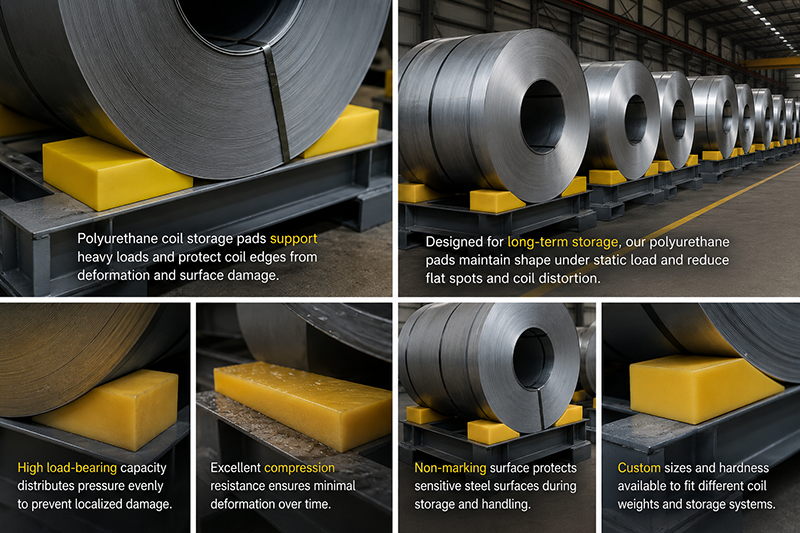
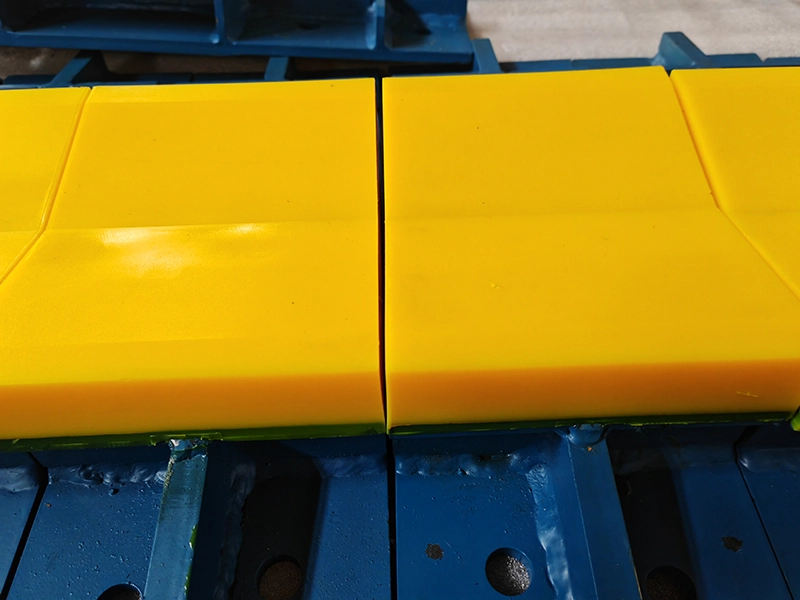
Hochleistungsfähige Aufbewahrungskissen und Sättel für Federkerne aus Polyurethan
Kundenspezifische Lagerplatten und -sättel aus Polyurethanguss für Spulen in Stahlwerken und Servicezentren
- Gegossene Polyurethan-Pads können für Kompressions-, Spulenstütz- und Oberflächenschutzanforderungen spezifiziert werden.
- Härte und Geometrie werden anhand der Spulenbelastung, der Kontaktfläche, der Gestellkonstruktion, der Oberflächenbeschaffenheit und der zulässigen Verformung ausgewählt.
- Konzipiert für Stahlwerke und Servicezentren unter Verwendung von Anwendungsdaten und repräsentativer Validierung.
- Die Materialverträglichkeit sollte hinsichtlich Rostschutzmitteln, Ölen, Reinigungsmitteln, Wasser und Lagertemperatur geprüft werden.
Stahlcoils können unter hohen Kontaktlasten über längere Zeiträume stillstehen. Bei der Auswahl der Lagerunterlagen müssen Kompression, Coilstabilität, Oberflächenmarkierung, Gestellgeometrie, Verunreinigungen, Umgebungsbedingungen und Inspektionsanforderungen berücksichtigt werden, bevor ein Trägersystem zugelassen wird.
Wir fertigen gegossenes Polyurethan Lagerflächen für Stahlcoils. Die Härte ist nur ein Auslegungsparameter; Druckverformungsrest, Kontaktfläche, Coildurchmesser, Geometrie der Auflagefläche, Temperatur, Flüssigkeiten, Oberflächenbeschaffenheit und zulässige Verformung sollten gemeinsam betrachtet werden.
Kundenspezifische Parameter für Polyurethan-Spiralpolster und Sattelformteile für OEM-Aufträge im Stahlwerksgelände
Härte, Kernmaterial, Geometrie, Abmessungen, Farbe und Oberfläche können für warm- oder kaltgewalzte Coil-Gestelle geprüft werden. Werkzeugkosten, Mustererstellung und Produktionsplan werden anhand der Zeichnung, der Menge, des Materials und der Prüfanforderungen ermittelt.
Anpassungsparameter
Verfügbares Konstruktionsspektrum
Zielbranche/Ausrüstung – Long-Tail-Suchbegriff
PU-Formulierung
Ausgewählt für die definierte Innen- oder Außenumgebung
Polyurethan-Auflagen für Stahlcoils im Außenbereich, Lagerunterlagen für warmgewalzte Coils im Innenbereich
Härte nach der Shore-Skala
Aus Anwendungsdaten und Versuchen ausgewählt
Spulenstützsättel mit hoher Härte für schwere Heißstahlspulen, weiche, kratzfreie PU-Spulenpolster
Statische Tragfähigkeit
Berechnet aus Spulen-, Stütz-, Kontakt- und Gestelldaten
Hochbelastbare Lagerpolster aus Polyurethan für 20-Tonnen-Stahlcoil-Regale
Trägermaterial für die Kernverstärkung
Massives PU, Einsatz aus verzinktem Stahl, Kern aus Glasfasermatte
verstärkte, rutschfeste Spulenträger mit Metallverstärkung für Lagerregale
Geometrie der Spulenkontakte
Flache rechteckige Auflagen, Sättel mit V-Profil, halbrunde Spulenhalterungen
V-förmige PU-Coil-Auflagen für die zentrierte Lagerung von kaltgewalzten Coils in Regalen
Kontrolle der Maßtoleranzen
Gemäß der genehmigten Zeichnung
Maßgefertigte Coil-Ablagehalterungen mit engen Toleranzen für automatisierte Coil-Regalanlagen
Industrielle Anwendungen für hochbelastbare Polyurethan-Lagerpolster und -Auflagen für Spulen
Geformte PU-Spulenhalterungen können für statische Regalsysteme in der Stahlproduktion, im Metallvertrieb und in der Aluminiumverarbeitung in Betracht gezogen werden, nachdem die Einsatzbedingungen im Innen- oder Außenbereich definiert wurden.
– Lagerregale für warmgewalzte Kohlenstoffstahlcoils in integrierten Stahlwerken
– Lagerplätze für kaltgewalzte Edelstahlcoils als hochwertiges Ausgangsmaterial für die Automobilindustrie
– Lagerregale für Aluminium-Strangpresscoils in Metallvertriebszentren
– Freiluft-Spulenlager im Freien, die ständig Sonnenlicht und Regengüssen ausgesetzt sind
– Automatisierte Lagerregalsysteme für die Coil-Handhabung mit fester Sattelpositionierung
– Lagerung von verzinkten Stahlcoils zur Vermeidung von Weißrost, Kontakt und Abrieb
Technische Auswahlkriterien für Spulenhalterungen aus Polyurethan, Gummi und anderen Materialien
Vergleichen Sie die Kandidatenmaterialien anhand derselben Prüfmethoden und Akzeptanzkriterien. Relevante Prüfungen können Abriebfestigkeit, Reißfestigkeit, Druckverformungsrest, UV-Beständigkeit, chemische Beständigkeit, Markierungsfestigkeit und Formstabilität umfassen.
– Vergleichen Sie die Abriebdaten des ausgewählten Polyurethans und alternativer Materialien unter gleichen Bedingungen (gleiche Methode, Belastung, Rad und Endpunkt).
– Für die Lagerung im Freien sind UV- und Witterungsbeständigkeitskriterien hinsichtlich Farbe, Rissbildung, Härte und Oberflächenbeschaffenheit festzulegen.
– Überprüfen Sie das Reißverhalten und die Kantengeometrie anhand von Daten der ausgewählten Sorten und repräsentativen Kontaktbedingungen.
– Prüfung auf Spurenfreiheit und Eindrückrisiko auf der tatsächlichen polierten, lackierten, verzinkten oder Edelstahloberfläche.
– Die Lastverteilung über die Fundament- und Gestellkonstruktion gemeinsam mit dem zuständigen Gestell- oder Statiker berechnen.
– Bewertung der einteiligen oder modularen Bauweise hinsichtlich Haltbarkeit, Installation, Austausch und Bewegung während der Handhabung.
Fragen zur Beschaffung und Qualität von kundenspezifischen Polyurethan-Spulenauflagen
Die Beschaffungsabteilung sollte die Leistungsfähigkeit der Lieferanten, die Materialaufzeichnungen, die Werkzeuge, die Musterfreigabe, die Inspektion, die Verpackung, die Lieferung und den Support mit den Projektanforderungen vergleichen.
– Fordern Sie die für den Auftrag erforderlichen spezifischen Managementsystemzertifikate, Materialaufzeichnungen und Prüfberichte an.
– Bitte bestätigen Sie im Angebot die Zuständigkeit für die Werkzeuge, die Zeichnungskontrolle, den Zeitpunkt der Mustererstellung und die Produktionsvorlaufzeit.
– Bestätigung der Muster- und Produktionsmengen anhand der Teilegröße, der Werkzeuge, des Materials und der Auftragsanforderungen.
– Vergleichen Sie die gesamten Anschaffungskosten, Inspektionskosten, Installationskosten, Nachweise über die Betriebssicherheit und das Risiko eines Ersatzes.
– Bereitstellung von Spulen-, Gestell-, Last-, Umgebungs- und Zeichnungsdaten zur Überprüfung der fertigungsgerechten Konstruktion.
– Garantieumfang, Ausschlüsse, Abnahmekriterien und Vorgehensweise bei der Geltendmachung von Ansprüchen in der Bestellung festhalten.
– Die Anforderungen an die Chargenprüfung und den Testbericht müssen vor Produktionsbeginn vereinbart werden.
Anwendungsbeispiele und Validierungspläne für Spulenlagerplattformen
Die folgenden Anwendungsbeispiele zeigen, was zu dokumentieren ist, wenn vorhandene Spulenhalterungen Risse bekommen, sich verformen, verschieben oder gelagertes Material beschädigen. Es handelt sich um Validierungsvorlagen, nicht um verifizierte Leistungsangaben von Kunden.
Anwendungsbeispiel 1: Lagerung von kaltgewalzten Edelstahlcoils
– Festgestellter Zustand: Die vorhandenen Sättel weisen Abnutzungserscheinungen, Bewegungen oder Markierungen an den oberflächenkritischen Spulen auf.
– Technische Überprüfung: Erfassung von Spulenmasse und -durchmesser, Kontaktfläche, Zahnstangengeometrie, Sattelpassung, Oberflächenbeschaffenheit, Härte und Materialverträglichkeit.
– Validierungsplan: Überprüfung der Spulenoberflächen, des Verschleißes der Auflageflächen, der Verformung, der Bewegung, des Gestellkontakts und der Auslöser für einen Austausch während eines repräsentativen Lagerversuchs.
Anwendungsbeispiel 2: Freilager für warmgewalzte Coils
– Validierungsplan: Definition der Freilandexposition, Prüfung auf Farbe und Rissbildung, Messung der Verformung der Auflageflächen und Einhaltung der Inspektionsintervalle für das Gestell gemäß dem Baustellenplan.
– Vorhandener Zustand: Die vorhandenen Fundamentplatten weisen im Außenbereich Verwitterungserscheinungen, Risse, Bewegungen oder einen Verlust der Stützgeometrie auf.
– Technische Überprüfung: Vergleich von UV-stabilisierten Formulierungen, Stützgeometrie, Verstärkung, Drainage, Rückhaltevermögen und Gestellkompatibilität.
Leitfaden zur Auswahl von Polyurethan-Spulenauflagen und -Sätteln für Stahlregalkonstrukteure und -käufer
Verwenden Sie den folgenden Arbeitsablauf, um eine Spulenhalterung für die tatsächliche Last, das Gestell, die Spulenoberfläche, die Umgebung und die Validierungsanforderungen zu definieren.
Schritt 1: Bestimmung der maximalen statischen Spulenbelastung pro Sattelkontaktfläche
Berechnen Sie die Spulenlast pro Stütze, die Kontaktfläche, die Druckverteilung, die dynamischen Handhabungsfaktoren, die Zahnstangenreaktionen und die zulässige Polsterverformung.
Schritt 2: Bestimmung der UV-Belastung in der Lagerumgebung
– Überdachte Innenhöfe: Vergleich der Kandidatenformulierungen hinsichtlich Belastung, Kompression, Flüssigkeiten, Temperatur und Markierung.
– Freilufthöfe: definieren UV-Strahlung und Verwitterung Akzeptanzkriterien für Wasser, Entwässerung, Temperatur, Farbe, Rissbildung und Geometrie der verbleibenden Stützkonstruktion.
Schritt 3: Analyse der chemischen Belastung und der Korrosionsschutzschmierstoffe
Identifizieren Sie Rostschutzbeschichtungen, Spaltöle, Reinigungsmittel, Wasser und andere Chemikalien. Vergleichen Sie die Kandidaten. Polyurethan auf Polyesterbasis und Polyurethan auf Polyetherbasis Bewertungen unter Verwendung von Kompatibilitätsdaten und repräsentativen Immersions- oder Kontakttests.
Schritt 4: Anpassung der Shore-Härte an die Anforderungen an die Oberflächenbeschaffenheit der Spule
– Bei oberflächenkritischen Spulen: Priorität haben Kontaktflächengestaltung, Dämpfung, saubere Rezeptur und Markierungstests.
– Raue warmgewalzte Coils: Bewertung von Belastung, Eindringung, Abrieb, Stoß, Unterstützung und zulässiger Durchbiegung.
Schritt 4: Wählen Sie die Kontaktgeometrie der Spule entsprechend der Konstruktion des Gestellrahmens aus
- Einzelne flache, rechteckige Auflagen für Spulenständer mit breiter Basis; Sättel mit V-Profil zur zentrierten Positionierung schmaler Spulen
Wie sollten Polyester- und Polyether-basierte Polyurethane für Spulensättel verglichen werden?
Vergleichen Sie die verschiedenen Sorten hinsichtlich Druckverformungsrest, Weiterreißfestigkeit, Abriebfestigkeit, Beständigkeit gegen Wasser, Temperaturbeständigkeit, Ölbeständigkeit, Rostschutzmittel, Reinigungsmittel und Markierungsgefahr. Keine der beiden chemischen Zusammensetzungen ist generell überlegen; prüfen Sie die Angaben der Lieferanten und testen Sie repräsentative Proben mit den tatsächlichen Kontaktflüssigkeiten und Belastungen.
Wie sollten Polyurethan-Spulenunterlagen und Hartholzblöcke hinsichtlich ihrer Gesamtkosten verglichen werden?
Vergleichen Sie Anschaffungspreis, Kompatibilität mit Gestellen, Spulenstabilität, Oberflächenmarkierungen, Verschmutzungen, Inspektionsaufwand, Austauschintervall, Handhabung, Entsorgung und dokumentierte Serviceergebnisse. Nutzen Sie standortspezifische Aufzeichnungen und einen repräsentativen Test, anstatt eine feste Lebensdauer für die Materialien anzunehmen.
Wie wird die Belastbarkeit einer Polyurethan-Federung bestimmt?
Berechnen Sie die Spulenlast pro Auflager, die Kontaktfläche, die Druckverteilung, die Gestellreaktionen, den Spulendurchmesser, die dynamischen Handhabungsfaktoren, die Temperatur und die zulässige Verformung. Wählen Sie Güteklasse, Härte, Geometrie und Bewehrung gemeinsam aus und überprüfen Sie anschließend Druckfestigkeit und Stabilität mit dem zuständigen Gestell- oder Statiker.
Welche Konformitäts- und Qualitätsdokumente sind für Polyurethan-Spulenunterlagen verfügbar?
Die verfügbaren Dokumente hängen von der gewählten Rezeptur, den Lieferantenunterlagen, dem Produktionsweg, dem Zielmarkt und der Bestellung ab. Geben Sie vor der Angebotserstellung das erforderliche Managementsystemzertifikat, die Erklärung zu eingeschränkten Stoffen, die Materialdokumentation, den Prüfbericht oder das Prüfverfahren an und prüfen Sie diese auf das exakt gelieferte Material.
Wie wird die Markierungsfreiheit bei oberflächenempfindlichen Spulen überprüft?
Fordern Sie eine saubere, nicht abfärbende Formulierung an und testen Sie diese auf der tatsächlichen Aluminium-, Edelstahl-, lackierten oder beschichteten Oberfläche unter repräsentativen Bedingungen hinsichtlich Belastung, Einwirkzeit, Bewegung, Temperatur, Ölen und Reinigungsmitteln. Prüfen Sie die Oberfläche vor der Freigabe auf Rückstände, Farbabrieb, Eindellungen, Korrosionsflecken und Kratzer.
Wie wird der V-Nutwinkel für einen Spulenaufbewahrungssattel ausgewählt?
Wählen Sie den Winkel und das Kontaktprofil anhand von Spulendurchmesser, Masse, Breite, Mittenhöhe, Gestellgeometrie, Stützabstand, Handhabungsmethode und Anforderungen an die seitliche Abstützung. Der zuständige Gestell- oder Statiker muss die Lastreaktionen, die Stabilität und die Sicherheit des gesamten Lagersystems überprüfen.
Welche Maßtoleranzen sind für kundenspezifische Spulenauflagen verfügbar?
Die Toleranz hängt von Bauteilgröße, Geometrie, Material, Form, Einsätzen, Bearbeitung, Messmethode und Passung ab. Identifizieren Sie kritische Maße und Bezugspunkte in der Zeichnung, damit die erreichbaren Toleranzen und der Prüfplan vor der Werkzeugfertigung abgestimmt werden können.